

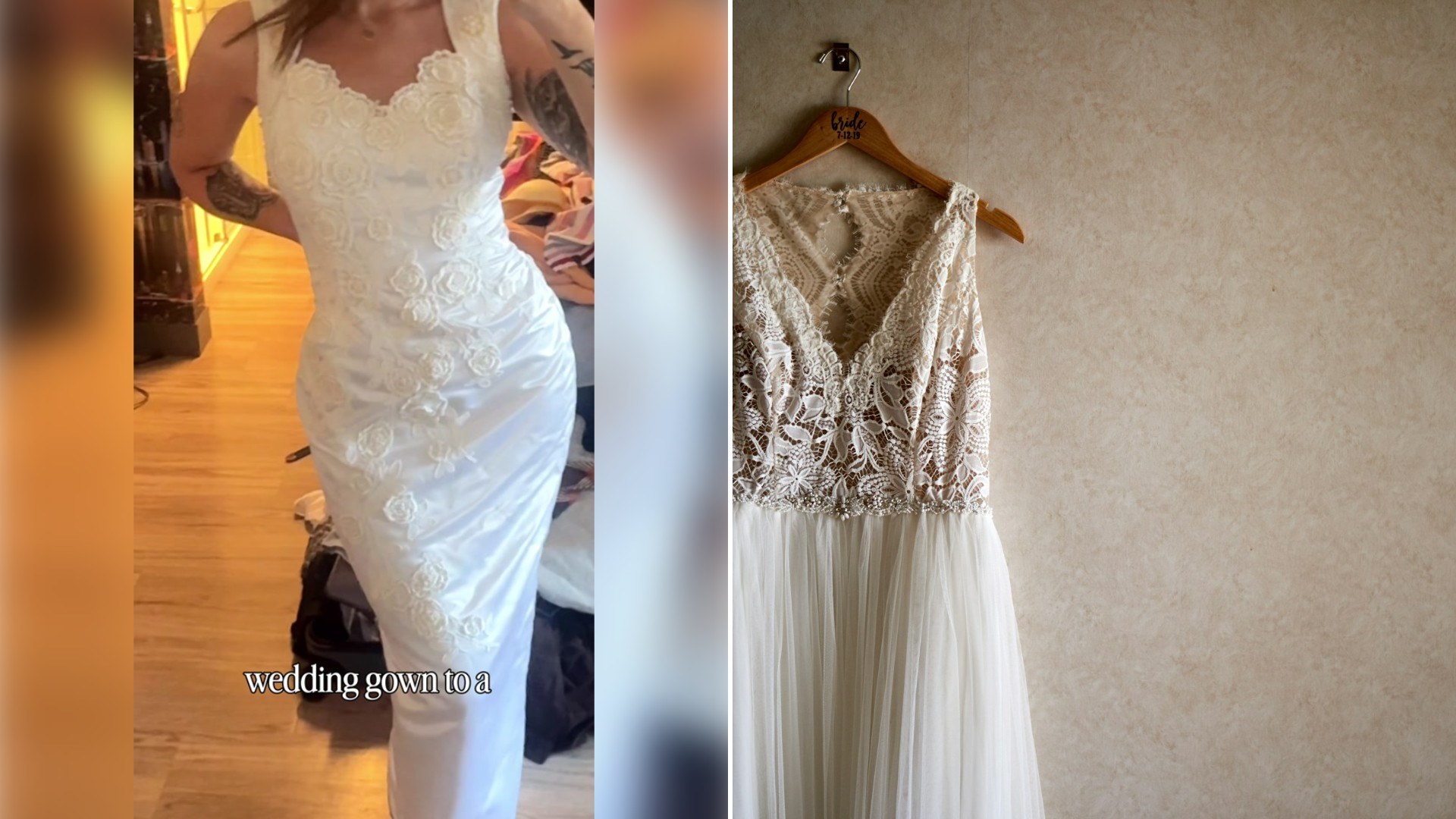
Not every wedding dress ends up worn down the aisle, but some end up transformed into something entirely new, and that is exactly what happened when @what_ali_wears pulled a discarded gown out of the Goodwill bins for a mere three dollars. Dresses that land in the bins, the deepest discount section of a thrift store where items are sold essentially by weight, have often been passed over multiple times already, making this particular gown’s journey from the bottom of a bin to the center of a viral transformation video all the more striking.
Recognizing potential in a dress most shoppers would have walked right past, the creator walks viewers through the full process of dyeing the polyester gown a rich, deep plum color, working through the entire transformation in her own kitchen using techniques accessible to anyone with basic dyeing supplies and a willingness to experiment. What starts as an unremarkable, likely stained or discolored white wedding dress slowly shifts, step by step, into a saturated, elegant plum that looks nothing like its original bridal incarnation.
@what_ali_wears
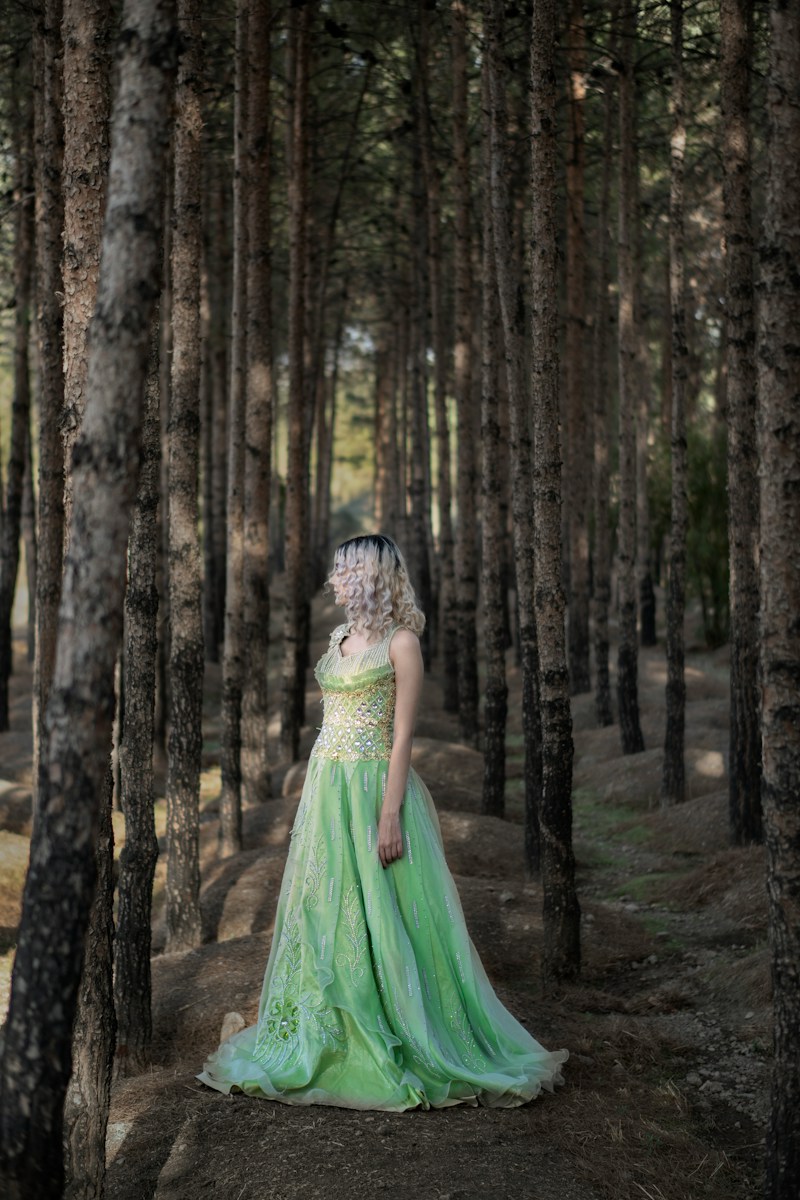
The final result was not just a color change for its own sake; the creator repurposed the gown into a custom bridesmaid style dress intended for a friend’s upcoming wedding, giving the discarded bridal piece an entirely new life and a genuinely meaningful purpose. That detail transforms the project from a simple crafting demonstration into something with real emotional stakes, since the finished dress is not headed for a closet as a one-off experiment but for an actual wedding, where it will play a visible role in someone else’s celebration.
Dyeing polyester fabric is notably more difficult than dyeing natural fibers like cotton or silk, since polyester’s synthetic structure resists standard fiber-reactive dyes that work well on natural materials, typically requiring specialized disperse dyes and, in many cases, careful heat application to get the color to bond properly with the fabric. That technical hurdle is part of why a successful polyester dye transformation, especially one that achieves as deep and even a color as the plum shown in this video, represents a genuine skill rather than a simple weekend craft project anyone could replicate on the first try.
Wedding dress upcycling has become an increasingly popular corner of the broader sustainable fashion and thrifting movements, driven by a combination of environmental awareness and simple economics. New bridesmaid dresses can easily run into the hundreds of dollars per person, particularly for custom colors or unique styles, while a discarded wedding gown found for a few dollars and reworked at home offers a fraction of that cost alongside a genuinely one-of-a-kind result that no retail bridesmaid dress could match.
There is also a quieter symbolic layer running underneath projects like this one. Wedding dresses, more than almost any other garment, carry an emotional weight tied to a specific, singular moment, and a gown that ends up discarded, whether due to a canceled wedding, a damaged condition, or simply being an unwanted donation, carries a kind of unfinished story with it. Transforming that same dress into a piece meant to celebrate someone else’s wedding day gives it a second chapter that feels almost poetic, turning what could have been a sad ending into a genuinely happy new beginning.
For anyone inspired to try a similar transformation, the process generally starts with identifying the fabric content correctly, since the dyeing method needed for polyester differs significantly from what would work on silk, cotton, or blended fabrics, followed by thoroughly cleaning the garment before dyeing to ensure even color absorption. Patience matters just as much as technique, since achieving a deep, even color like the plum shown in this video typically requires multiple dye baths and careful attention to fabric movement throughout the process, but as this three dollar Goodwill find proves, the payoff for getting it right can be a genuinely showstopping piece that started out as something nobody else wanted.
It is also a reminder of just how much untapped material passes through thrift store bins every single day without anyone stopping to consider what it could become. Most shoppers see a stained, discarded wedding gown and keep moving, and it takes a specific kind of creative eye to recognize that three dollars of overlooked polyester could, with enough patience and the right dye, become a dress good enough to stand up in someone else’s wedding photos.
There is also something quietly generous about the entire project, since the finished dress was never intended to stay in the creator’s own closet but was built specifically as a gift for someone else’s milestone occasion, adding a layer of care to the transformation that goes beyond the technical skill of the dye work itself.
For readers with their own overlooked secondhand fabric finds, the key lesson is not to judge a garment purely by its current color or condition, since a stained or discolored piece in good structural shape can often be transformed entirely with the right dye process, turning an unwanted castoff into something worth wearing to a genuinely special occasion.
In the end, the dress will carry two stories at once whenever it is worn, the bargain bin find it once was and the celebration it now belongs to.

Leave a Reply