

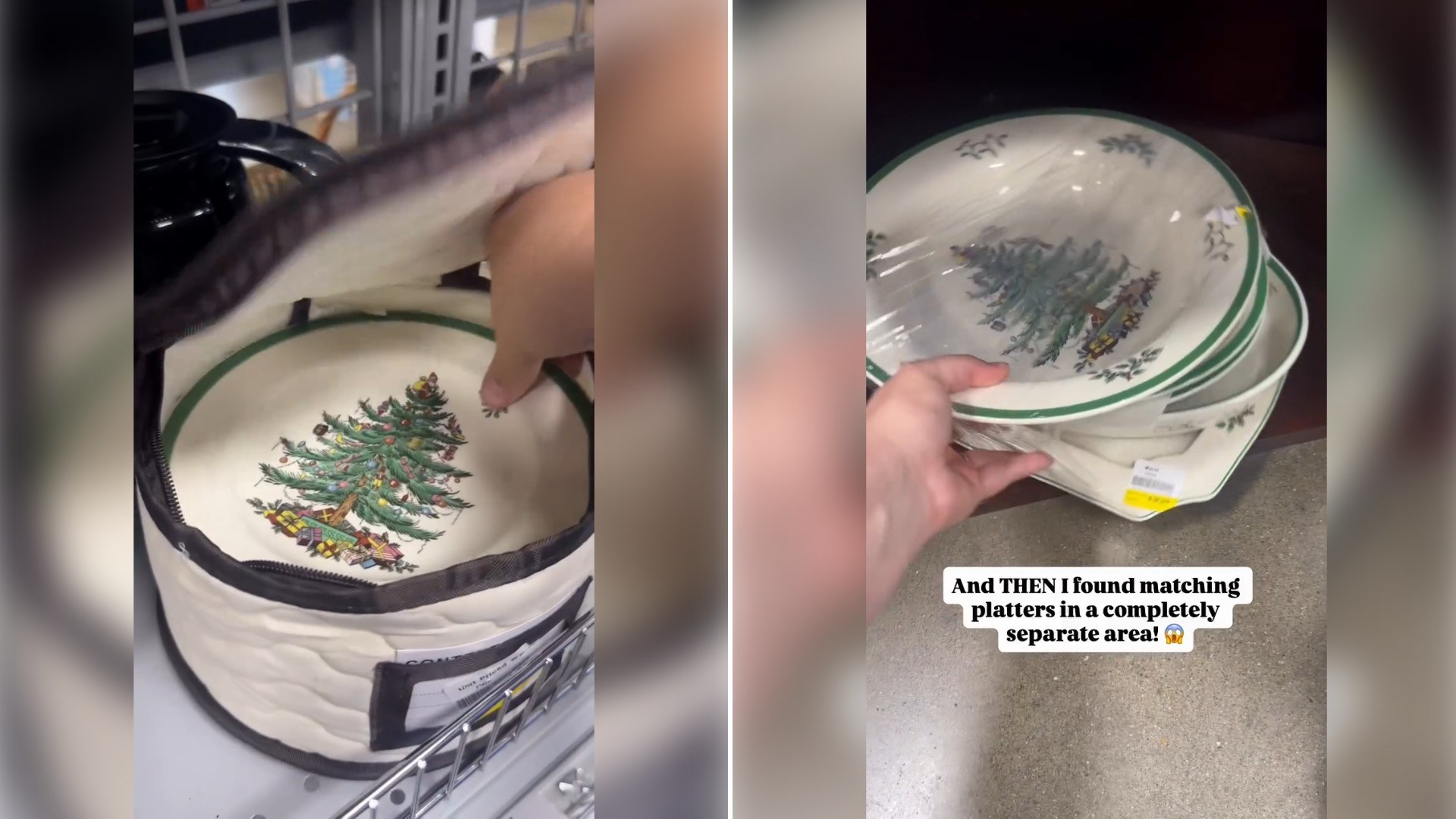
Thrift store shelves have a way of hiding their best secrets in plain sight, and that is exactly what happened when @sokydesignstudio went digging through a local shop and came away with a full set of vintage Spode Christmas dinnerware. Filmed entirely from the shopper’s own point of view, the video puts viewers right there in the aisle as she spots something worth a second look, tucked among the usual mismatched mugs and chipped plates that make up most thrift store dish sections.
Rather than a single stray plate, what she found was a matching, complete set stored together in its own carrying case, a detail that immediately sets this find apart from the usual one-off thrifted dish. The video shows her unzipping the case to reveal the pieces inside, still bearing the recognizable Spode Christmas pattern that has decorated holiday tables for decades, its classic red, green, and gold design instantly familiar to anyone who grew up setting a table for a big family dinner.
View this post on Instagram
Calling the discovery hitting the jackpot, the creator turns to her followers directly, asking whether they would have grabbed the same holiday dinnerware set on sight, a question that doubles as both engagement bait and a genuine test of thrifting instincts. It is the kind of find that separates casual browsers from serious pickers, since recognizing a name brand pattern buried on a shelf takes a level of familiarity that most shoppers walking through a thrift store simply do not have.
Spode has been producing fine china and dinnerware in England since the late eighteenth century, and its holiday patterns in particular have become a fixture of American Christmas tables, passed down through generations and reissued in various forms over the decades. A complete set, especially one that has survived intact with matching pieces and no chips or cracks, represents both a sentimental find and a genuinely useful one, since holiday dinnerware sets are exactly the kind of item families tend to hold onto rather than discard, making an intact secondhand set somewhat unusual to come across.
Part of what makes this kind of discovery so satisfying to watch is the mismatch between where the item was found and what it is actually worth. Thrift stores generally price items based on general category rather than brand recognition, meaning a name brand china set can sit on a shelf priced the same as a set of plain, unremarkable dishes simply because the person pricing it did not recognize the pattern or the maker. That gap between shelf price and actual resale or replacement value is the entire engine driving the current wave of thrifting content online.
Seasoned dinnerware collectors and resellers say the key to spotting these gaps is pattern recognition built up over repeated trips, learning to identify a handful of well-known makers and patterns by sight rather than needing to flip every piece over to check a stamped maker’s mark. Holiday specific patterns like Spode’s Christmas line are especially rewarding to learn because they show up seasonally at estate sales, thrift stores, and even yard sales as families downsize or clear out dishware that only gets used once a year.
For shoppers hoping to make a similar find, timing matters as much as knowledge. Thrift stores tend to see an influx of holiday dinnerware donations in the months following the holidays themselves, when families realize they have duplicate sets or are simplifying their kitchens, which means late winter and early spring can be surprisingly good windows for finding complete holiday sets at a fraction of their retail or collector price. A little research into recognizable patterns before a shopping trip can turn an ordinary browse into the kind of jackpot moment that had this creator asking her followers if they would have grabbed it too.
Beyond the specific find, the video is a small case study in how thrifting rewards a bit of homework before ever setting foot in a store. Spending a few minutes learning to recognize the look of a handful of well-known dinnerware patterns and makers, the shapes of their logos, the colors typical of a given era, can make the difference between walking right past a set like this one and recognizing it immediately as something worth a second look, turning an ordinary errand into the kind of trip other shoppers only hear about afterward.
There is also something quietly satisfying about a complete set surviving intact this long in the first place, since dinnerware is exactly the kind of household item prone to chipping, breaking, or getting separated piece by piece over years of use and storage, making an untouched full set feel less like ordinary luck and more like a small act of preservation on the part of whoever owned it before it ever reached that thrift store shelf.
For readers building their own eye for thrifted dinnerware, a good starting habit is simply flipping over a handful of pieces during every visit to check maker’s marks, even when nothing on the shelf looks especially promising at first glance, since that repetition is exactly how pattern recognition eventually becomes second nature.

Leave a Reply