

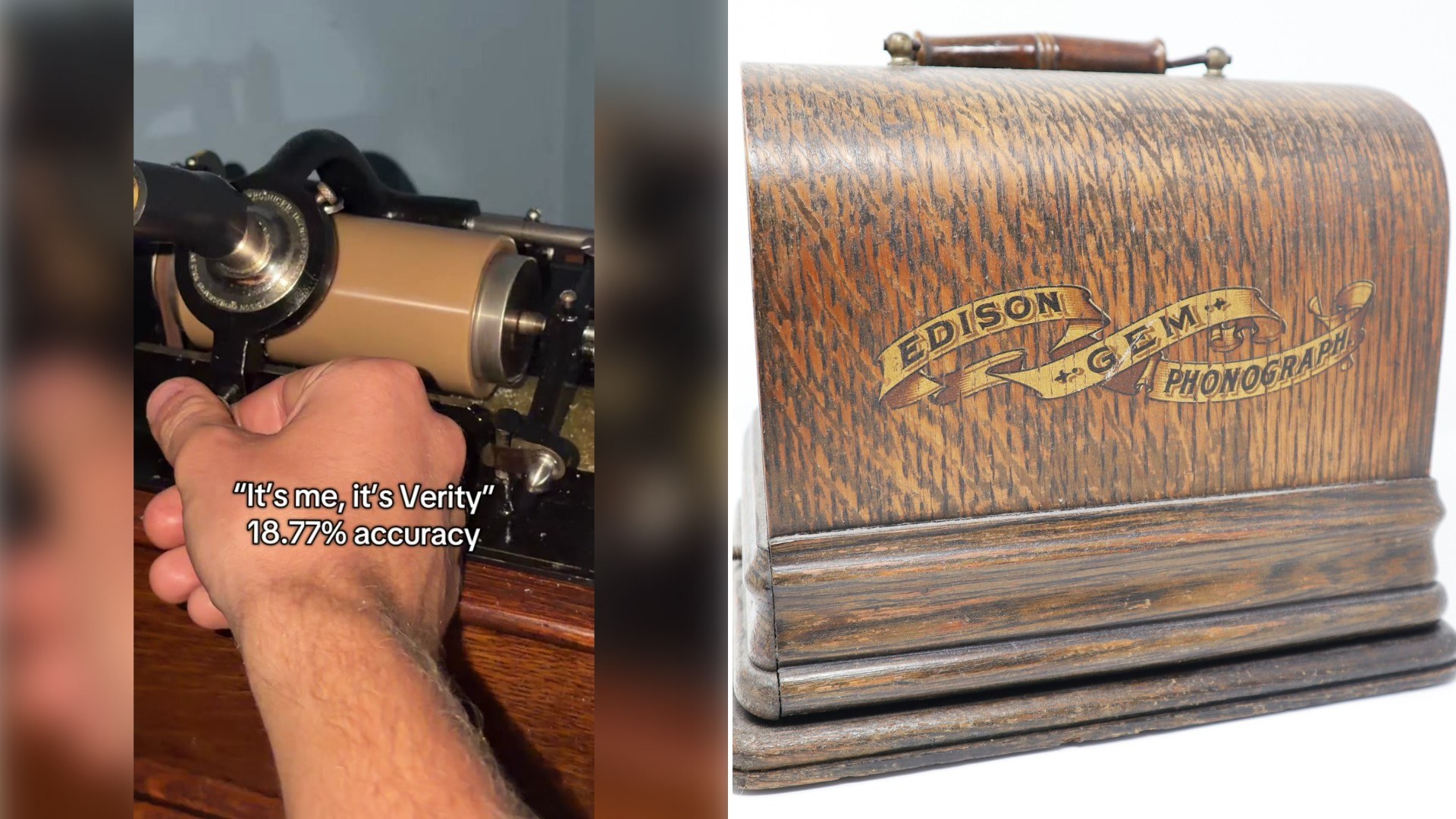
Antique technology demonstrations usually follow a predictable script: careful setup, a bit of crackling static, and then a period-appropriate recording that matches whatever era the device came from. Creator @sirtopperhat2.0 threw that entire script out the window in a video that starts exactly the way you’d expect and ends nowhere close to it. Carefully placing a needle onto an old wax cylinder loaded into a phonograph, he lets the sound crackle to life the way it always does on this kind of vintage equipment, and then a thoroughly modern song comes pouring out instead of anything remotely period-accurate.
The mismatch is what makes the clip work as well as it does. Wax cylinder phonographs are genuinely ancient technology by any modern standard, predating even standard vinyl records, and they carry an unmistakable visual and auditory identity: the horn-shaped speaker, the hand-cranked mechanism, the particular hiss and crackle that immediately signals “old” to anyone watching, even people with no real knowledge of audio history. Hearing a current song emerge from a device that looks and sounds that antique creates an immediate, almost absurd contrast that lands as genuinely funny precisely because it defies every expectation the setup carefully builds in the first few seconds.
@sirtopperhat2.0 I got a question. #fyp #verity #veritysong #waxcylinderrecording #relatable ♬ original sound – THESirTopperHat
Phonograph cylinders represent one of the earliest formats ever used for recorded sound, developed in the late nineteenth century and largely obsolete by the time standard flat records took over the market in the early twentieth century. For most people today, encountering one at all is rare, usually limited to museum displays or specialty antique collections, which already makes any video featuring one feel like a small history lesson before anything unexpected even happens. Layering a purely comedic twist on top of that already niche and unusual piece of technology is exactly the kind of unexpected combination that tends to travel well online, since it appeals both to people fascinated by antique tech and to people who just want a quick laugh with no context required.
There’s also a specific kind of craft involved in setting up a joke like this one convincingly. For the reveal to actually land, the setup has to feel genuine right up until the punchline arrives. That means the phonograph itself, and the way it’s demonstrated, needs to look and sound authentic enough that viewers are fully expecting a period-accurate recording, not anticipating the twist ahead of time. Anyone who collects or works with antique audio equipment brings a level of specialized knowledge to a video like this that a lot of casual content creators simply don’t have access to, which is part of what gives it its particular charm. It’s not just a joke; it’s a joke that required genuine expertise in vintage audio technology to properly set up and execute.
Antique and vintage technology content generally draws two overlapping audiences: dedicated collectors and history enthusiasts who appreciate authentic period demonstrations for their own sake, and a much broader audience simply looking for something visually interesting or unusual to watch. A straightforward, accurate demonstration of a wax cylinder phonograph would likely satisfy the first group while doing relatively little for the second. Injecting a genuinely funny, unexpected twist into that same demonstration is exactly what makes a video capable of reaching both audiences simultaneously, giving history-minded viewers an accurate look at real antique equipment while giving everyone else a reason to laugh and share it regardless of their interest in phonographs specifically.
For anyone interested in vintage audio equipment or antique technology more broadly, there’s a genuine appreciation worth building for just how much ingenuity went into the earliest recording devices, long before anything resembling modern audio technology existed. A wax cylinder phonograph required no electricity, no digital processing, nothing beyond mechanical engineering and careful craftsmanship to capture and reproduce sound at all, which remains a genuinely remarkable achievement even by today’s standards. Videos like this one, built around comedy rather than pure historical reverence, end up doing something valuable almost by accident: introducing a piece of real audio history to an audience that might never have encountered it otherwise, all wrapped inside a joke clever enough to make people want to watch it more than once.
There’s also a broader appeal here in how the joke plays with expectation itself, a comedic technique that’s existed for as long as storytelling has but rarely gets applied to something as literal as antique machinery. Viewers are trained by countless similar videos to expect a certain kind of payoff, a scratchy period recording matching the visual setup exactly, and the moment that expectation gets flipped is precisely when the laugh lands. It’s a reminder that even genuinely old, niche subject matter can be made to feel fresh and immediately shareable with the right comedic framing layered on top of it.
For anyone who enjoys this kind of playful mashup of old and new, it’s worth remembering that the antique object itself is doing real, functional work throughout the entire clip, needle, cylinder, horn and all, which means the joke only works because the underlying vintage technology genuinely still operates exactly as intended.
Actually playing an original wax cylinder on its own antique mechanism also carries real preservation risk, which is part of why many museum collections now default to playing only digitized transfers rather than running fragile, irreplaceable cylinders through their original hardware. Wax surfaces wear down a little more with every physical playback, and a worn or cracked cylinder cannot simply be reprinted the way a damaged vinyl record sometimes can, so a creator willing to actually spin an original cylinder for a joke like this one is, whether or not it crosses their mind, accepting a small amount of genuine wear in exchange for the bit landing convincingly on camera.

Leave a Reply