

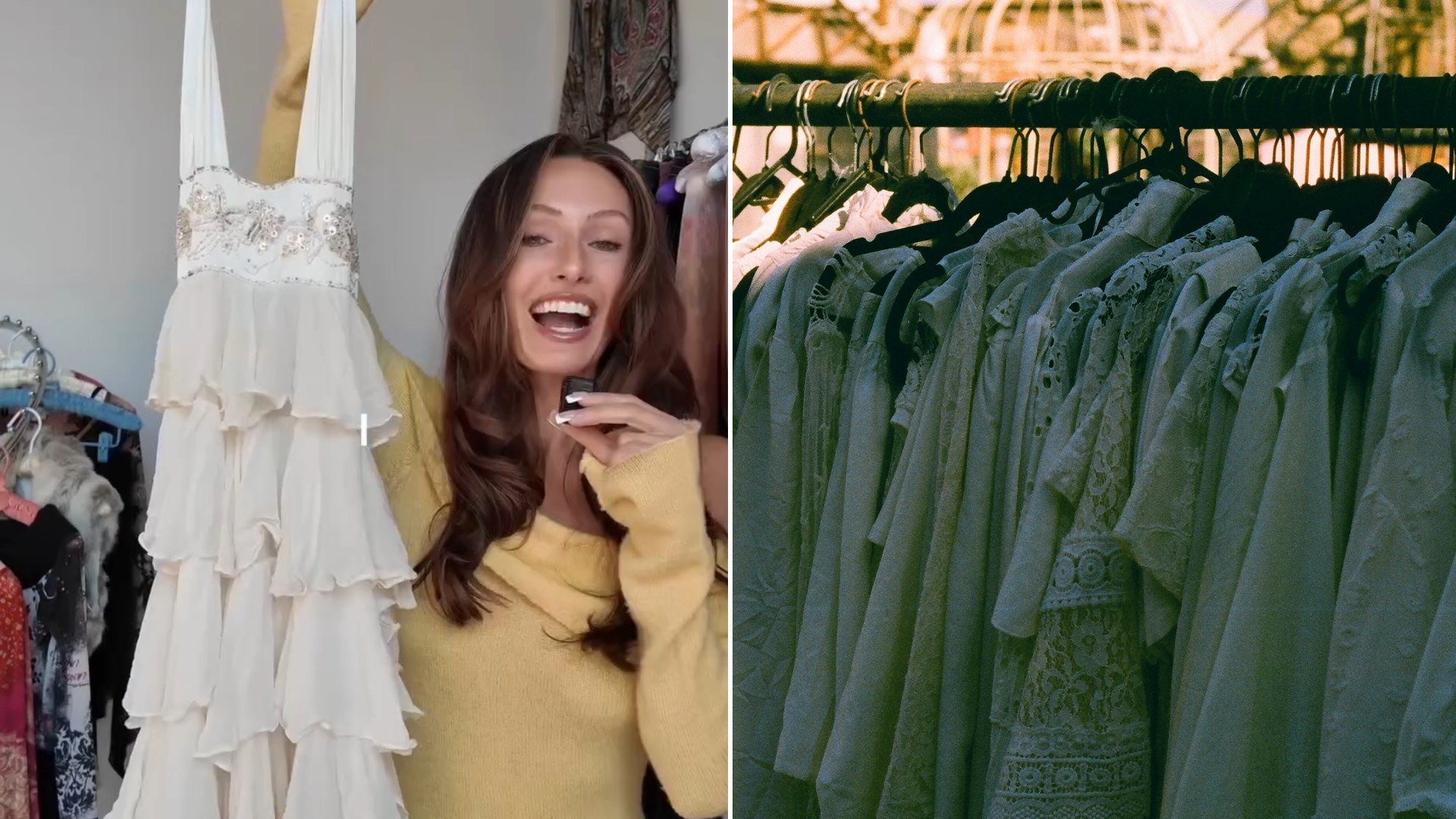
Not every vintage reseller manages to keep a completely detached, business-first relationship with the inventory passing through their hands, and creator @losthairclip is refreshingly honest about that struggle. In a recent video, she holds up a genuinely rare find, a white silk slip dress from a 2002 Victoria’s Secret collection, walking through everything that makes it special: the label, the fabric quality, and the specific design details that mark it as a standout piece of early-2000s fashion. And then comes the twist that turns a simple product showcase into something far more relatable. She admits the dress is still hanging in her own closet, because she genuinely cannot decide whether she’s ready to let it go.
It’s a small confession, but it says a lot about the emotional complexity hiding underneath the vintage resale business, an industry that on the surface looks purely transactional but in practice is often driven by people who love these items just as much as the customers eventually buying them. Anyone who has ever tried to build a resale business around something they’re personally passionate about knows exactly this feeling: the tension between running a business that depends on turning over inventory and the very real pull of wanting to keep the best pieces for yourself.
View this post on Instagram
The early 2000s have become a genuine hotbed for vintage and secondhand fashion collectors over the past few years, and pieces from that exact Y2K era, especially from brands with real cultural cachet at the time, are commanding serious attention from shoppers who either lived through the period firsthand or are discovering the aesthetic for the first time. A Victoria’s Secret dress from 2002 sits right at the intersection of those two audiences: nostalgic enough to hit older millennials directly in their own teenage or young adult memories, and distinctive enough in silhouette and detail to appeal to younger shoppers chasing an aesthetic they never got to experience the first time around.
Part of what makes a piece like this genuinely hard to part with, beyond simple nostalgia, comes down to the specifics she highlights in the video: the label, the fabric, the construction quality. Fast fashion has trained a lot of shoppers to expect garments that wear out or fall apart of within a season or two, which makes an early-2000s piece that has survived decades in wearable condition feel almost like a small miracle by comparison. Silk especially requires real care to preserve over that many years, which means a piece like this one likely represents not just a lucky find but also however much attention it took to keep it in the condition it’s in today.
There’s also something worth acknowledging about how vintage resellers build trust with their audiences precisely through moments like this one. A seller who never shows any personal attachment to their inventory, who treats every item as purely interchangeable stock, tends to come across as exactly what a lot of shoppers are trying to avoid: an impersonal middleman rather than someone with genuine taste and expertise. Admitting on camera that she’s struggling to let go of this particular dress actually reinforces her credibility as someone who knows quality when she sees it, rather than undermining her business. If anything, it makes the eventual sale, whenever it happens, feel more meaningful to whoever ends up buying it.
For anyone who has ever run any kind of resale business, whether in vintage clothing or any other collectible category, this exact tension is worth sitting with. There’s real value in occasionally keeping a standout piece rather than treating every single item purely as inventory to be moved. Not only does it protect against seller burnout, the kind that comes from constantly parting with things without ever getting to personally enjoy any of it, it also helps a reseller develop a genuinely deeper understanding of what makes certain pieces special, since living with something for a while, rather than photographing and shipping it immediately, tends to reveal details that a quick listing description would otherwise miss.
There’s a broader lesson here too, one that applies well beyond vintage fashion specifically. Almost anyone who collects or deals in anything they personally love, whether it’s records, books, furniture, or clothing, eventually runs into this exact dilemma: the item that’s simply too good to sell, at least for now. Learning to sit with that indecision rather than rushing to resolve it either way, by forcing a sale or permanently keeping the piece, is its own kind of skill. Sometimes the right answer really is to let a piece hang in the closet a little longer, undecided, until the moment feels right one way or the other. Not every decision needs to be made immediately, and in resale as in life, a little patience with your own uncertainty tends to serve you better than rushing to resolve it.
It’s also worth thinking about how transparency like this shapes the way an audience relates to a small business over time. Followers who watch a seller openly wrestle with whether to part with a favorite piece feel like they’re in on something more personal than a typical listing, and that sense of closeness tends to build loyalty in a way purely commercial content rarely manages.
There’s a practical angle here too for anyone dipping into vintage resale for the first time. Not every valuable find needs to be listed the moment it’s discovered; sitting with a piece for a while often produces better, more informed descriptions once it does eventually go up for sale.

Leave a Reply