

Every generation has a design trend it insists will never go out of style, right up until it very obviously does. Boomers championed plenty of choices with real confidence, convinced they were investing in a classic rather than a fad.
Time has not been entirely kind to some of these picks. Here are seven home trends that got the “timeless” label decades ago and now read as pretty firmly stuck in their era.
Mauve and Dusty Rose Everywhere
This soft pink-purple palette dominated walls, carpets, and upholstery through the late ’80s and early ’90s, paired frequently with forest green or navy as an accent. At the time, it was considered a sophisticated, muted alternative to bolder primary colors. Gen Z’s neutral-heavy palette of warm whites, greiges, and the occasional deep jewel tone makes mauve read as instantly nostalgic rather than the quietly elegant choice it was marketed as.
Track Lighting Everywhere
A row of adjustable spotlights mounted on a single track was considered a genuinely modern lighting upgrade for decades, offering flexible, directional light without the commitment of recessed can lighting requiring ceiling work. It was practical and relatively easy to install. Gen Z’s lighting preferences lean toward layered, ambient sources — sconces, pendants, warm lamps — and a visible metal track spanning the ceiling now reads as an obvious giveaway of a home’s last renovation decade.
Sponge-Painted Faux Finish Walls
Using a sea sponge to dab layered coats of paint onto a wall, creating a mottled, textured effect, was a hugely popular DIY technique for adding visual interest without wallpaper. Entire home decor shows were built around teaching the technique. It’s since become one of the most immediately dateable wall treatments out there, and Gen Z’s preference for flat, clean paint or a single intentional wallpaper choice has left sponge-painting almost entirely behind.
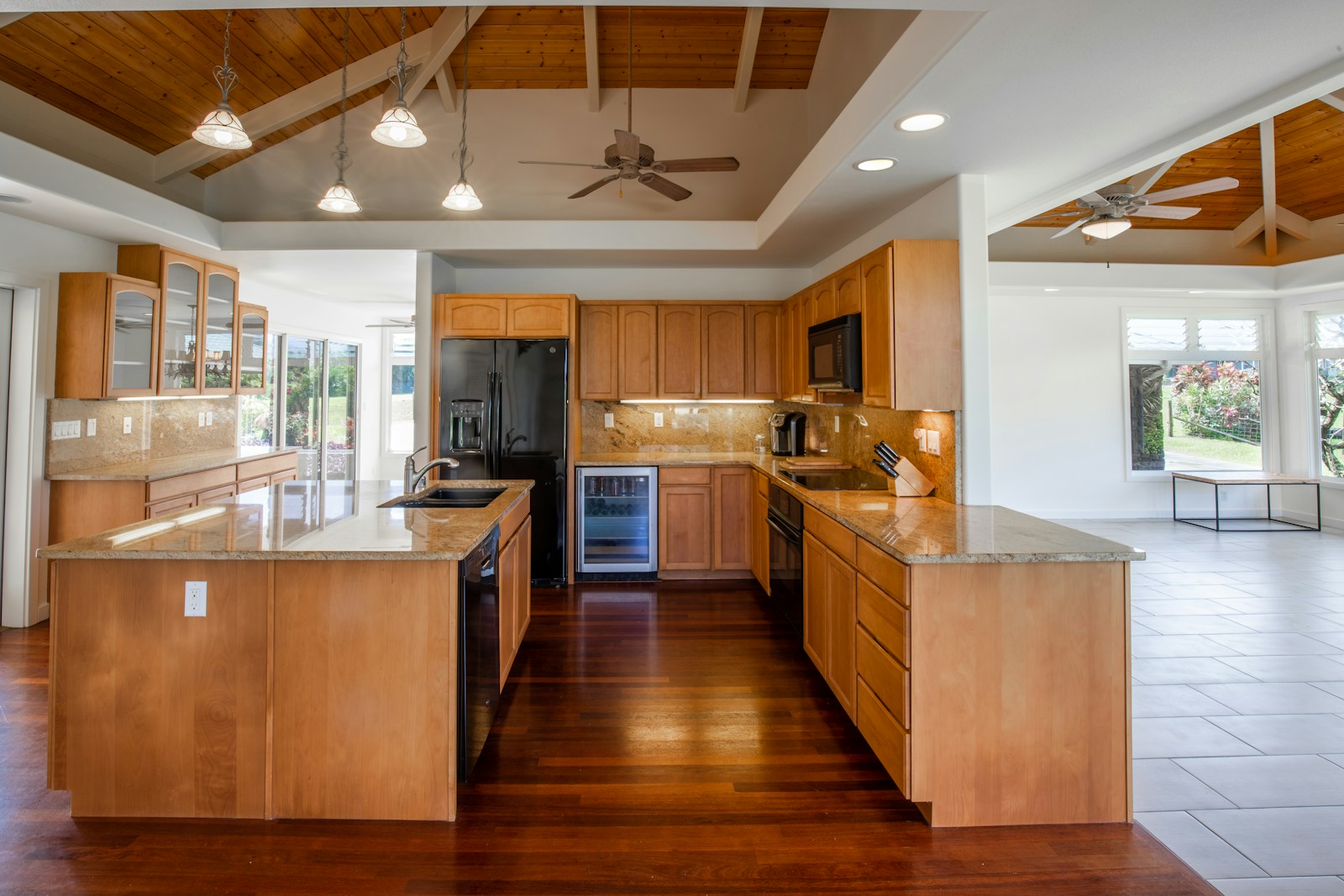
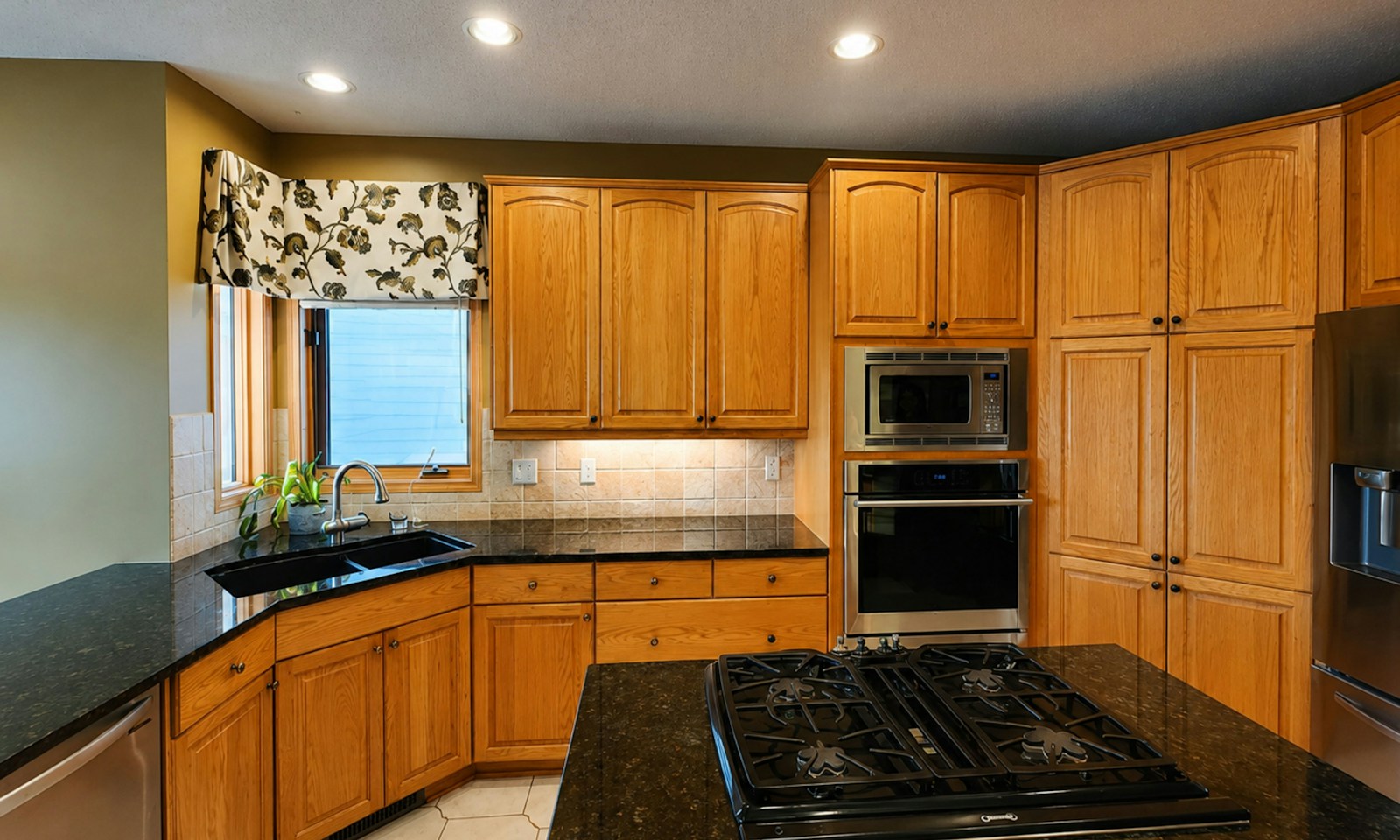
Golden Oak Cabinets
A warm, honey-toned oak finish with visible wood grain was the default kitchen cabinet choice for a huge stretch of the ’80s and ’90s, chosen for its durability and cozy, natural look. It paired with just about any countertop color available at the time. Gen Z’s kitchen preferences run toward white, two-tone, or deeper stained cabinetry, and that specific golden oak tone has become one of the fastest, most reliable ways to date a kitchen’s last update at a glance.
Plant Ledges Above the Cabinets
A narrow open shelf built along the top of kitchen cabinets, specifically designed to display faux greenery, collectible items, or decorative baskets just below the ceiling, was a popular architectural feature in homes built during the ’80s and ’90s. It added visual interest to otherwise wasted vertical space. Gen Z’s kitchens tend to favor cabinets that run flush to the ceiling instead, treating the open display ledge as a dust-collecting feature rather than a decorating opportunity worth preserving.
Country Blue Gingham Accents
A cheerful country aesthetic built around blue gingham curtains, matching tablecloths, and rooster or farmhouse-themed accessories was an enormously popular kitchen and dining look for years, evoking a cozy, homespun feeling. It extended into everything from oven mitts to wallpaper borders. Gen Z’s version of cozy leans toward a more pared-back, modern farmhouse look with far fewer printed textiles and novelty accessories, making the full gingham treatment feel more costume than comfortable now.
Arched Cutout Doorways
Rounded archways cut between rooms, often finished with a soft curved edge instead of a squared frame, were a popular architectural softening detail in many homes built through the ’80s and ’90s, meant to feel less boxy than a standard rectangular doorway. Gen Z’s preference for clean, modern lines generally favors a sharp, squared opening or, in many cases, no wall division at all, and the rounded archway has become one of the clearer architectural signatures of that specific building era.

Leave a Reply