


Nostalgia has a real talent for softening the edges of the past, and nowhere is that more obvious than in how we remember our own childhoods. We laugh about the lawn darts, the bikes with no helmets, the metal slide that could practically brand you in July, treating it all as harmless, character-building fun. In reality, a lot of it was genuinely dangerous, backed up by real injury data that eventually led to actual bans, recalls, and redesigned products.
None of this is meant to scold anyone for surviving a slightly reckless childhood — most of us did, and we turned out fine. But it’s worth being honest about just how much risk was quietly baked into a lot of ordinary childhood moments. Here are ten things from childhood that were considerably more dangerous than the fond memory usually lets on.
Lawn Darts
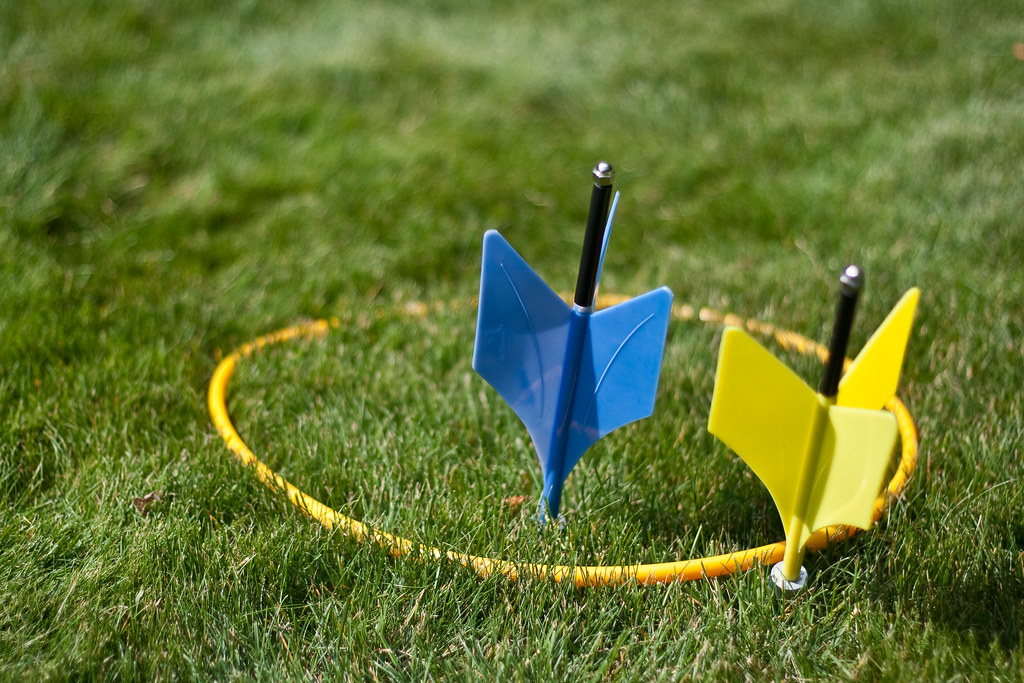
Jarts and other metal-tipped lawn dart sets were a genuinely popular backyard game for years, involving tossing a heavy, sharply pointed projectile high into the air and hoping it landed somewhere near a target ring rather than near a person. The weighted metal tip that made them fly accurately also made them capable of causing severe puncture injuries, and reports of serious injuries and even deaths, largely among children, eventually accumulated to the point where the U.S. Consumer Product Safety Commission voted to ban the sale of lawn darts in 1988. At the time, most families saw it as a harmless lawn game alongside horseshoes or badminton. In hindsight, handing children a heavy metal spike to throw through the air was a far riskier backyard activity than it felt like at the time.
Drop-Side Cribs
For decades, the standard nursery crib featured a side rail that could be lowered for easier access, a completely unremarkable design found in the vast majority of American homes. Over time, worn or poorly maintained hardware on these cribs created gaps where an infant’s head or body could become trapped, leading to a significant number of serious injuries and infant deaths. That history eventually led the Consumer Product Safety Commission to approve new federal crib safety standards in 2011 that banned the manufacture and sale of drop-side cribs entirely. Parents at the time had no reason to question a design used in virtually every nursery. It’s a sobering example of a completely ordinary piece of baby furniture turning out to carry a real, quantifiable risk.
Riding Without a Car Seat or Seatbelt
For much of the twentieth century, kids commonly rode in cars completely unrestrained, sitting on a parent’s lap, standing on the front bench seat, or bouncing freely around the back without a car seat, booster, or even a seatbelt in use. Seatbelt laws weren’t widely adopted until surprisingly recently, with New York becoming the first state to require adult seatbelt use only in 1984. Before that, a car crash at even moderate speed could turn an unrestrained child into a genuine projectile inside the vehicle. Parents weren’t being careless by the standards of the time; the safety equipment, research, and laws that would eventually change everything simply hadn’t caught up yet. The gap between how normal it felt and how dangerous it actually was is one of the starkest examples on this list.
Choking Hazards Before Warning Labels Existed
Small toy parts, marbles, and tiny plastic pieces circulated freely in children’s toys for years without any standardized warning system alerting parents to choking risks for young kids. That changed with the passage of the Child Safety Protection Act, which the Consumer Product Safety Commission moved to implement in the mid-1990s, establishing choking hazard warning labels on toys and small-parts testing requirements meant for children under three. Before that, parents had far less reliable information about which toys posed a genuine risk to a curious toddler prone to putting everything in their mouth. Many popular toys from earlier decades would likely never pass today’s small-parts testing standards. The absence of a simple warning label meant real risk hid inside completely ordinary toy boxes for years.
Riding Bikes With No Helmet
For most of several decades, kids rode bicycles at real speed down hills, through intersections, and off makeshift ramps with absolutely nothing protecting their heads beyond maybe a baseball cap. Properly designed, impact-tested bike helmets simply weren’t widely available or commonly used until safety research and advocacy caught up in the years that followed. Head injuries from bike falls were treated as an unfortunate, expected part of childhood rather than a preventable risk. The gap between how routine it felt to ride bare-headed and how much protection a helmet actually provides became increasingly clear as injury data accumulated over time. It remains one of the more striking examples of a completely normal childhood habit carrying real, largely unacknowledged risk.
Unfenced Backyard Swimming Pools
Backyard pools installed decades ago frequently had minimal or no fencing separating them from the rest of the yard, the house, or the street, treated as simply another feature of the property rather than a serious drowning hazard requiring containment. Young children could wander toward the water completely unsupervised, sometimes from inside the house itself, with nothing physically stopping them. Pool safety awareness and specific fencing requirements developed gradually over subsequent decades as drowning statistics highlighted just how significant the risk actually was, particularly for toddlers. Many pool owners at the time saw a fence as an unnecessary expense or an eyesore rather than a genuine safety measure. The casual approach to pool access that once felt completely normal is now recognized as one of the more serious hidden risks of an ordinary backyard.
Leaded Gasoline Fumes
Every car on the road for decades ran on gasoline containing added lead, releasing lead particles into the air with every mile driven, especially concentrated near busy roads, gas stations, and urban areas where traffic was heaviest. Kids playing outside, walking to school along busy streets, or simply living near major roadways were regularly exposed to elevated lead levels without anyone recognizing the risk at the time. It would take until 1996 for the Environmental Protection Agency to complete its phaseout of leaded gasoline for on-road vehicles in the United States. Later research connected childhood lead exposure to serious developmental concerns, making this one of the more invisible, widespread risks woven into completely ordinary daily life for generations of kids.
Pesticide Fogging Trucks in the Neighborhood
Many towns once sent trucks slowly through residential neighborhoods spraying a visible fog of DDT specifically to control mosquitoes, and kids frequently ran and biked directly through the mist, treating it as an oddly fun part of a summer evening rather than anything to avoid. The chemical was marketed at the time as a safe, modern solution to a genuine nuisance problem, with minimal public concern about exposure. Research eventually linking DDT to serious health and environmental harm led the Environmental Protection Agency to ban most uses of DDT in the United States in 1972. Kids chasing a pesticide fog truck down the street is now recognized as a genuinely alarming image rather than the innocent summer memory it was treated as at the time.
Metal Playground Equipment Over Hard Ground
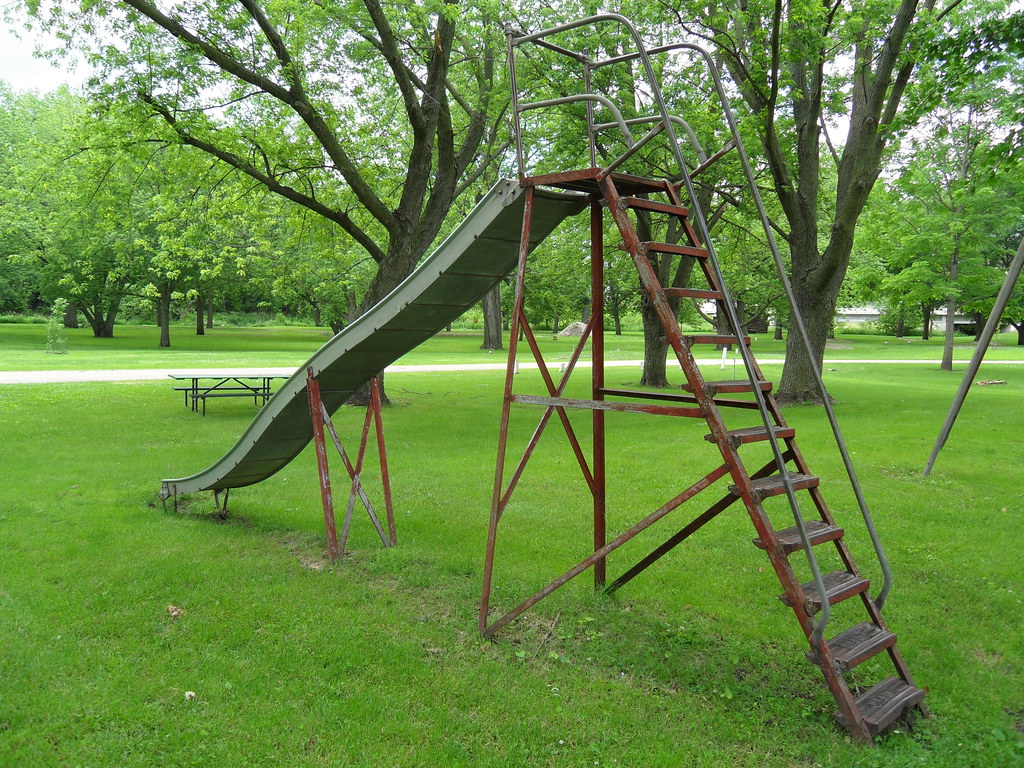
Public playgrounds for much of the twentieth century commonly installed metal slides, monkey bars, and merry-go-rounds directly over asphalt, packed dirt, or thin gravel, offering essentially no cushioning for a fall from a significant height. Metal slides left in direct sunlight could reach temperatures high enough to cause real burns on contact with bare skin. Broken bones from playground falls were common enough to be treated as an unremarkable, expected part of growing up rather than evidence that the equipment itself needed rethinking. It would take years of accumulated injury data before playground design standards shifted meaningfully toward softer surfacing and shorter equipment heights. The playgrounds that felt like an ordinary part of every childhood were, by modern safety standards, considerably riskier than most people realized at the time.
Lead Paint on Toys and Walls
Bright, richly colored paint used on walls, furniture, cribs, and even some children’s toys for decades often contained lead, a durable pigment ingredient that also happened to be seriously toxic, particularly to young children who might chew on a painted surface or breathe in dust from peeling paint. Before the federal government banned lead-based paint for residential use in 1978, it was simply the standard paint found in the vast majority of American homes. Children in older houses were regularly exposed to lead dust from window sills, chipped walls, and worn furniture without anyone recognizing the danger at the time. Later research linked childhood lead exposure to serious, lasting developmental harm. What once seemed like ordinary household paint turned out to be one of the more significant hidden hazards woven into everyday childhood environments for generations.

Leave a Reply