

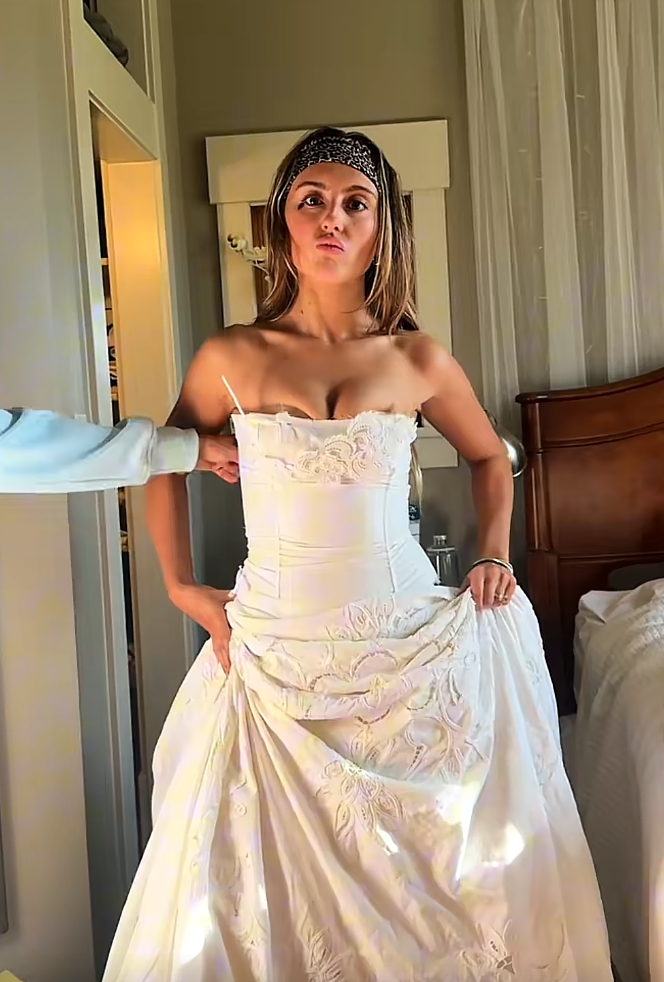
Gracie Songer tried on gowns that cost up to $10,000 and walked away from all of them. What she wore down the aisle instead was made from her own childhood bedsheets, transformed into a custom wedding dress for roughly $150 in materials. She documented the process on TikTok as @graciesonger.
In her video, Songer shows the sentimental starting material, bedsheets from her own childhood, being cut, pieced together and constructed into a finished gown suitable for her wedding day. The $150 figure and the comparison to gowns costing up to $10,000 are her own reported numbers, and they highlight less a simple cost-cutting measure than a deliberate choice to prioritize sentimental value and personal craftsmanship over a traditional bridal-shop purchase.
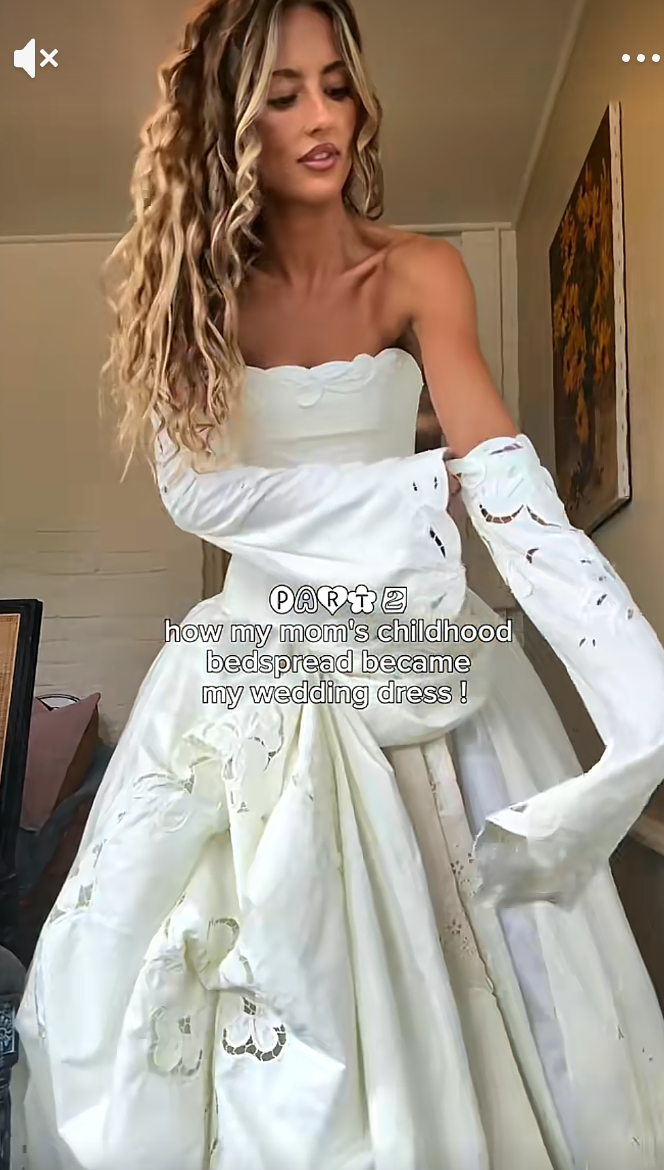
It’s worth being clear about what that $150 figure represents and what it doesn’t: it reflects materials, not the substantial unpaid labor that went into designing, cutting, fitting and sewing an entire wedding dress from scratch. A project like this represents dozens of hours of skilled work that a bridal shop would charge significantly more to replicate, and treating the finished dress as simply “a $150 wedding dress” would understate what actually went into making it.
What gives the story its emotional core isn’t the savings, it’s the material itself. Turning bedsheets from your own childhood into your wedding dress creates a literal, physical thread between two major life chapters, a detail that a store-bought gown, however expensive, simply can’t replicate. That sentimental throughline is likely what elevated this project beyond a standard budget-wedding hack.
Custom and upcycled wedding attire has carved out a genuine niche among people drawn to the idea that a wedding dress can carry personal history rather than simply being a beautiful, generic garment. Songer’s project sits at the far end of that spectrum, using a deeply personal source material rather than just repurposing a generic secondhand find.
The Takeaway
A wedding dress doesn’t have to come from a bridal shop to feel special, and materials with real sentimental history, an old quilt, childhood bedding, a parent’s fabric, can become something entirely new with the right sewing skills and enough time. Just go in with realistic expectations about the labor involved; a project like this represents real skill and dozens of hours of work, not simply a cheaper alternative to a store-bought gown. If you don’t have the sewing experience yourself, consider working with a seamstress who can help translate a sentimental material into a wearable design.

Leave a Reply