

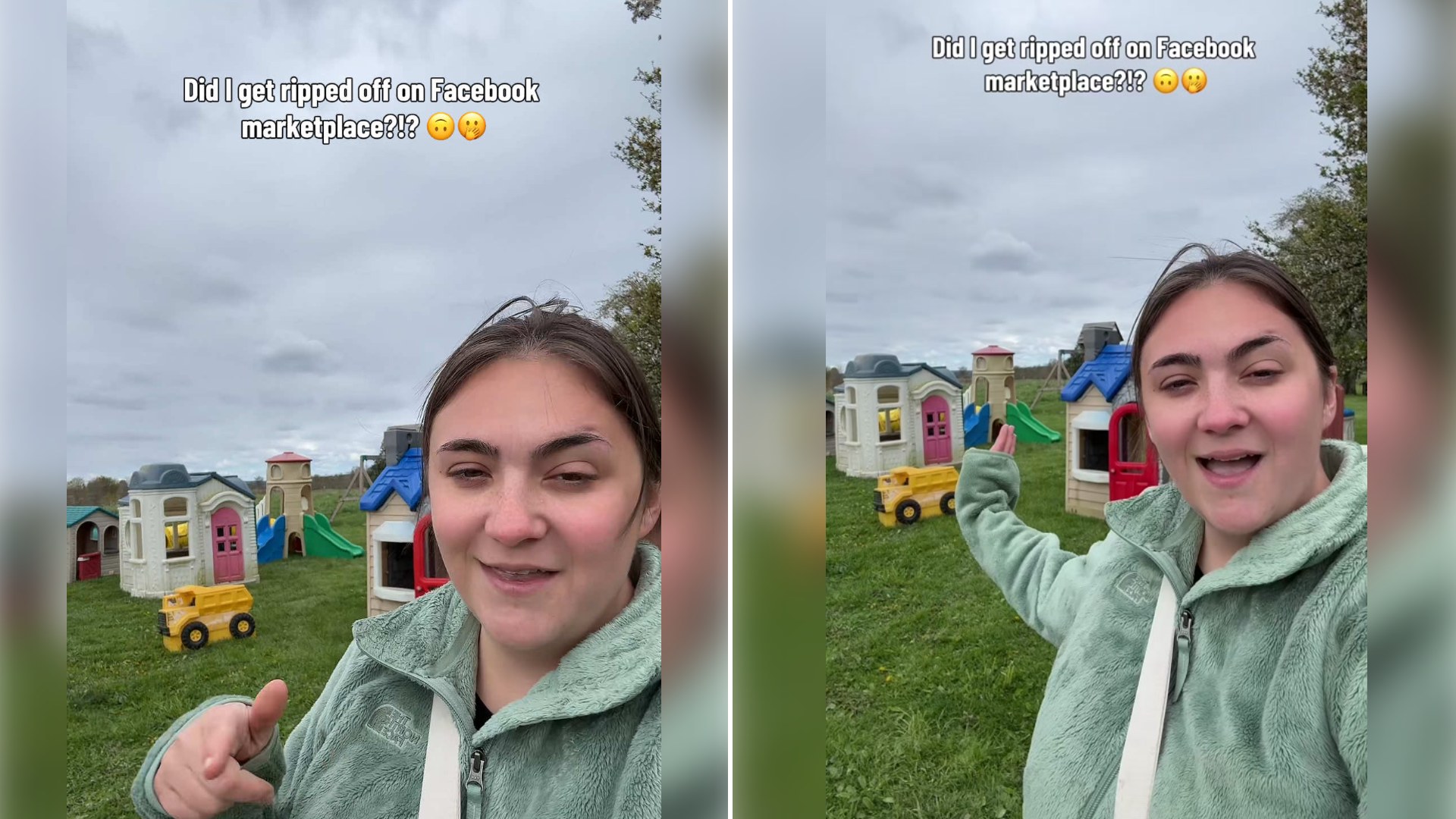
Jayde Hoban has turned her backyard into something like a miniature storybook town, filling it with vintage playhouses she has sourced and restored over time. Her project has grown into a full arrangement of colorful, restored structures for her children, and she has documented the process on TikTok as @life.withjayde.
Per her own caption, the candidate count for the village stands at 21 vintage Little Tikes structures and toys — though it’s worth noting the video underlying this coverage was originally posted some time before it resurfaced in wider circulation, meaning the collection may have grown, shrunk, or been rearranged since it was filmed. Rather than treat that number as a fixed final total, it’s more accurate to describe it as the count Hoban herself reported at the time of posting, drawn from the structures she shows or specifically references in the video.
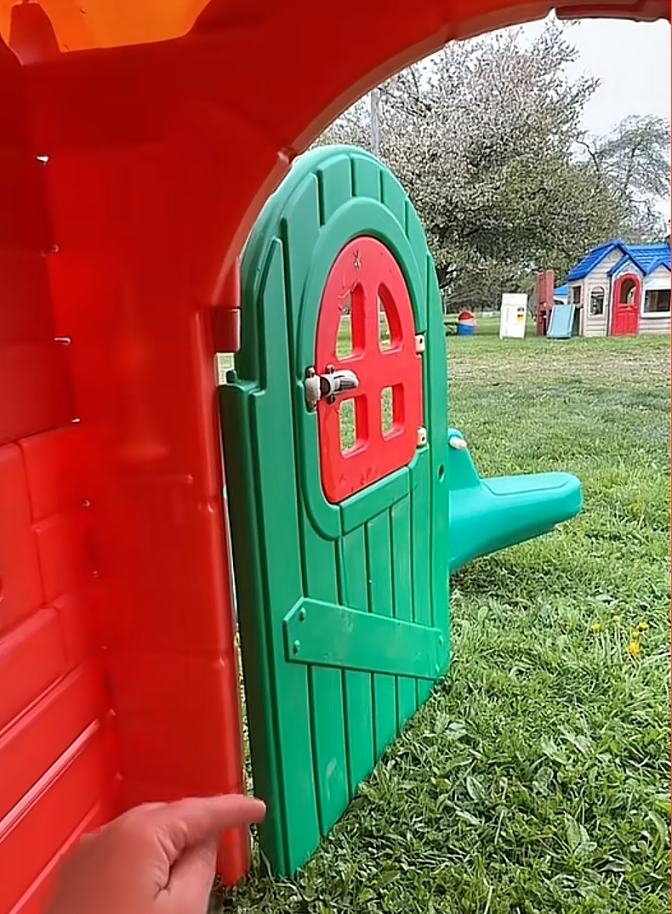
The appeal of the project is as much about restoration as it is about display. Vintage playhouses — the kind of molded-plastic and wood-panel structures that were once staples of suburban backyards — tend to turn up faded, cracked, or missing pieces after years of sun exposure and weather. Hoban’s approach, as shown in her videos, has involved sourcing these structures, then cleaning, repainting, and repairing them individually before finding a place for each one within the larger layout, essentially assembling a village out of pieces that were headed for a landfill or a dusty back corner of a storage unit.
That combination — nostalgia for a bygone style of backyard toy plus visible, hands-on restoration work — is a big part of why the project has resonated with viewers. Vintage playhouses are the kind of item many people remember specifically: a certain shape of front door, a particular shade of plastic roof, a size just right for a child but memorable well into adulthood. Seeing a collection of them repaired and repurposed taps into that memory directly, and the visual scale of an entire miniature village, rather than a single restored piece, is what gives the project its scope.
The TikTok video embedded above shows Hoban unveiling the haul, and her ongoing content frames the project as an evolving one rather than a finished collection — she continues to source, restore, and arrange structures, which is consistent with the note that the specific count in this video reflects what was shown at the time rather than a permanently fixed figure.
It also helps to understand why a project like this keeps resurfacing and finding new audiences well after it was first posted. Restoration content tends to have a long tail online: a video documenting one structure being repaired might circulate modestly on its own, but once a project reaches a scale large enough to be described as a “village,” it tends to get rediscovered and recirculated by new audiences long after its original upload date. That appears to be part of what happened here — the underlying TikTok predates its most recent wave of attention, which is exactly why the 21-structure figure is best framed as the count Hoban reported at the time of that video, rather than treating it as a permanently accurate, up-to-the-minute inventory.
The restoration process itself is worth dwelling on, because it’s the part of the story that separates this kind of project from simply buying and displaying vintage toys. A weathered plastic playhouse pulled from a backyard where it’s sat for years typically needs more than a rinse: faded plastic often needs specialized paint formulated to adhere to polyethylene or PVC surfaces, cracked panels may need patching or replacement hardware, and roofing pieces exposed to sun for a decade or more can become brittle enough to need careful handling just to move them without further damage. Multiply that work across 21 separate structures, each likely sourced from a different original owner and in a different condition, and the scale of the undertaking becomes clearer — this isn’t a weekend project so much as an ongoing one, built structure by structure over what appears to be an extended stretch of time.
That incremental, ongoing quality is also what gives the project its visual impact once enough pieces are in place. A single restored playhouse reads as a nice keepsake; two dozen of them, arranged together and color-coordinated into something resembling a village, reads as a destination — which is presumably a large part of why the imagery has traveled as far as it has.
The Takeaway
Vintage playhouses and other large outdoor toys are an underrated category for secondhand hunters, largely because they’re bulky and unglamorous compared to smaller collectibles, which keeps prices lower and competition thinner. If a restoration project like this one appeals to you, start by checking local classifieds, yard-sale apps, and community swap groups rather than general marketplaces, since large plastic or wood structures are rarely worth shipping and tend to move locally. Budget for cleaning supplies, exterior-grade paint, and replacement hardware, since weather damage is the norm rather than the exception on anything left outdoors for years. And pace yourself: projects like this one are typically built structure by structure over an extended period, which means the “final” count of any restoration collection is really just wherever it happens to stand when someone asks.

Leave a Reply