

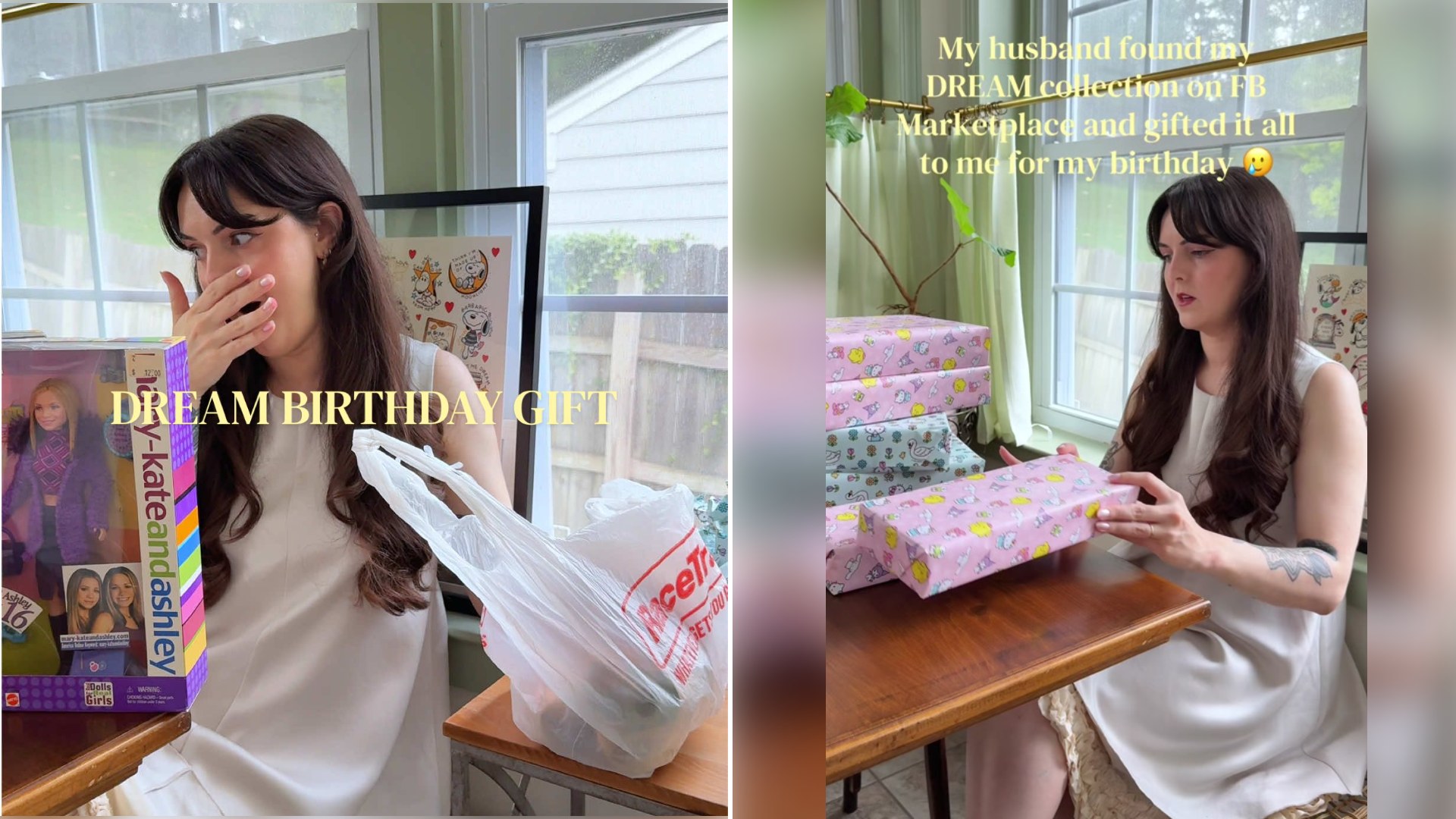
When Brittany Cartie’s husband started browsing Facebook Marketplace, he wasn’t looking for anything specific — until he spotted a lot of vintage Mary-Kate and Ashley Olsen dolls, the kind of collection his wife had wanted since childhood but never had. He bought the set and surprised her with it, and Cartie documented the reveal on TikTok under the handle @brittanyc.art.ie.
The collection at the center of the story is made up of 18 vintage Mary-Kate and Ashley Olsen dolls, part of the sprawling merchandise line that grew out of the twins’ straight-to-video movies and TV specials in the 1990s and early 2000s. For a generation of kids who grew up taping their shows and collecting the tie-in toys, the dolls were less a passing fad than a fixture of childhood bedrooms — the kind of thing that gets talked about wistfully for years after it’s given away, sold in a yard sale, or simply lost to time.
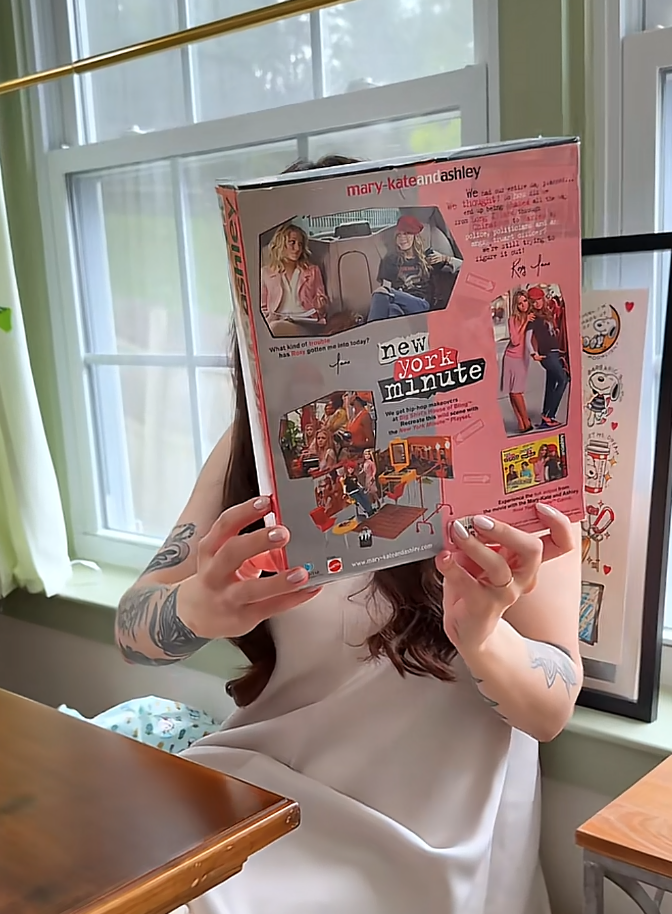
That’s what made the find so meaningful for Cartie, based on what she shared in her caption. Her husband apparently remembered her mentioning the dolls as a collection she’d always wanted, and when he came across a matching lot on Facebook Marketplace, he moved on it. Cartie’s post puts the couple’s purchase price for the full set at $300 — a figure worth treating as the couple’s own account of the transaction rather than an independently appraised value, since resale prices for vintage character dolls can vary widely depending on condition, packaging, and which characters or outfits are included in a given lot.
The TikTok video embedded above captures what by all accounts was a genuine, unscripted moment — Cartie’s reaction to the surprise, filmed in real time. It’s the kind of reveal that resonates widely online precisely because it taps into something a lot of viewers recognize: a partner quietly filing away an offhand comment about a childhood want, then acting on it months or years later.
Facebook Marketplace has increasingly become a hunting ground for this kind of nostalgia find. Sellers clearing out attics, storage units, or a relative’s old bedroom often don’t realize what a complete or near-complete set of licensed character dolls from a specific era can be worth to the right buyer — not necessarily in dollars, but in sentimental value to someone who remembers exactly what it felt like to unwrap one as a kid. Lots like the one Cartie’s husband found don’t surface with much regularity; more often, collectors piece sets together one doll at a time across months or years of searching.
For Cartie, though, the story isn’t really about the resale math. It’s about being remembered — about a passing comment turning into a gesture that took real effort to pull off, from spotting the listing to keeping the surprise a secret until the reveal. That’s the throughline that comes across in the TikTok itself: a small, specific act of attention that turned into something worth documenting and sharing.
It’s worth putting the $300 figure in some context, even while treating it strictly as the couple’s own reported number rather than an appraised valuation. Vintage character dolls tied to a specific media property tend to trade in a wide price range depending on a handful of factors: whether the original packaging survived, whether accessories and outfits are complete, how many distinct characters or looks are represented in the lot, and simple supply — how many of that particular doll are still circulating in resale markets decades after their initial release. A bundle of 18 dolls is a meaningfully different find depending on whether it spans multiple outfits and release years or repeats the same figure, which is why it’s worth sticking to what the couple reported paying rather than assuming an independent valuation.
The broader trend underneath this story is familiar to anyone who follows thrifting and resale content online: adults reconnecting with the specific toys and merchandise of their own childhoods, often by proxy through a partner who does the searching on their behalf. Facebook Marketplace has become a go-to hunting ground for that kind of nostalgia shopping because listings are local, informally priced by sellers who may not know an item’s collector value, and searchable by keyword — a buyer who knows exactly what they want can set an alert and simply wait, which appears to be roughly the mechanism behind this particular find.
None of that changes the core of what made the moment land the way it did for Cartie and, by extension, for the people who watched her reaction online. The dollar figure and the doll count are details; the gesture itself — recognizing a small, specific longing and acting on it — is what the story is actually about, and it’s the detail Cartie herself keeps front and center in her caption.
The Takeaway
Stories like this one are a good reminder of why secondhand marketplaces reward patience. Vintage character dolls, especially ones tied to a specific show or movie era, rarely show up as complete sets — most collectors build theirs piece by piece, so a full lot is worth acting on quickly when it appears. If you’re hunting for a specific childhood collection, save searches with the character or line name on Facebook Marketplace, thrift-app listings, and local buy-sell-trade groups, and check listing photos closely for missing accessories or outfit pieces, since those details affect both price and completeness. And if you’re shopping for someone else, small offhand comments — “I always wanted the whole set” — are often the best clue you’ll get. Holding onto that detail, even for months, is usually what turns a routine scroll through listings into the kind of find worth surprising someone with.

Leave a Reply