

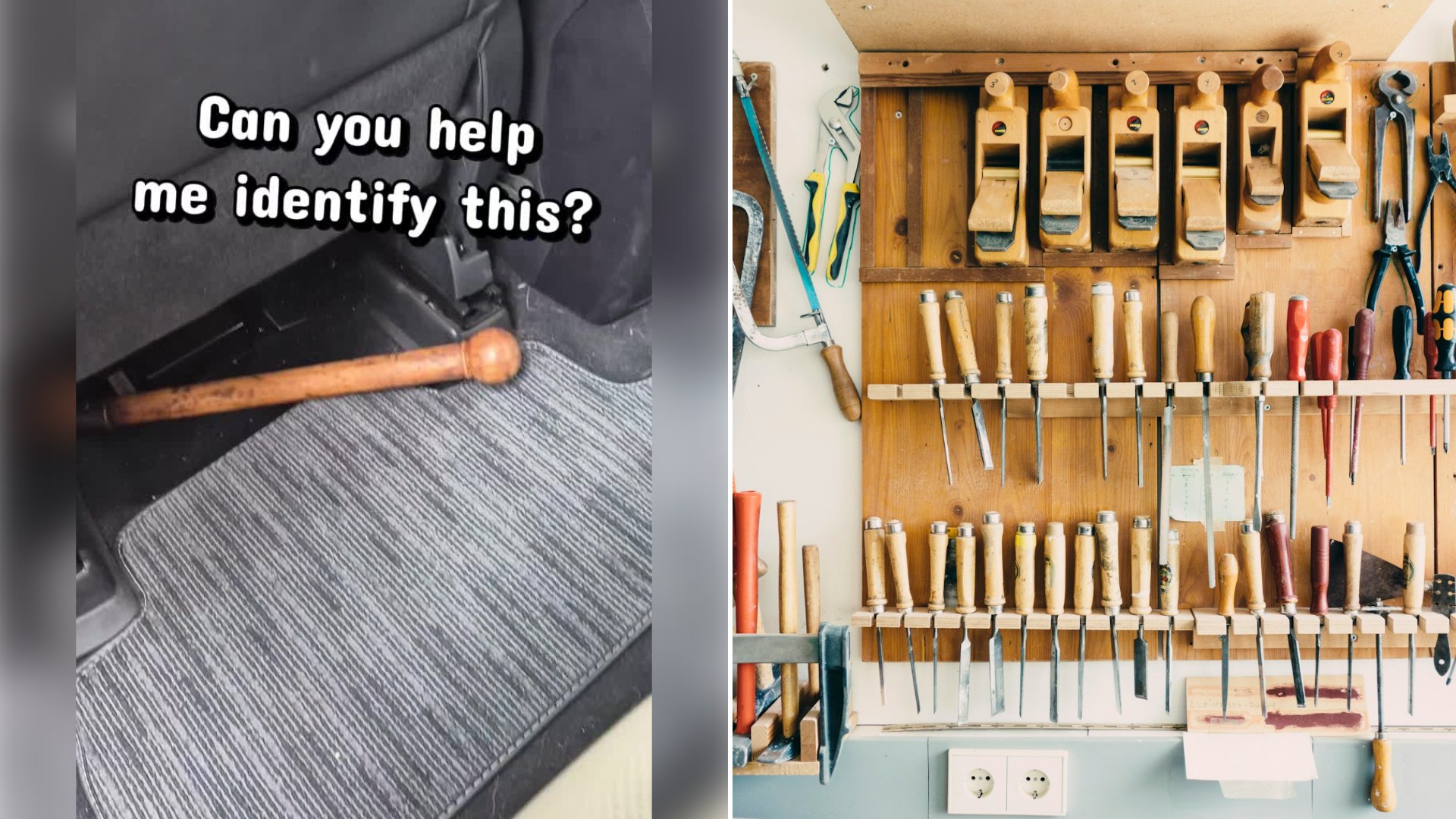
Some family heirlooms come with a story attached. Others come with nothing but a shrug and a decades-old habit nobody can quite explain. A woodworker who posts on TikTok as @jnmwoodworking found himself with the second kind of object: a mysterious wooden item that his mother has long kept in her car, reportedly for self-defense, without anyone in the family actually knowing what the thing was originally made for.
In his video, the creator holds up the object and lays out the situation plainly. This is, by his account, a piece his mother has carried in her vehicle for a long time — long enough that it’s become something of a running family mystery, as his caption makes clear: “It’s long been a family #mystery.” Rather than offering a confident answer, he turns the question over to his audience, asking viewers directly whether they can identify what the object actually is and what it was originally designed for.
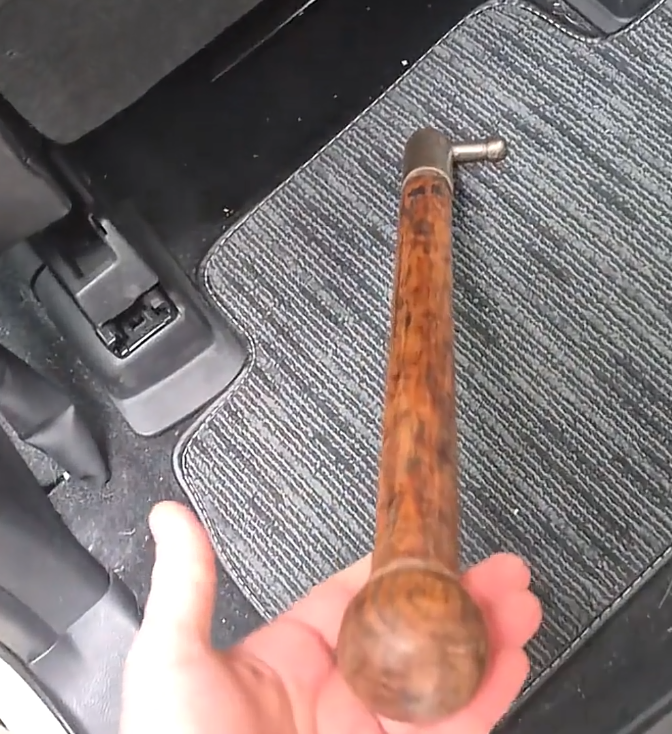
That framing matters. This isn’t a video where a woodworker uses his trade knowledge to solve the puzzle and deliver a tidy answer — as of the video, the object’s original purpose remains genuinely unresolved. What he does bring, as someone who works with wood professionally, is an eye for craftsmanship: an ability to look at the grain, the shape, the wear patterns, and the way the piece has clearly been handled over the years, even without being able to name exactly what it once was. His mother’s use of it as a car-safety item is really a second life for the object, repurposed decades or generations after whatever it was originally built to do.
Antique-identification content like this has become one of the more durable formats on TikTok precisely because it invites participation. A creator posts a photo or video of an unlabeled tool, gadget, or household object and effectively crowdsources the research to an audience that includes antique dealers, tradespeople, historians, and hobbyists who might recognize a shape or function that stumped everyone else. The comment section becomes the real investigation — a mix of confident theories, competing guesses, and the occasional expert who has seen the exact same object before. For a family mystery that has apparently persisted for years, tapping into that collective knowledge is a reasonable next move.
There’s also something quietly compelling about the domestic detail here — a mother, keeping an unidentified wooden object in her car for protection, without either of them knowing its origin. It suggests an object valued for its heft and shape rather than its provenance: something that feels solid and purposeful in the hand, regardless of what it was actually built for. Whether it began life as a tool, a piece of sporting equipment, a kitchen implement, or something else entirely is still an open question, and the honest answer, at least for now, is that nobody in the video claims to know for certain.
That honesty is worth preserving. It would be easy for a video like this to invent a dramatic backstory — a Civil War relic, a tool from a vanished trade, something suitably cinematic — but nothing in the clip supports that kind of leap. What’s on record is simpler and, in its way, more interesting: a genuinely unidentified antique, handed down or acquired at some point, repurposed by a mother as a practical comfort item, and now open to the internet’s best guess.
Identifying a Mystery Antique
Unidentified wooden tools and objects turn up in attics, garages, and glove compartments more often than people expect, and there’s a reasonably reliable process for narrowing down what they might be. Start with the material and joinery — hand-carved versus machine-turned wood can suggest an era — and look closely at wear patterns, since where an object shows smoothing or damage often hints at how it was gripped or used. Local historical societies, antique tool collectors’ forums, and museum curators are frequently willing to take a look at photos and offer informed guesses, even without a formal appraisal. And when in doubt, crowdsourcing works: a clear photo posted to the right community of collectors or tradespeople often surfaces someone who has handled the exact same object before. Until a definitive answer turns up, though, it’s worth resisting the urge to assign the object a history it hasn’t actually earned.

Leave a Reply