

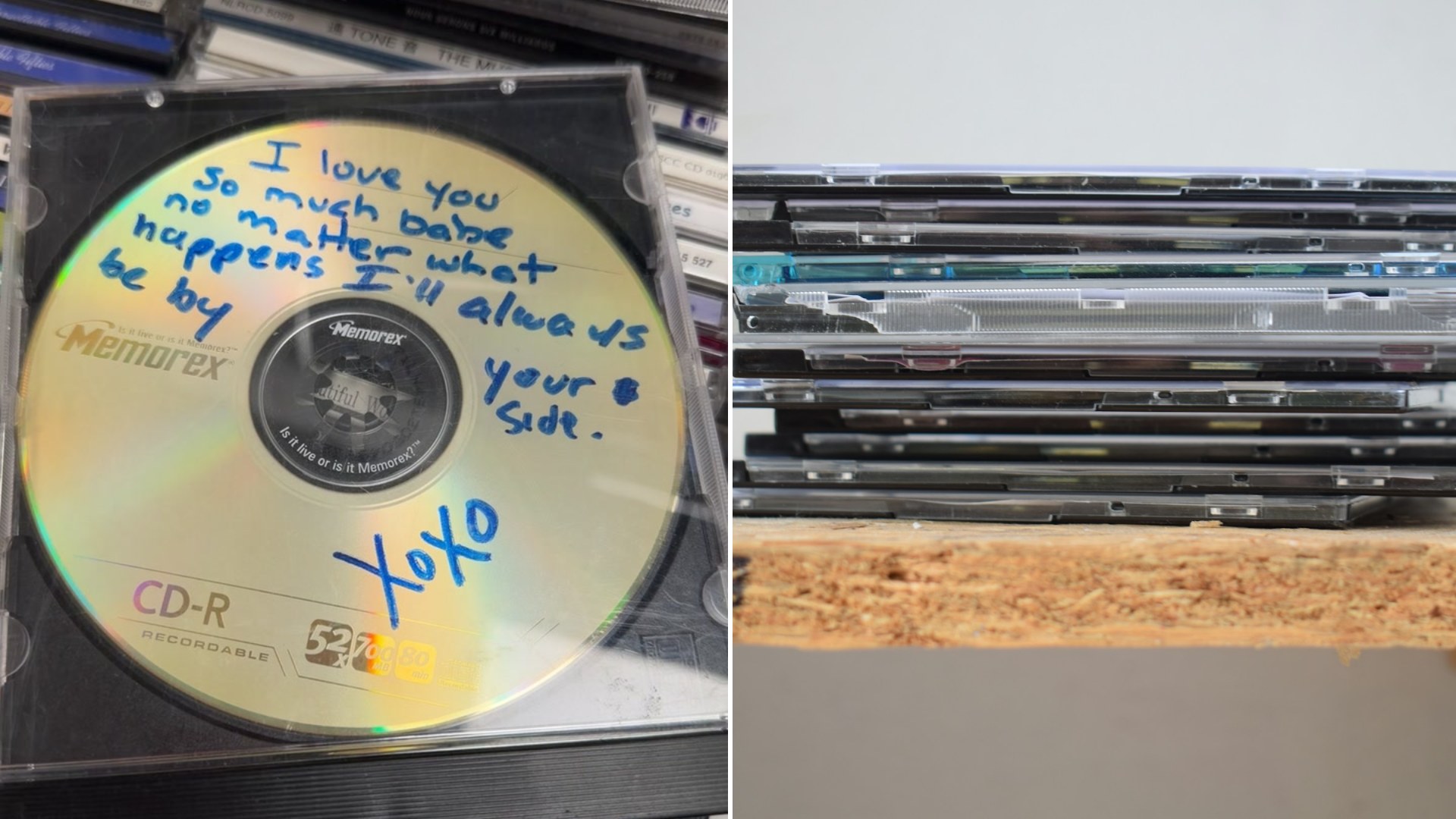
Thrift stores are full of small mysteries. Every shelf of chipped mugs and every bin of jewel cases holds objects that once belonged to somebody else’s life, and every so often, a shopper stumbles onto proof of that. A TikTok creator known as @thewestcoast had exactly that experience while flipping through a rack of secondhand CDs, when a routine browse turned into an unexpectedly emotional find.
According to the creator’s video, the discovery happened the way most great thrift finds do: without warning. Tucked inside one of the CD cases was something far more personal than a liner-note booklet or a scratched disc. It was a handwritten love note, the kind of intimate, ordinary artifact that was never meant to end up in a donation bin, let alone be found by a stranger years later. The creator’s own caption on the clip put it simply: “Nearly cried.”
There is something uniquely disarming about finding a note like that. A used CD is, on its surface, just a piece of plastic — a format so thoroughly overtaken by streaming that many younger shoppers only encounter one secondhand. But inside its case was a physical trace of a relationship: someone’s handwriting, someone’s sentiment, folded up and tucked away, then lost along with the rest of a collection when it eventually made its way to a donation shelf. The video does not reveal who wrote the note or who it was meant for, and the creator has not claimed to know either. What comes through instead is the raw, immediate reaction of finding it.
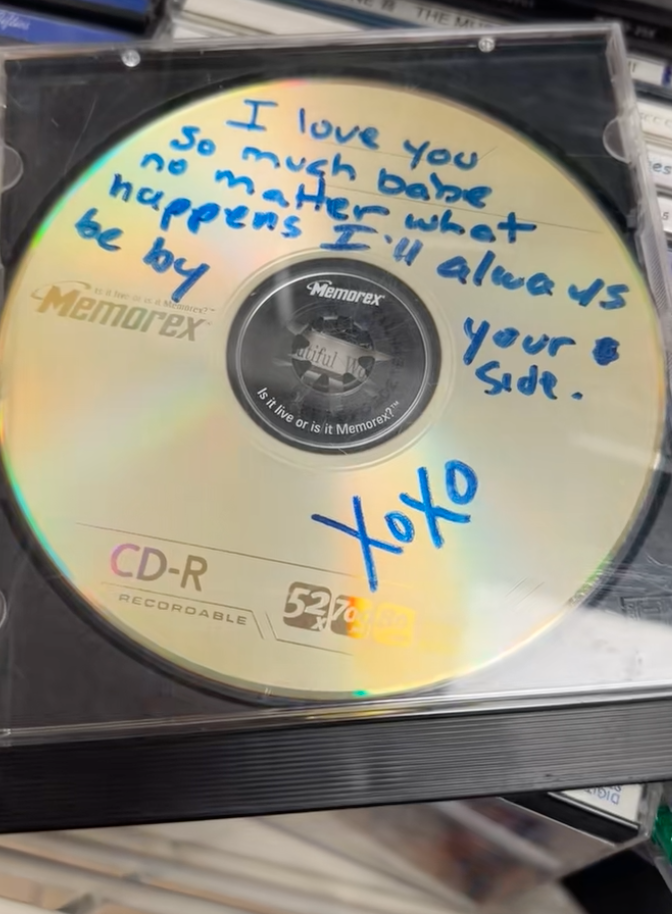
The clip’s hashtags — #liminalspaces and #backrooms — point to a broader online fascination with the eerie, in-between feeling of secondhand spaces: the fluorescent-lit aisles of thrift stores, the half-familiar objects that seem to exist outside of time. A handwritten love note fits neatly into that atmosphere. It is a piece of evidence that a real, specific moment happened between two real people, preserved by accident in a place designed for anonymous resale. The mundane setting of a thrift-store CD rack makes the discovery land harder, not softer.
Moments like this have become a recognizable genre on platforms like TikTok, where creators film themselves flipping through boxes of records, VHS tapes, and jewel cases in search of exactly this kind of surprise. Most trips end with nothing more than a good album at a good price. Every so often, though, a shopper opens a case and finds a photograph, a receipt, or — as in this case — a note written in someone else’s hand, and the video takes on a different weight entirely. Viewers who have had similar experiences, or who simply enjoy secondhand-shopping content, tend to respond strongly to these clips, in part because the emotion is so unscripted.
It’s worth being clear about what is and isn’t known here. The video shows the creator finding and reacting to the note; it does not establish who the original owners were, how long the CD had been circulating, or why the note ended up separated from whoever it belonged to. Those details remain private, likely permanently. What the clip captures instead is a single, genuine reaction — someone confronted, without warning, by a fragment of a stranger’s love story.
That tension — between the intimacy of the object and the anonymity of its origin — is a big part of why the clip resonated. It’s a reminder that secondhand shopping isn’t only about finding a bargain. It’s an encounter with the traces people leave behind, intentionally or not, every time they pass a possession along.
A Note on Thrifting and the Things People Leave Behind
Anyone who spends time in thrift stores, flea markets, or estate sales eventually learns that secondhand objects rarely arrive empty-handed — they carry receipts, photographs, ticket stubs, and, occasionally, notes never meant for a stranger’s eyes. When something like that turns up, it’s worth pausing before tossing it aside. A quick look through a book’s pages, a CD case, or a coat pocket costs nothing and sometimes turns up a small piece of someone’s story. If a note or photo seems clearly personal, treat it with a little care: set it aside rather than discard it, and if there’s any identifying detail, consider whether the item could plausibly be returned to a family member. Most of the time, though, there’s no way to trace it back, and that’s part of what makes these finds so poignant. They exist now as small, orphaned pieces of history, kept alive only because someone thought to look a little closer.

Leave a Reply