

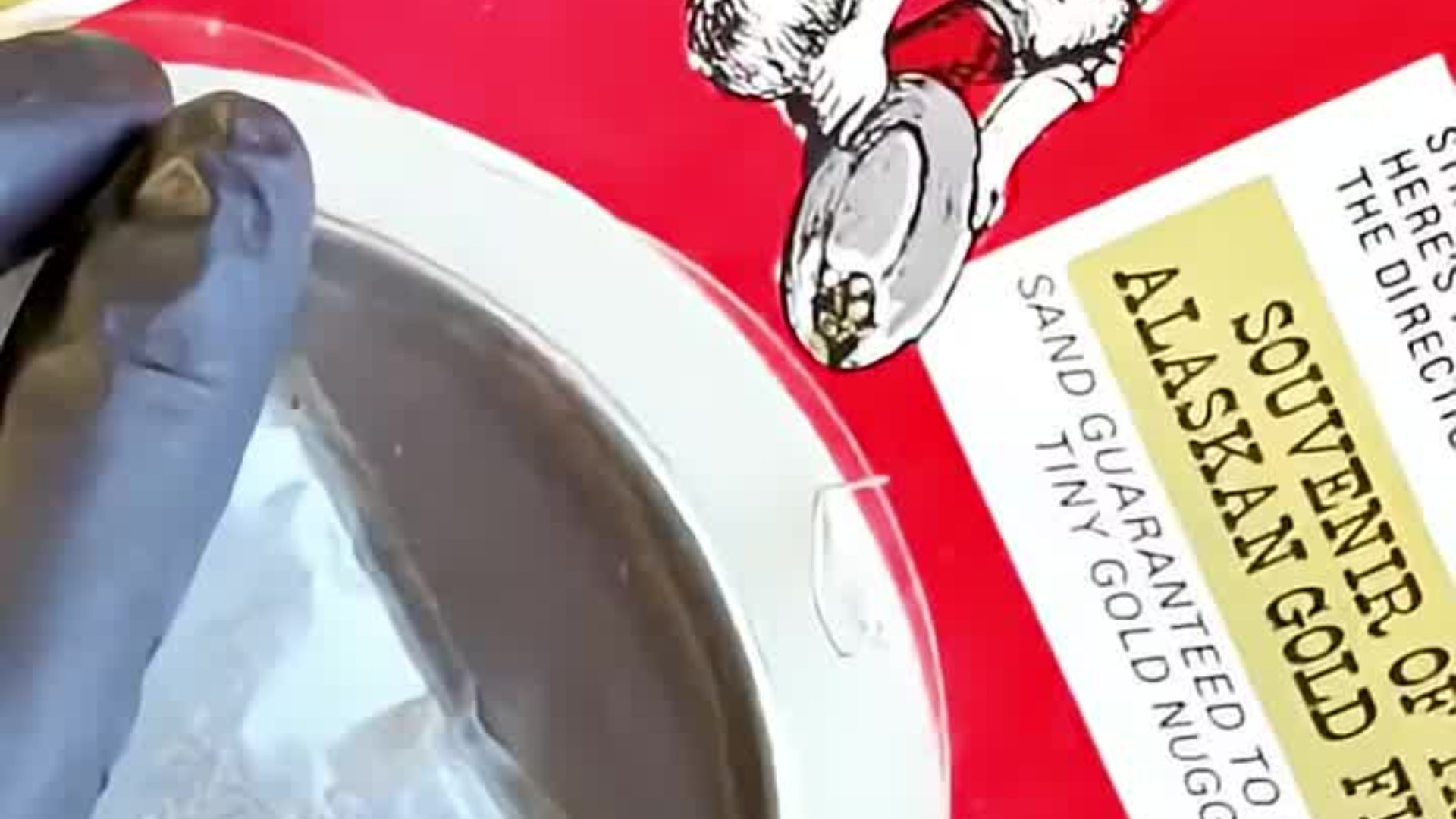
Fifty-four years is a long time for a sealed bag of dirt to sit untouched, and collector @kleshofficial finally opened one. His video shows gloved hands carefully breaking the seal on a vintage 1972 packet of gold prospecting paydirt, on-screen text confirming the date, before testing what remains inside for actual gold content. The clip is labeled “First Look Part 2,” suggesting there was more than one bag worth investigating, and viewers clearly wanted to know how it turned out. The video pulled in 715,000 views, nearly 300 times his account’s usual reach.
What paydirt actually is
Most people picture panning for gold as something that only happened in the 1800s. It never actually stopped, it just moved from creek beds into hobby kits.
For anyone who has never panned for gold, the term itself needs a little unpacking. Paydirt is simply dirt or sediment that contains traces of gold, sourced either straight from a gold-bearing region or specially prepared and sold to hobbyists who want the panning experience without traveling to a remote claim, according to Sluiceboy Prospecting. Panners run the material through water, swirling and shaking a pan to let the heavier gold particles settle at the bottom while lighter sediment washes away. That same source notes the phrase “pay dirt” itself dates back centuries, to the California Gold Rush, when prospectors used it to describe material actually worth working through, as opposed to the far more common dirt that contained nothing at all.
A bag from 1972 puts this particular packet squarely in the middle of a later, smaller gold-prospecting hobby boom, well past the original Gold Rush but decades before today’s packaged paydirt products became a common novelty item sold to weekend hobbyists and gift-shop browsers. Modern paydirt bags are typically processed to remove excess debris and sometimes have flakes or small nuggets added back in to guarantee results, which makes an unaltered vintage bag like this one a genuinely different product than what gets sold under the same name today.
Why a sealed decades-old bag matters
A brand-new bag of paydirt is a purchase. A sealed one from 1972 is closer to a bet placed by somebody else, decades ago, that a viewer now gets to settle.
Most paydirt gets opened and panned soon after purchase, which is the entire point of buying it. A bag that sat sealed for over five decades is a genuine anomaly, and that is what makes @kleshofficial’s video worth watching even before the results come in. Nobody quite knows what condition the material will be in, whether the seal actually held, or how much gold, if any, was ever mixed into that specific batch to begin with. It is essentially a time capsule with a built-in cliffhanger.
That uncertainty is baked right into the appeal. A fresh bag of paydirt promises a known, marketed amount of gold. A sealed relic from 1972 promises nothing except the chance to find out, and that unpredictability is exactly the kind of tension that keeps a “Part 2” video from feeling like a rerun. Viewers who caught the first installment already know something changed between then and now, which pulls them straight into this one looking for the payoff.
The pattern behind the pan
Every hobby leaves behind its own accidental time capsules. Gold prospecting just happens to bury a good number of them in a drawer instead of the ground.
Prospecting culture has always run on that same mix of patience and delayed gratification, whether the delay is a few minutes of panning or fifty-four years of sitting untouched in storage. A sealed bag simply stretches the wait to an almost absurd length, and turns a simple hobby demonstration into something closer to an archaeological dig with a payout at the end.
It also says something about how collectibles from ordinary hobby culture, not just rare toys or designer goods, can end up sitting untouched long enough to become artifacts in their own right. Somebody bought this bag in 1972 fully intending to pan it, then simply never got around to it, and that small, unremarkable act of procrastination is the entire reason there was anything left to open five decades later.

Leave a Reply