

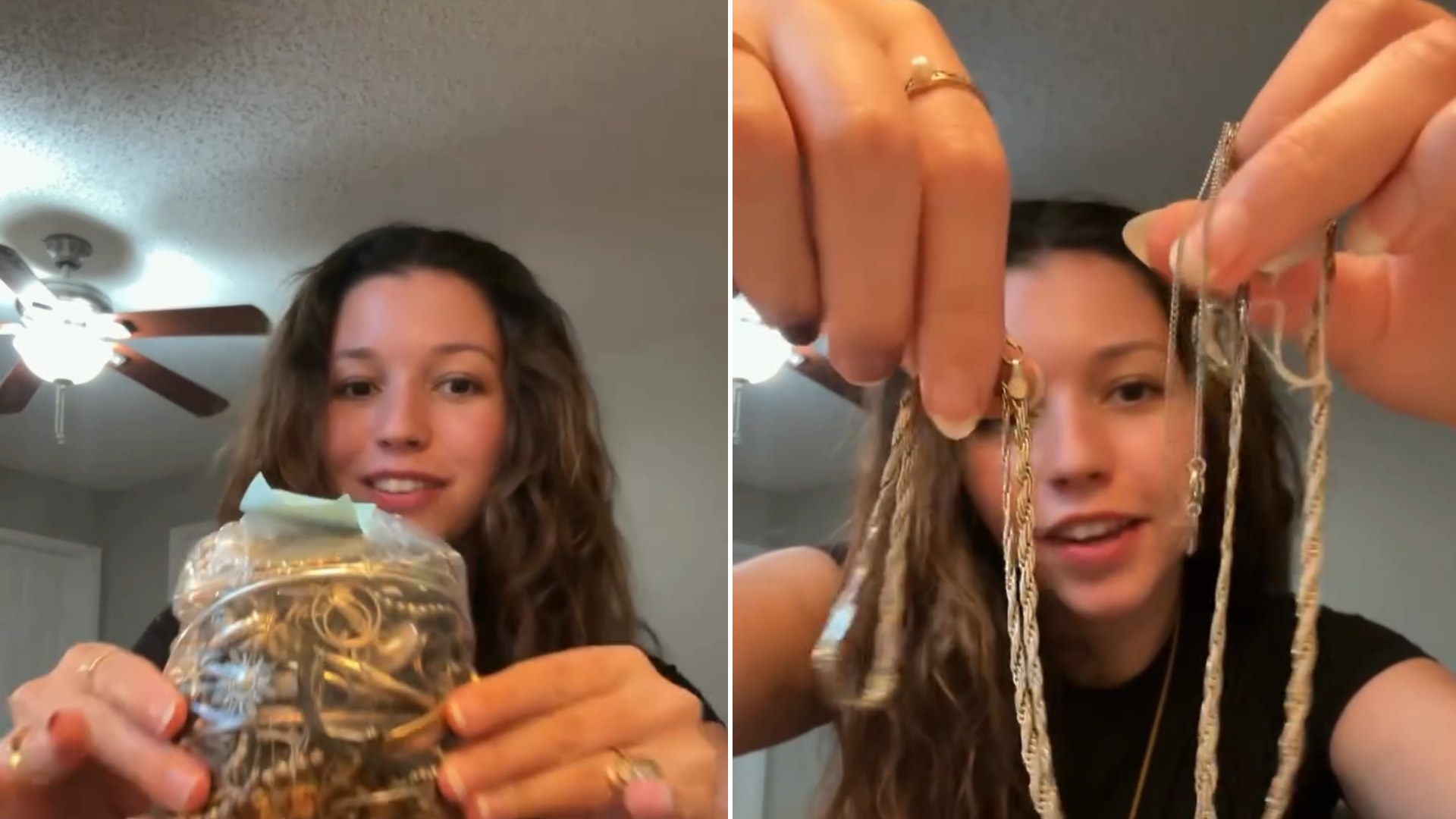
“I JUST PAID $70 FOR A MYSTERY BAG OF JEWELLERY FROM THE THRIFT STORE,” reseller @nannas.nuggets announces at the start of her video, and from there the entire clip is exactly what it promises: an unopened bag with an unknown number of pieces inside, pulled apart on camera one item at a time. The video has reached 70,700 views, more than 22 times her usual reach. Her caption sets it up as the first entry in a series, “Mystery jewelry bag haul pt. 1,” and notes that everything she pulls out is going up for sale afterward. No inventory list, no photos in advance, just a sealed bag and a price already paid before anyone, including her, knew what was inside.
Buying Blind Is the Entire Point
The mystery bag format has become a recognizable niche of its own inside the thrifting and reselling world, and it works precisely because the math is a gamble rather than a sure thing. A thrift store or estate liquidator bundles a pile of loose jewelry, some of it costume, some of it possibly real gold or silver, into a single bag or jar and sells it as one unsorted lot rather than pricing each piece individually. Buyers like @nannas.nuggets are betting that the total resale value of everything inside beats what they paid up front, without any way to verify that before handing over the money. It’s part treasure hunt and part straightforward math problem, solved live on camera in real time.
That structure is also what makes a haul video like this one so watchable. There’s genuine suspense built into a format where even the person filming doesn’t know what’s coming next. A tangled costume necklace might surface right next to a ring worth checking for a hallmark, and neither the creator nor the audience gets a preview before it happens.

Sorting the Pile Into Keep, Wear and Sell
Once the bag is open, the real work is sorting, deciding piece by piece what’s worth keeping for herself, what’s wearable and worth listing as-is, and what needs cleaning, repair or a closer look under better light before it can go up for sale at all. Costume jewelry from past decades often carries maker’s marks on the clasp or the back of a brooch that can tell a sorter a lot in seconds, once they know where to look. A piece stamped with a recognizable vintage costume jewelry brand can be worth considerably more than an unmarked lookalike sitting right next to it in the same tangle, which is exactly the kind of detail worth pausing the video to zoom in on.
Not every piece survives the sorting process intact, either. Tarnished metal, missing clasps and cracked stones are part of the deal with any unsorted lot, and a chunk of what comes out of a bag like this ends up set aside for repair or simply discarded rather than resold. That’s part of why the reveal carries real tension even for viewers who’ve watched dozens of similar videos before. The bag doesn’t owe anyone a jackpot, and @nannas.nuggets has to work through the disappointing pieces along with the good ones, on camera, in the same unedited order they came out.
Why Paying Before Looking Still Makes Sense
There’s a practical reason sellers can get away with pricing a bag like this without disclosing contents. Sorting, cleaning, researching and individually pricing dozens of small jewelry pieces takes real time that a thrift store or liquidator often doesn’t have the staff to spend. Bundling it all into one unsorted lot and letting a buyer like @nannas.nuggets do that sorting work herself, on her own time, shifts the labor downstream in exchange for a flat price that’s usually lower than the pieces would fetch individually once sorted and cleaned. For a $70 bet, that’s a trade plenty of resellers are clearly happy to keep making, one sealed bag at a time. Whether her audience follows her into part two for the possibility of a hidden gem or just for the simple pleasure of watching someone else’s gamble play out, the format itself seems to be working. Betting seventy dollars on a bag nobody has opened yet is a small enough risk to feel low stakes, and a large enough one to make every single piece she pulls out genuinely worth watching for.

Leave a Reply