

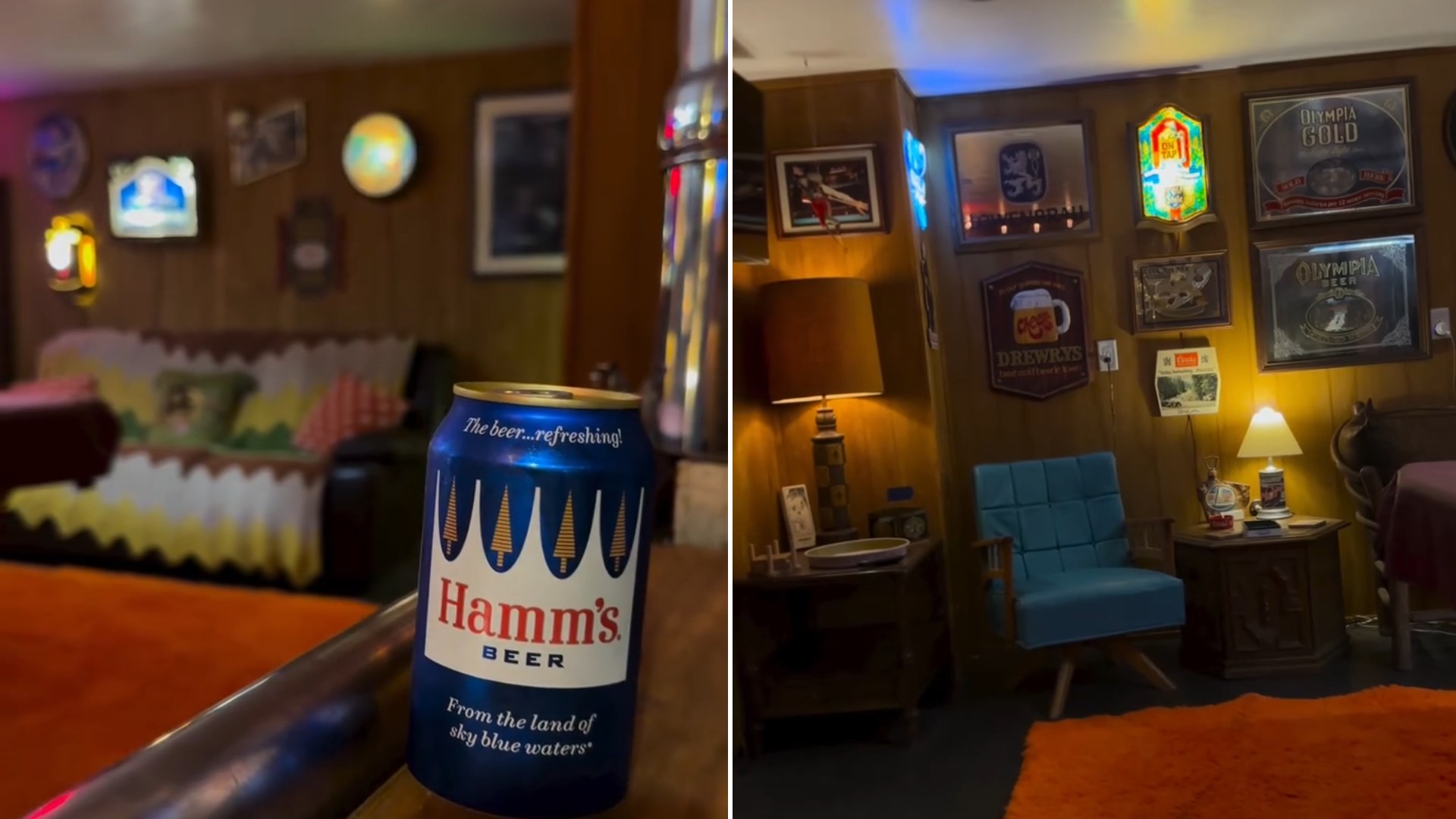
The camera opens on a can of Hamm’s beer sitting on a bar top, then slowly pans across neon signage, dark wood paneling, and an orange shag rug that hasn’t been replaced in what looks like fifty years. No narration and no reveal, just a cinematic walkthrough of a basement bar that time apparently forgot to update, and it’s racked up nearly 330,000 views, over 33 times the account’s typical reach, mostly from viewers convinced this room is more tastefully decorated than anything currently for sale at a modern furniture store.
Wood Paneling Had a Real Reason to Be Everywhere
The paneling covering nearly every wall in that video wasn’t a decorating fluke. Synthetic wood paneling became a fixture of American homes in the postwar building years because it was cheap and fast to install, letting builders finish a room in a fraction of the time plaster walls used to take, and by the 1970s it had become the default look for basements and rec rooms nationwide, according to Yahoo Lifestyle. It also fit the decade’s broader design mood, an appetite for warm, earthy, back-to-nature materials that showed up everywhere from clothing to furniture. That’s exactly why it ended up wrapped around so many basement bars instead of staying confined to living rooms and dens upstairs.
The Basement Bar as a Family’s Second Living Room
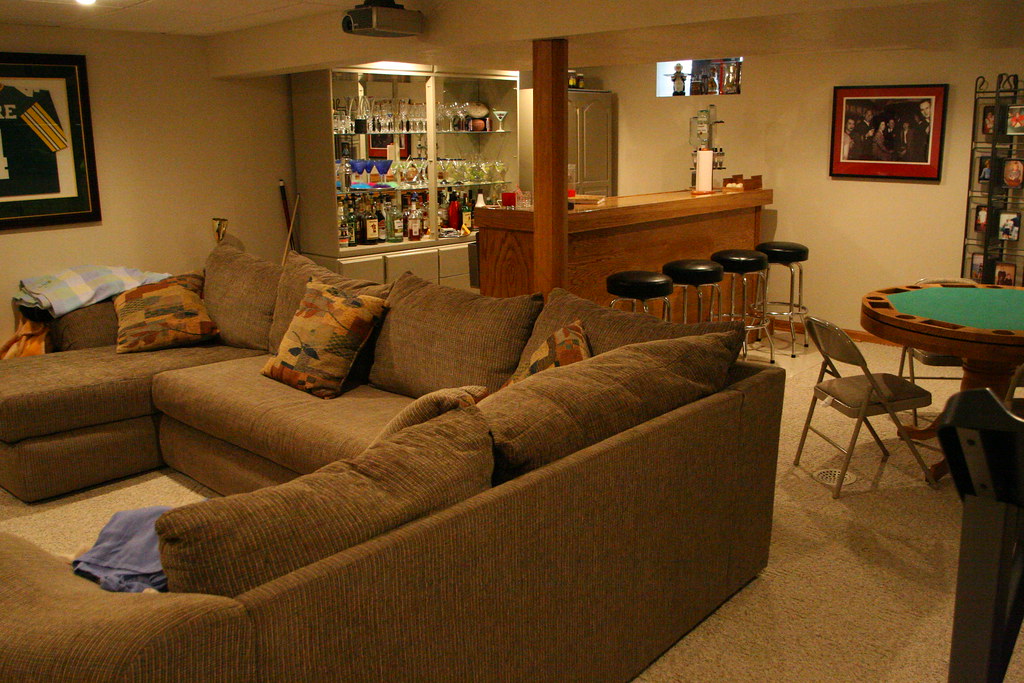
Basements finished this way weren’t just storage with a couch shoved in the corner. They were built out as genuine second living rooms, informal enough for casual entertaining but distinct from whatever more formal space existed upstairs for company that needed impressing. A home bar, neon sign included, was the centerpiece of that identity, less about serious drinking and more about signaling that this particular room existed for hosting friends, watching a game, or just getting away from the rest of the house for an evening. Decades later, you can still read the whole design statement in one slow camera pan, no explanation required and none really offered.
A Look That Design Trends Keep Circling Back To
Retro home bars have had a noticeable resurgence in recent renovation and design content, with plenty of homeowners now intentionally building new basements to look like this one rather than tearing an original room like it out. That reversal says something about how design taste tends to move in loops rather than straight lines, discarding a look for a generation or two before deciding it was actually good all along. A basement bar that survived purely by neglect, rather than by anyone’s deliberate preservation effort, now finds itself accidentally ahead of a trend it never had to chase. Homeowners paying contractors real money to replicate this exact look in new construction are effectively racing to recreate something one lucky house never lost. That gap between what people are now paying for and what this house got to keep for free is most of the reason a slow, quiet camera pan managed to outperform 33 times the account’s usual audience. It also explains why the comment section skewed less toward jokes about outdated decor and more toward genuine envy, plenty of viewers openly wishing their own childhood basement had survived a few renovations instead of getting stripped down to beige and forgotten somewhere along the way. A shag rug and a beer sign shouldn’t carry this much emotional weight on paper, and yet here they are, doing exactly that for an audience that grew up watching rooms just like this one get quietly erased.
Why Nobody Wanted to Touch This One
Most homes like this eventually get gutted, with the paneling ripped out and the shag replaced by something more neutral and easier to sell to the next owner. This one apparently never got the memo, and the internet seems grateful for it, judging by a comment section more interested in the decor than the real estate value underneath it. That slow, reverent pan across a Hamm’s can and a wall of neon plays less like a real estate tour and more like a tribute, proof that a basement built with total 1970s confidence doesn’t need modernizing to still do exactly what it was built for, decades after the trend it came from went out of style everywhere else.

Leave a Reply