

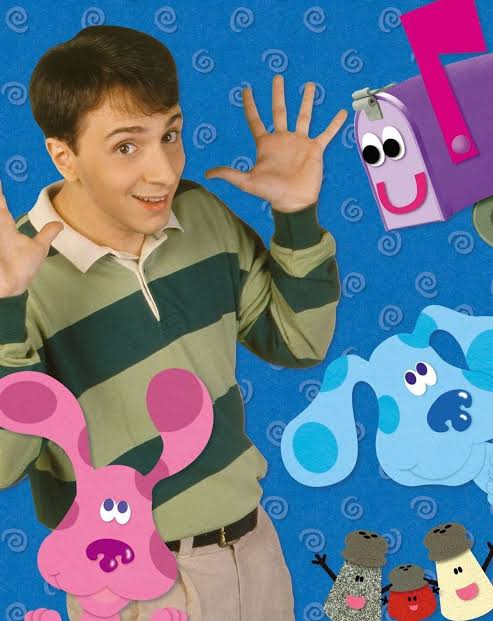
Blue’s Clues turns 30 this month, and the pacing that made a generation of parents reach for the remote was never an accident. The show premiered on Nickelodeon’s Nick Jr. block on Sept. 8, 1996, built around a single continuous puzzle instead of the quick-cutting, magazine-style segments that dominated kids’ television at the time. A host and an animated puppy collected three clues across each episode and solved them together in a spot called the thinking chair, pausing constantly so young viewers could shout out answers. Parents mocked the slow rhythm for years, but child-development researchers had designed it that way on purpose.
Three Creators, One Very Different Idea
The show came out of a specific creative team: Traci Paige Johnson, Todd Kessler, and Angela C. Santomero, according to Cord Cutters News. Most preschool programming before Blue’s Clues followed a magazine format, stringing together short, unrelated segments the way Sesame Street had for decades. Blue’s Clues broke from that, structuring each full episode as one continuous mystery with a beginning, middle, and end, an approach the creators built specifically around how young children actually process a story.
The Slowness Was the Point
Every pause, every repeated line, and every held silence after a question was written into the show deliberately, giving preschool viewers enough time to actually answer before the episode moved on, rather than racing past them the way faster-paced programming did. The show also incorporated American Sign Language into its segments, making it one of the first widely seen preschool programs to do so, per Cord Cutters News. That structure treated the audience as active participants instead of passive watchers, a distinction that sounds obvious now and was genuinely unusual for children’s television at the time. Visually, the show doubled down on that same unhurried philosophy. Host Steve Burns worked inside a bright, textured world built to look handmade, closer to construction paper and crayon than the cleaner, more polished animation airing on competing networks at the time, which gave the whole show a slightly homemade, scrapbook feel even at its most produced.
The Industry Noticed, Even If Parents Groaned
The show became the highest-rated preschool series on commercial television during its run and won a Peabody Award, which specifically credited it for “pioneering and consistent efforts in children’s programming that always respects its very special audience,” according to the Peabody Awards. The citation also praised its “play-along, think-along” structure for building real problem-solving skills rather than just holding a child’s attention for 22 minutes. Original host Steve Burns anchored six seasons and more than 140 episodes before handing the show off to Donovan Patton, and the format went on to air in more than 100 countries.
The Thinking Chair Never Really Left
The franchise didn’t wait until 2019 to try reinvention. A puppet-based spinoff, Blue’s Room, launched on Nickelodeon in 2004, expanding the world well before any full reboot was on the table. Nickelodeon revived the format more fully in 2019 as Blue’s Clues & You!, with new host Josh Dela Cruz stepping into a version of the same thinking-chair structure, and both Burns and Patton appeared in the premiere episode to hand off the job on screen, per Cord Cutters News. The choice to bring the original hosts back for that moment suggests the network understood exactly what it was reviving, not just a mascot, but a specific, deliberately unhurried way of talking to small children.
Three decades on, the format has become so standard in children’s programming that it barely registers as a choice anymore. Blue’s Clues won that argument by trusting a four-year-old to use an actual pause when given one, and it never needed to get louder or faster than anything else on the dial to prove the point. Every reboot since has kept the thinking chair in some form, which is about as close to a permanent endorsement as children’s television gives out. Competing shows chased faster edits and louder soundtracks for years afterward, and plenty of them found their own audiences, but none managed to unseat the format Blue’s Clues built around a single, patient question: what do you think happens next? That question turned out to have staying power well beyond one Nickelodeon block, one host, or even one generation of preschoolers.

Leave a Reply