

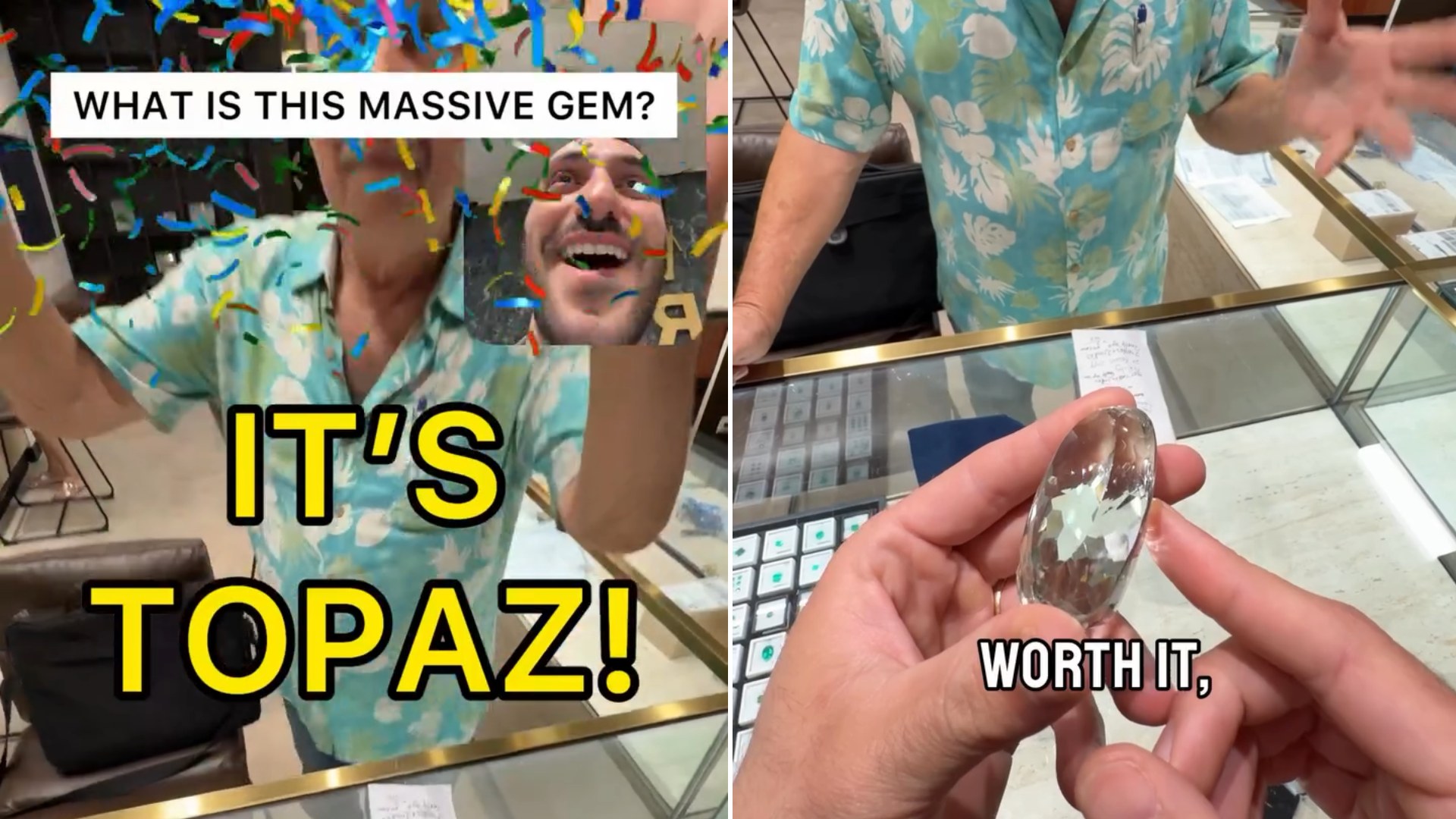
A gemologist who posts as @avithegemguy tested a massive, unidentified stone live on camera for a buyer who fully expected it to be worthless, and the real-time verdict has already pulled in 1.5 million views.
The video opens with the setup laid out plainly in the caption: “He bought this massive mystery stone expecting it to be basically worthless. Then we tested it…” From there, @avithegemguy and a fellow jeweler walk through the identification together over a video call, checking it the way working gemologists actually do, by weight, by how light moves through it, and by the tiny imperfections that give a stone’s origin away long before any lab report could. Neither one rushes the process. They talk through each observation out loud, correcting each other and revising guesses, building toward a conclusion the way an actual appraisal works rather than the way TV drama usually stages one.

Key Points:
- The account, run by a working gemologist with 308,000 followers, posted the identification video to Instagram.
- The clip has reached 1.5 million views, roughly 32 times the account’s typical median performance.
- Two gemologists examine the stone together over a video call, narrating each clue as they find it instead of announcing a result up front.
- The buyer had purchased the stone with no real expectation it would turn out to be valuable, which is what makes the reveal land.
- The video’s appeal leans heavily on process over payoff; viewers stick around to watch two experts think out loud rather than skip straight to a verdict.
Mystery-stone content has quietly become its own genre online, mostly because it rewards patience the same way an old auction house appraisal does. Nobody gets the answer in the first five seconds. You watch two people who actually know what they’re looking at argue, second-guess, and finally agree, and that back-and-forth carries more weight than any single expert simply stating a number. It also demystifies a process most buyers never get to see up close, since a formal lab certification usually happens behind closed doors, away from the customer entirely.
There’s an old thrift-and-flea-market fantasy underneath all of it, too: that something dismissed as junk, sitting in a box or a drawer for years, might have been worth paying attention to the entire time. Every generation seems to produce a fresh batch of these stories, and social video has simply given them a stage that a dusty appraisal counter never could.

Leave a Reply