

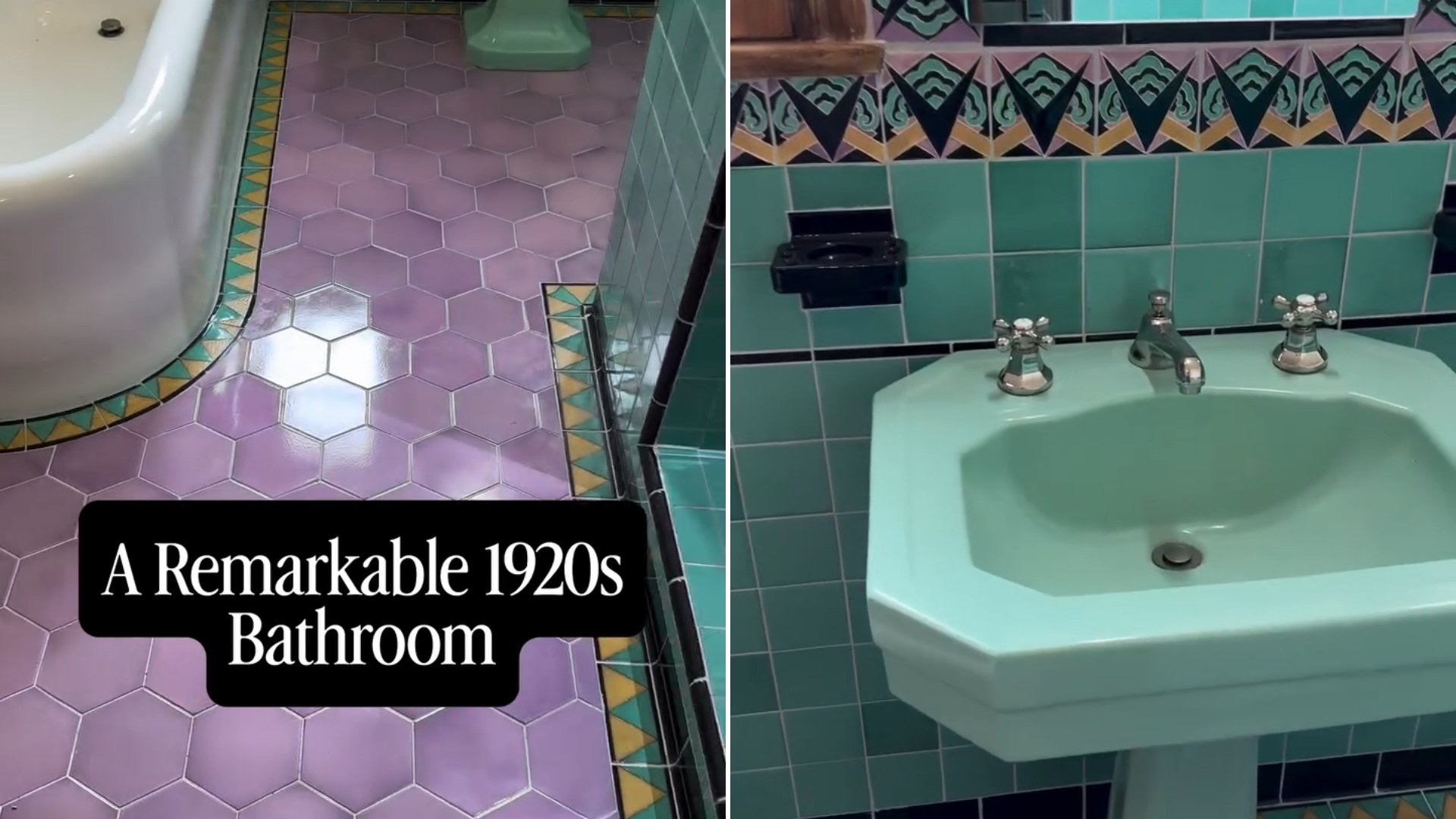
Most renovation content online is still chasing the same all-white, all-neutral look, which makes a slow, loving walkthrough of a preserved 1920s bathroom feel almost rebellious by comparison. This one leans hard into color instead of stripping it out, and 2.3 million viewers apparently agree it was the right call.
A Remarkable 1920s Bathroom
The on-screen text in @characterhomesla’s own Instagram Reel keeps the pitch simple: “A Remarkable 1920s Bathroom.” The caption goes further, with the account writing, “I am a sucker for a 1920s bathroom, and this one might be one of my favorites. Lavender hex tile…” before the slow, sweeping camera work does the rest of the talking. The reel pulled in 2.3 million views, nearly 20 times the account’s typical performance for its 105,000 followers, a jump that suggests this particular bathroom struck a nerve well beyond @characterhomesla’s regular audience of period-home enthusiasts.
Lavender and Green, Original and Intact
What sets this bathroom apart from a typical vintage-home feature is that the original lavender and green hex tile stayed exactly where it was rather than getting demoed for something safer and more neutral. Hex tile in unusual pastel colorways was a genuine hallmark of 1920s American bathroom design, and it is exactly the kind of detail that tends not to survive a modern renovation, since it is far easier and cheaper to rip out old tile than to work around it. Keeping the period fixtures alongside the original tile makes the room read as a preserved artifact rather than a reproduction, and that distinction is a big part of why slow walkthrough footage like this performs so well with viewers who follow historic-home accounts specifically for the details a full gut renovation would erase.
Why Color Is Having a Moment Again
For the better part of the last decade, “renovated” has largely meant “neutral,” with bold original tile work treated as something to be modernized away rather than celebrated. Reels like this one are part of a visible shift back toward original color palettes being treated as a selling point rather than a flaw to correct. A slow, patient camera pass rather than a quick cut-heavy edit fits that mood too, giving viewers time to actually take in details like grout lines, fixture hardware, and tile patterning instead of rushing toward a big reveal moment.
The Case for Leaving Well Enough Alone
Preservation-minded renovation content keeps finding bigger audiences precisely because it runs counter to the demolish-and-rebuild instinct that dominates so much of the genre. A 1920s bathroom that kept its original lavender and green tile intact, rather than swapping it for a modern subway-tile default, is a quiet argument for restraint, and 2.3 million views suggests plenty of people are ready to hear it.

Leave a Reply