

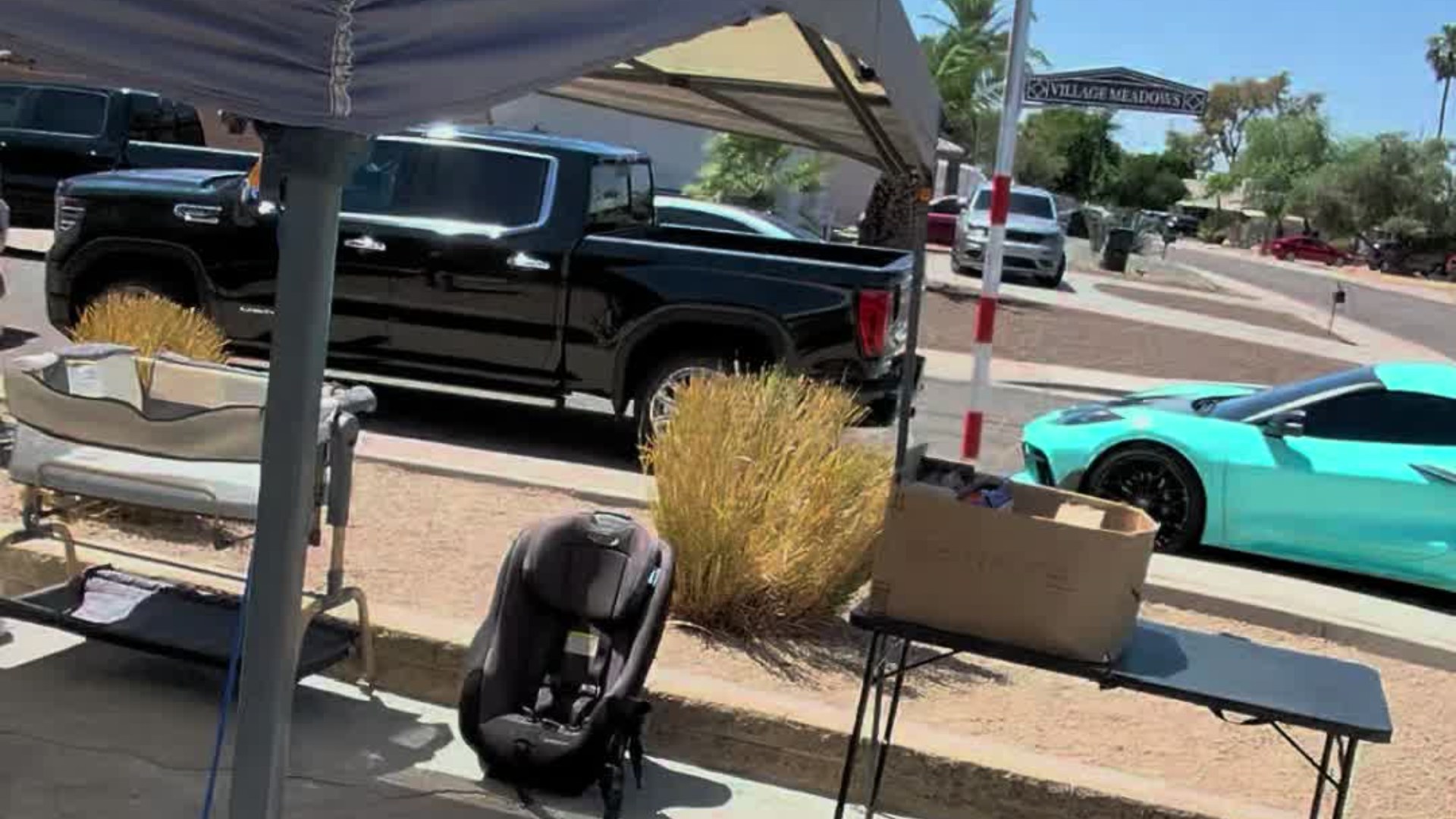
A yard sale haggle usually goes one direction: the buyer wants a lower number and the seller wants a higher one. One recent driveway sale flipped that entirely, and the moment it happened on camera is why the clip has racked up more than three quarters of a million views.
A Poster the Buyer Couldn’t Pay For
In the video, posted by @yardsalehippie2’s own TikTok, the creator picks out a rare framed poster at a stranger’s yard sale and tries to hand over cash for it. The seller won’t take it. On-screen text sums up the moment plainly: “THIS YARD SALE LEFT ME SPEACHLESS.” No haggling, no negotiating a lower price, just a flat refusal to accept any payment at all for a piece the buyer clearly wanted.
The clip has pulled in 751,100 views on an account with 10,600 followers, a jump of roughly 80 times what the creator’s videos typically bring in. It’s tagged with #yardsale, #garagesale, and #estatesale, the exact community of pickers and secondhand hunters who understand instantly why a moment like this stops the scroll. For anyone who has spent a Saturday morning digging through card tables and folding chairs, a free rare find from a generous stranger is close to the platonic ideal of the hobby.

Why a Seller Says No to Money
Turning down cash for something with clear resale value isn’t the norm at a yard sale, which is exactly why it stands out. Most people setting up tables in their driveway are doing it to clear space and make a little money in the process, not to give things away. But posters, prints, and framed pieces occupy a strange middle category in secondhand culture. They carry sentimental weight that a used blender or a stack of paperbacks usually doesn’t, and sellers who’ve held onto something for years sometimes care more about where it ends up than what it’s worth.
That instinct shows up across yard sale culture more than people expect. A seller downsizing a home, clearing out a relative’s belongings, or just tired of storing something they no longer display will often hand it off the moment they sense real enthusiasm from a buyer. Watching a stranger’s face light up over a piece can matter more in that instant than a five or ten dollar bill changing hands. It’s less a transaction and more a small act of matchmaking between an object and the person who’ll actually appreciate it.
The Appeal for Everyone Watching
Part of what makes this kind of clip travel is how rarely it happens on camera. Viewers see plenty of thrift store hauls and flea market bargains, but a seller actively refusing payment is a different flavor of content entirely. It taps into something people who don’t even shop secondhand still respond to: a small, unscripted moment of generosity between two strangers, caught in real time with no setup and no script.
For the regulars who live for #yardsale content, though, it’s also a reminder of why the hobby keeps pulling people back out to driveways and church parking lots every weekend. The bargains are one draw. The stories, like a total stranger just deciding to make someone’s day for free, are the other. A find like that doesn’t happen at a big-box store, and it rarely happens twice. It happens because someone behind a folding table decided a poster meant more sitting in the right living room than it did earning them a few extra dollars, and a camera happened to be rolling when they said so.
Whether the seller ever finds out how many people watched that exchange play out is beside the point. The moment already did its job: it gave a scroll full of strangers a reason to believe that kind of generosity still shows up in ordinary places, no script required.
What It Means for Weekend Pickers
For anyone who treats yard sale season as a genuine sport, moments like this one shift the mental math a little. Most pickers walk up to a table expecting to negotiate, budgeting a few dollars for anything that catches their eye and mentally preparing to counter a price that feels too high. What the video captures instead is the opposite risk: showing up ready to pay and getting turned down entirely. It’s a small reminder that the person on the other side of the table isn’t running a store. There’s no price tag algorithm, no manager approving discounts, just one homeowner deciding in the moment what an item is worth to them and who deserves to walk away with it.
That unpredictability is arguably the whole draw of buying secondhand from an actual person instead of a curated shop. A framed poster at an antique mall comes with a fixed price and a barcode. The same poster at a yard sale comes with a story and, sometimes, a flat refusal to take a dollar for it. Comment sections on clips like this tend to fill fast with people sharing their own version of a stranger’s kindness at a sale table, which says something about how often this happens even when nobody’s filming.
None of that guarantees the next stranger’s yard sale table will produce the same outcome. But it does explain why so many people keep circling back to driveways and church parking lots on weekend mornings, scanning folding tables for the next thing worth stopping for. Sometimes it’s a bargain. Once in a while, it’s free.

Leave a Reply