

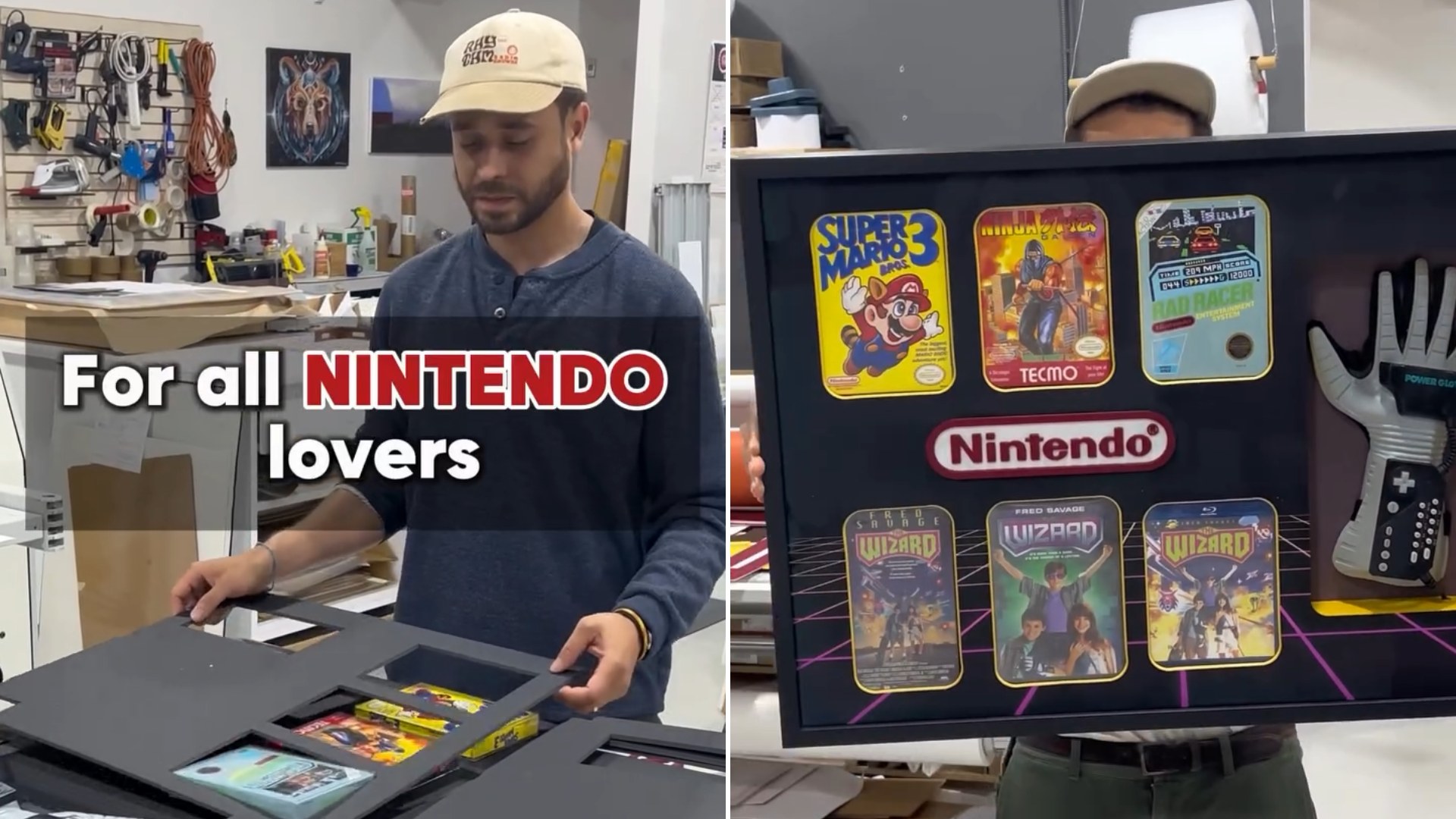
A pile of loose Nintendo game boxes does not look like much sitting on a shelf. Arranged inside a custom shadowbox, mounted, matted, and framed like a piece of art, that same pile suddenly reads like a museum exhibit. That transformation, filmed step by step, is exactly what turned one framing shop’s Instagram Reel into a magnet for retro gaming fans.
Turning Loose Cartridges Into a Wall Piece
According to @frameworkscanada’s own Instagram Reel, the video walks through the assembly of a custom, high-quality framed shadowbox display case built specifically to house vintage Nintendo game boxes and memorabilia. The on-screen text keeps the audience narrow and obvious on purpose: “For all NINTENDO lovers.” This is not a generic framing tutorial dressed up with a trendy subject. It is a piece of content built entirely around one very specific fandom.
Shadowbox framing, the kind of display case with enough depth to hold three-dimensional objects rather than a flat print, has been used for decades to preserve sentimental items like medals, jerseys, and family keepsakes. Applying that same museum-style treatment to something as ordinary as a stack of secondhand game boxes is what gives the video its punch. It reframes, literally, objects that most people think of as clutter into objects worth displaying on a living room wall.
Why Retro Gamers Respond So Strongly
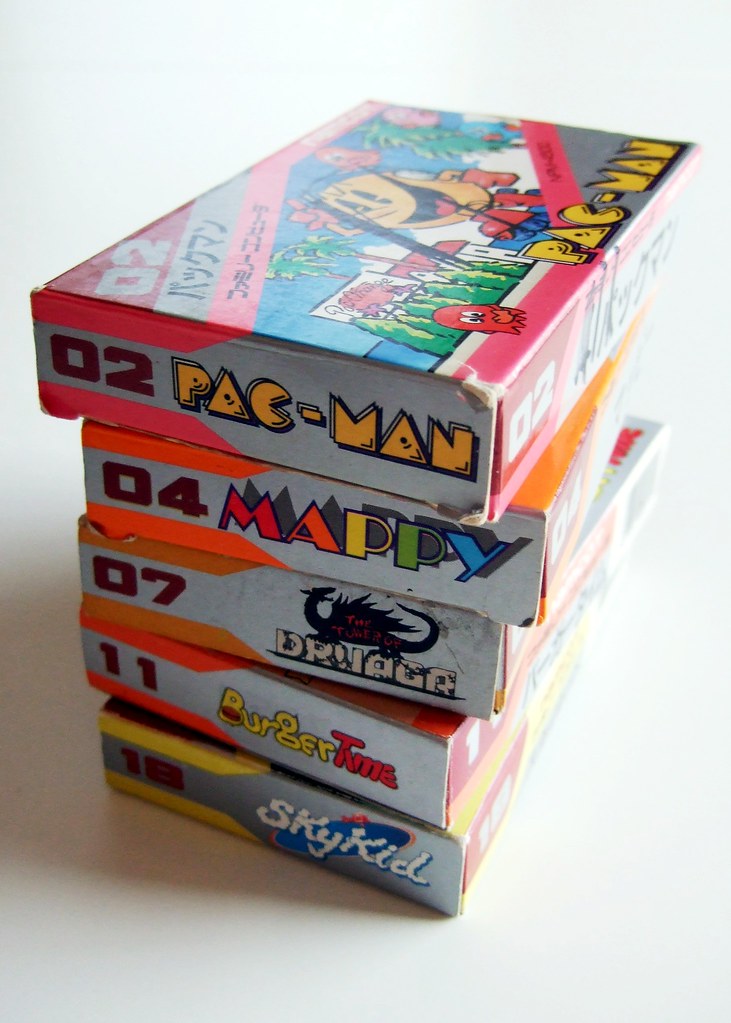
Vintage Nintendo game boxes carry a specific kind of nostalgic weight for anyone who grew up buying and playing those exact titles. The box art, the cartridge label design, and even the wear on the corners all function as a kind of personal timestamp. Most of those boxes end up stored in a closet or a bin, protected from damage but never actually seen. A shadowbox flips that arrangement entirely, keeping the items just as protected while finally putting them somewhere they can be looked at every day.
That is likely why the video’s own prompt, asking viewers their favorite Nintendo game, worked as well as it did. Retro gaming fans do not need much encouragement to talk about the specific titles that defined their childhood, and seeing a wall of real game boxes treated with this level of care is exactly the kind of visual that invites people to name their own favorite in the comments rather than just double-tapping and moving on.
A Craft Reel That Doubles as an Ad
The hashtags attached to the video, including #shadowbox, #customframing, #nintendo, #retrogaming, and #kingstonontario, make clear this was built as much to showcase a local framing business’s craft as it was to appeal to nostalgic gamers. That dual purpose is part of what makes the format so effective. A straightforward advertisement for custom framing services would not travel nearly as far as a video that happens to feature genuinely appealing nostalgic subject matter doing the selling on its own.
The numbers reflect that crossover appeal. The reel pulled in 85,100 views, 42.6 times the creator’s usual median of around 2,000 views, on an account with 3,600 followers. A multiplier that large on a relatively small account suggests the video reached well beyond the shop’s normal local audience, likely shared widely by retro gaming fans who had never heard of the business before but recognized exactly what was being framed.
A Growing Market for Display-Ready Nostalgia
Custom framing built around collectibles rather than photographs or artwork has grown into its own small niche over the past several years, as more collectors look for ways to actually display items they would otherwise keep boxed away in storage. Trading cards, jerseys, and vinyl records have all found their way into shadowbox-style framing before, so applying the same treatment to vintage game boxes is less a novel idea than a natural extension of a trend that has been building for a while. What makes the Nintendo-specific version land so well is how immediately recognizable the subject matter is; almost anyone who grew up gaming in that era can identify at least one box in the display without needing any context at all.
The Question Everyone Keeps Asking
What the comments apparently keep circling back to is not whether the display looks good. It is how to get one made. A custom shadowbox built around a specific, personal game collection scratches an itch that mass-produced retro gaming decor cannot: it turns a person’s own actual childhood collection into the centerpiece, rather than selling them a generic version of someone else’s nostalgia.

Leave a Reply