

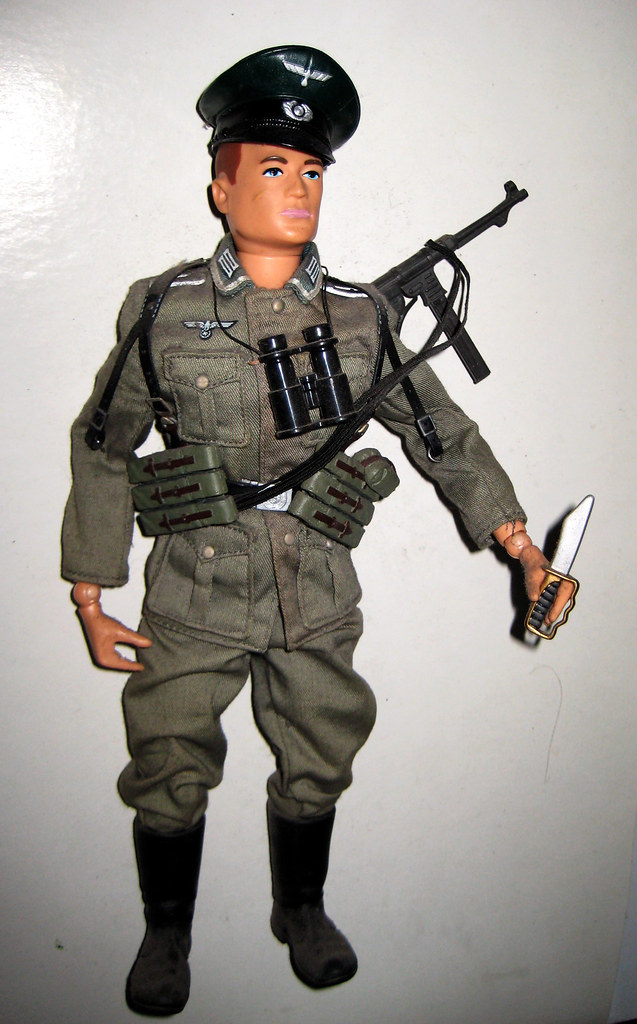
Toy industry logic in the early 1960s held that boys simply would not play with anything resembling a doll, full stop. Barbie had already proven wildly successful for girls since her 1959 debut, and plenty of executives assumed the concept could never cross over to boys. Hasbro bet against that assumption in 1964 with an eleven and a half inch soldier named G.I. Joe, and the company protected itself from its own industry’s skepticism with one clever bit of language: it never called the thing a doll at all.
Inventing a New Word to Sell an Old Idea
Toy licensing agent Stanley Weston is widely credited with first pitching the idea of an articulated military figure sized for a boy’s imagination, and he brought the concept to Hasbro, where Don Levine, the company’s director of research and development, championed it internally against real resistance. According to Guinness World Records, Hasbro needed a way to market a poseable figure to boys without triggering the doll stigma, so the company invented a new category and called it an “action figure,” a term that stuck so completely it eventually became the generic word for the entire toy segment, used today for everything from superheroes to wrestlers.
Hasbro’s own leadership treated the branding as a serious matter, not a throwaway marketing line. Company president Merrill Hassenfeld reportedly told his sales force in no uncertain terms, “Don’t you dare call G.I. Joe a doll,” a directive reported by Smithsonian Magazine. The distinction mattered enormously to how retailers displayed the toy and how fathers felt about buying it for their sons, at a moment when gender expectations around toys were rigid enough that a single word could sink a product line before it started.
Nineteen Joints and a Battle Scar
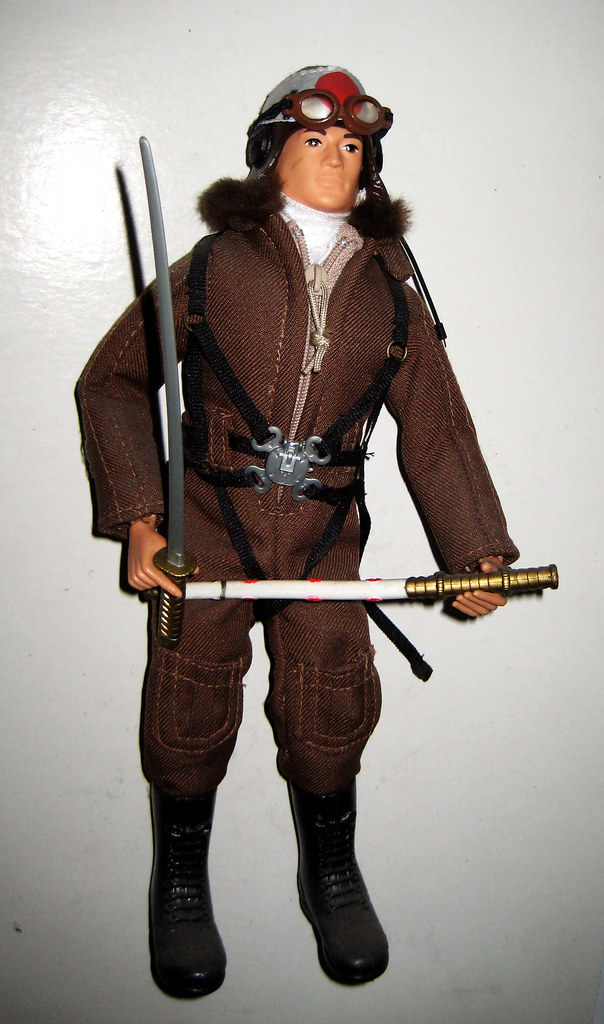
The original 1964 figure stood eleven and a half inches tall and featured nineteen points of articulation, an unusual amount of poseability for a toy aimed at boys who wanted to stage battle scenes rather than simply display a static figure on a shelf. Design details reinforced the military fantasy: a small scar was molded into the figure’s right cheek, and a metal dog tag hung from its neck, both details noted in Smithsonian Magazine’s retrospective on the toy’s design. Hasbro launched the line across four service branches at once, giving kids a soldier, a sailor, a marine, and a pilot to choose from, which let the toy tap into family connections to World War II and the Korean War that were still fresh for many of the parents buying it.
From Skeptical Buyers to a Licensing Empire
Retailers were cautious about stocking a jointed figure marketed to boys, and some buyers reportedly balked at the concept when Hasbro first showed it off. Once G.I. Joe hit shelves, though, boys bought in fast enough that sales reportedly reached $36.5 million by 1965, just a year after launch, an enormous number for a single toy line in that era. Hasbro licensed the concept to the British toy company Palitoy in 1966, which rebranded the figure as Action Man for the UK market, spreading the format internationally within just a couple of years of its American debut.
The success reshaped how the entire toy industry thought about boys as customers. Within a decade, jointed figures aimed at young men were a standard category rather than a gamble, eventually giving rise to lines built around Star Wars, superheroes, and professional wrestling that all borrowed G.I. Joe’s basic format and its careful branding. None of those later lines needed to invent a workaround word, because Hasbro had already done that work back in 1964, proving an entire industry’s conventional wisdom wrong with a soldier, a scar, and a dog tag.
Trading Combat Boots for Adventure Gear
G.I. Joe’s military framing did not survive the decade unchanged. As American attitudes toward the Vietnam War soured in the early 1970s, parents grew less comfortable buying their sons a toy built explicitly around combat, and Hasbro responded by shifting the line toward what it rebranded as the Adventure Team, according to the product’s own documented history on Wikipedia. The rebranded figures faced off against wild animals and ecological disasters instead of enemy soldiers, a repositioning made possible in part by a new flocked hair technique developed by Hasbro’s British licensee Palitoy, which gave the figures a more civilian, adventurer look than their crew-cut military predecessors.
That willingness to reinvent the toy on the fly, twice within its first decade, is arguably as important to G.I. Joe’s longevity as the original branding trick that got it onto shelves. A toy built specifically to dodge one cultural anxiety in 1964 had to dodge an entirely different one by 1970, and it managed the pivot without losing its core audience, setting the pattern that would let the brand keep reinventing itself through cartoons, comics, and films for decades to come.

Leave a Reply