

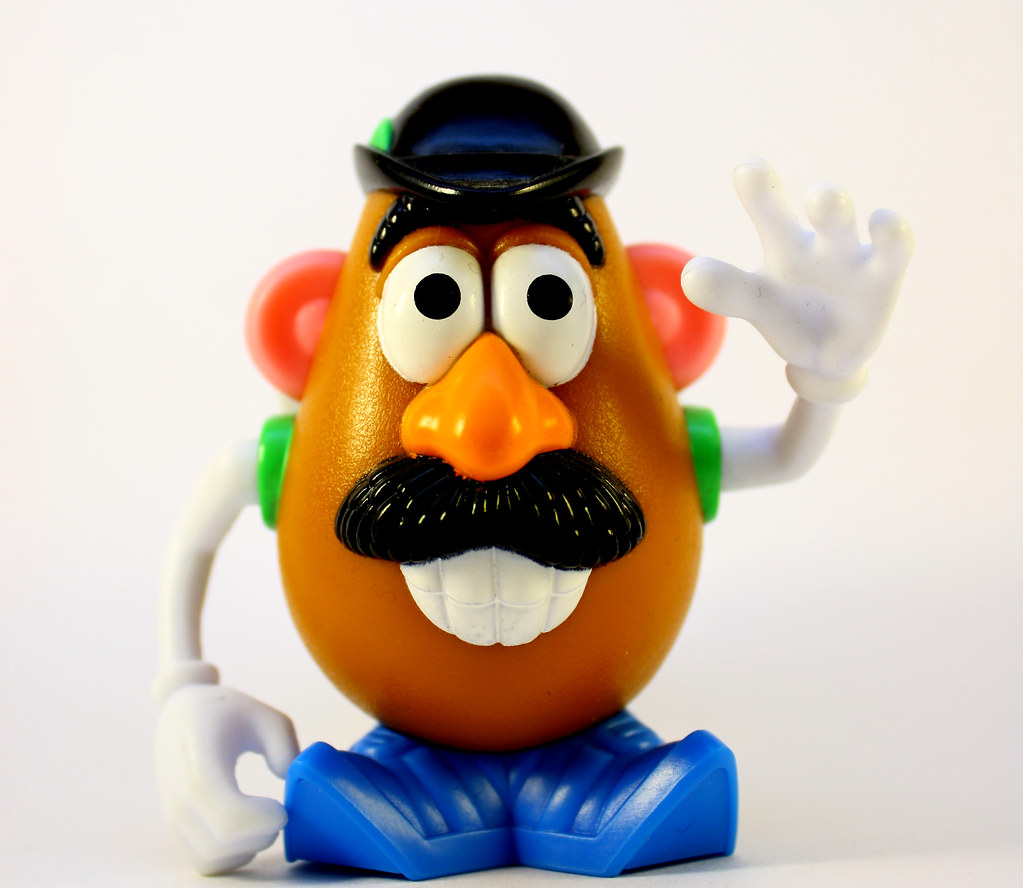
On April 30, 1952, a bag of plastic facial parts with pushpins on the back became the very first toy ever advertised on American television. There was no potato in the box. Whichever vegetable ended up wearing the eyes, mustache, and pipe was strictly the customer’s problem, something families were simply expected to supply themselves from the kitchen.
From Funny Face Man to Store Shelves
The concept began with toymaker George Lerner, who developed a set of stickable facial features under the working idea of a “Funny Face Man” kit meant to be poked into fruit or vegetables around the house. Lerner eventually sold the concept to Hassenfeld Brothers, the company known today as Hasbro, which brought it to market in 1952 under the name Mr. Potato Head. The original kit shipped with 28 separate pieces, including ears, eyes, hats, a pipe, and a mustache, all designed to be pressed into a real potato or similar produce the family already had on hand.
That decision to leave the vegetable out of the box was not an oversight. It kept manufacturing costs down and let Hasbro market the toy at a price point accessible to nearly any household, while quietly assuming parents would not mind sacrificing a spud from the pantry for their kids’ entertainment. Details on the original packaging and parts list are laid out in a retrospective from Click Americana, which documents just how bare-bones that first release actually was compared to the fully accessorized plastic version most people picture today.
Selling Straight to Kids for the First Time
What made Mr. Potato Head historically significant had less to do with the toy itself and more to do with how it was sold. Its April 1952 commercial was aimed directly at children rather than the parents who actually controlled the household budget, a genuinely new approach documented by Atlas Obscura. Until that point, advertisers had largely treated kids as an audience not worth addressing directly, since children were not the ones handing over money at the register.
That approach cracked open what the advertising industry would later nickname the nag factor, the strategy of getting a product lodged in a child’s mind so thoroughly that the child does the persuading at home. Rising television ownership through the early 1950s gave that strategy an audience it had never had before, and a nationwide polio outbreak that same year kept many children indoors and in front of the television more than usual, an unplanned circumstance that likely boosted the commercial’s reach even further. More than a million kits sold in the toy’s first year on shelves, a striking number for a product that was, at its core, just a bag of plastic parts and a set of instructions to go find a potato.
The Potato Finally Shows Up
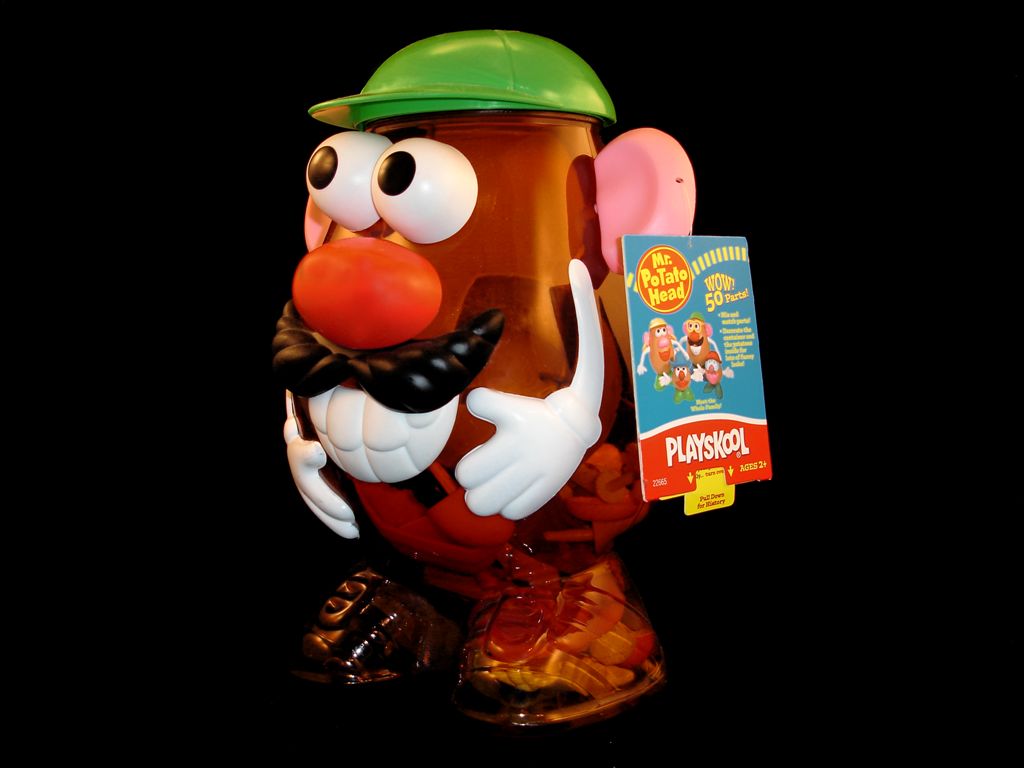
The vegetable-free approach could not last forever. By 1964, Hasbro began including an actual plastic potato body in every box, a change driven by two practical complaints piling up from parents: real potatoes rotted uncomfortably fast once a face had been jabbed into them, and the sharp plastic pushpins used to attach parts posed genuine safety concerns for small children handling them directly. The redesign made the toy safer and considerably less smelly a week after purchase, even if it also quietly erased the feature that had made the original version such an unusual grocery-adjacent novelty.
Mr. Potato Head’s television debut mattered well beyond one toy’s sales figures. It marked the moment children became a marketing target in their own right rather than an afterthought parents managed on their behalf, a shift that would go on to shape decades of Saturday morning cartoon commercial breaks, cereal box mascots, and toy aisle marketing built entirely around getting kids, not their parents, to fall in love with the product first.
A Face That Outlasted the Fad
Most toys built around a single gimmick fade once the novelty wears off, but Mr. Potato Head kept finding new relevance decade after decade. The character became a licensed mascot for breakfast cereal boxes in the 1950s, got a full plastic redesign in the 1960s, and picked up an entirely new audience in the late 1990s once Pixar cast a version of the toy, voiced by Don Rickles, as a wisecracking supporting character in Toy Story. That film franchise introduced the character to millions of kids who had never seen the original 1952 commercial and had no idea a version of the toy once required a real vegetable to function at all.
The original bag of plastic parts still shows up in museum collections dedicated to advertising history, cited less for the toy’s design than for what its commercial proved about a previously untapped audience. A single thirty second spot in 1952 opened the door to treating children as consumers with their own preferences worth courting directly, and that shift in strategy ended up outlasting the potato shortage the toy’s own packaging quietly assumed every household could solve on its own.

Leave a Reply