

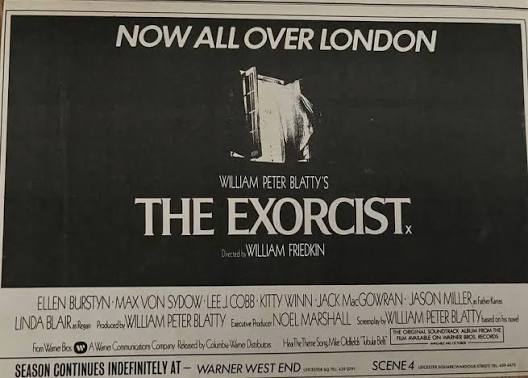
The Exorcist played in British cinemas without much trouble when it opened in 1974, but a decade and a half later the same film could not legally be sold or rented on home video anywhere in the United Kingdom. The gap between those two facts came down to shifting censorship rules, real injuries suffered on set, and a reputation that only grew stranger the longer the movie stayed just out of reach.
Approved for the Cinema, Refused for the Living Room
Directed by William Friedkin and adapted from William Peter Blatty’s novel, The Exorcist received an X certificate for its original UK theatrical run, meaning adults could see it in a cinema without issue. The trouble started in 1984, when Parliament passed the Video Recordings Act in response to the so-called “video nasties” panic, a moral outcry over violent horror films circulating on home video with no oversight. The law required every film sold on video to be freshly classified by the British Board of Film Classification, regardless of what certificate it had already earned in theaters.
When The Exorcist came up for reclassification in 1988, BBFC director James Ferman refused to grant it a certificate for home release at all. According to a detailed history published by Collider, Ferman cited concerns raised by child psychologists about the effect repeated, unsupervised home viewings could have on younger audiences, worries that simply did not apply in the same way to a controlled cinema screening with an age check at the door. The film stayed off British shelves for eleven years, only clearing classification for home video in 1999, timed to a 25th anniversary theatrical rerelease, a saga also documented by Reason in its own retrospective on the era’s censorship fights.
The Injuries Were Not Special Effects
While regulators argued over what audiences should be allowed to see, the film’s own production had already left permanent marks on two of its stars. Linda Blair, who played the possessed Regan, was rigged to a mechanically controlled bed for the film’s violent shaking scenes. During one take, the harness lacing that was supposed to hold her securely came loose, and the resulting jolt fractured her lower spine. Blair has spoken about the injury in later interviews, and reporting on the incident notes it contributed to lasting complications, including scoliosis she has managed for decades since.
Ellen Burstyn, who played Regan’s mother Chris MacNeil, suffered a separate injury during the scene in which her character is thrown violently across a bedroom by the possessed child. Burstyn was pulled by a harness rig with enough force that she sustained a back injury of her own, one she has since described in interviews as leaving lasting effects. Neither actress was doing a stunt double’s job in these sequences, and the physical toll became part of the behind-the-scenes lore that has followed the film for fifty years.
Two Kinds of Notoriety, One Reputation
Neither the injuries nor the UK ban were manufactured for publicity, but both fed the same growing myth around the film, that The Exorcist was somehow more dangerous than an ordinary horror movie, cursed on set and too intense for regulators to fully trust with the public. Stories about fainting audience members, on-set accidents, and cast members declining to discuss the production circulated for years, whether or not every detail held up to scrutiny.
What is verifiable is straightforward enough on its own. Real rigging failures hurt real actors during production, and a real law kept the finished film off British shelves for over a decade after it had already played safely in theaters. Half a century later, The Exorcist remains one of the most studied and referenced horror films ever made, its reputation built as much on the genuine hazards of making it and the genuine fights over regulating it as on anything that happens on screen.
A Ban That Made the Film Bigger
The eleven-year home video restriction arguably did the opposite of what censors intended. Instead of quietly fading from public memory, The Exorcist became something British horror fans actively hunted for, trading grainy imported copies or simply waiting for the rare cinema revival that let them see the film legally at all. Scarcity tends to sharpen curiosity, and a movie that was officially too risky for the living room but perfectly fine for a theater seat only underlined how inconsistent the reasoning behind the ban actually was.
By the time the BBFC finally granted a home video certificate in 1999, The Exorcist had spent more than a decade collecting exactly the kind of forbidden reputation that no marketing campaign could have bought outright. Combined with the very real physical toll the production took on its cast, the film arrived in the modern streaming era already wrapped in layers of documented fact and half-remembered rumor, a combination that keeps new generations of horror fans discovering it, dissecting it, and occasionally getting a few of the details wrong all over again.

Leave a Reply