

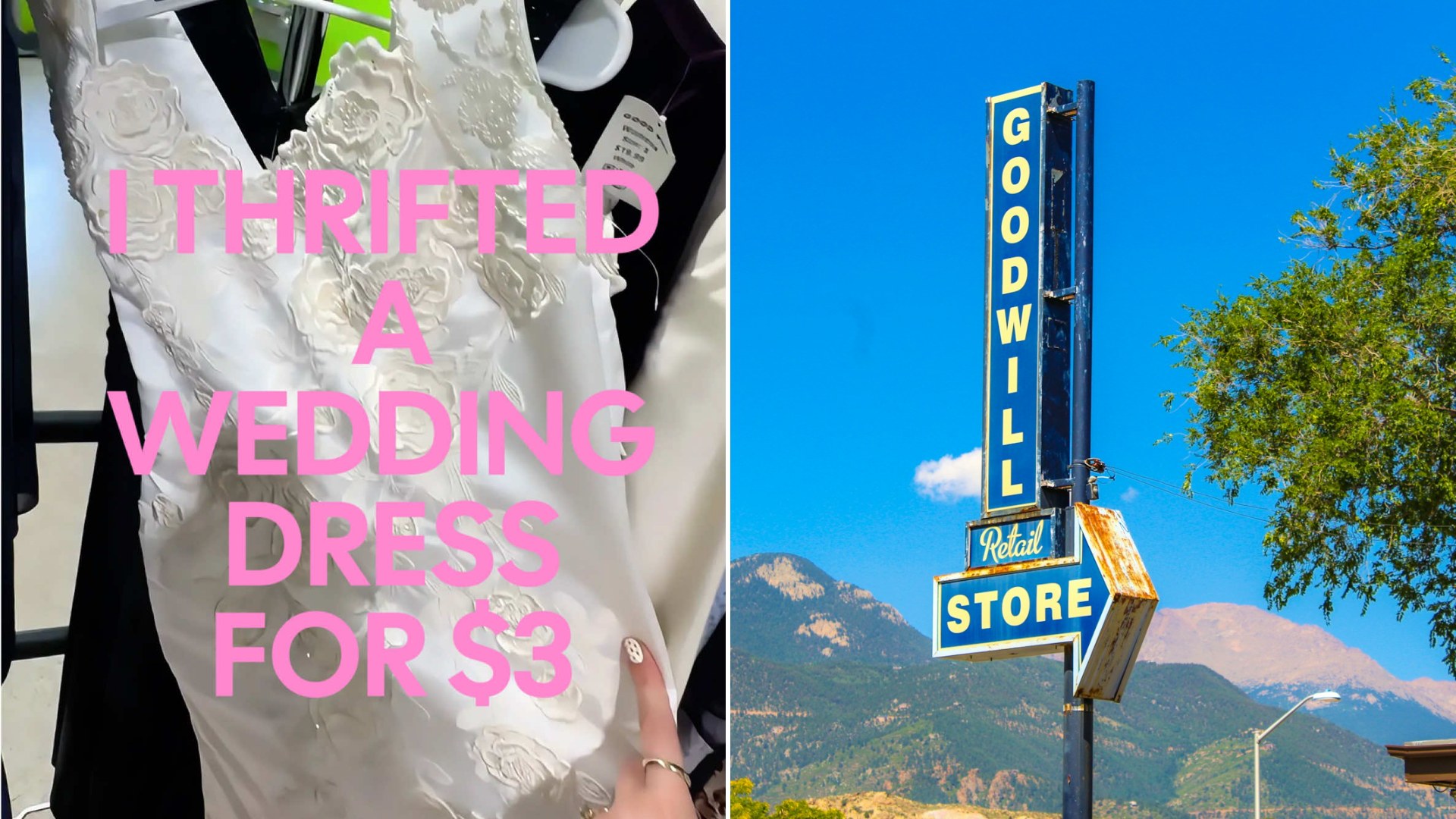
Wedding guest outfits have turned into their own expensive little category of fast fashion, which makes what creator @what_ali_wears pulled off feel almost rebellious. She found a full wedding gown sitting in the Goodwill Bins, the pay-by-the-pound clearance section where thrift stores dump their least-picked-over stock, and walked out having paid three dollars for it.
Rather than let it sit in a closet as a novelty thrift score, she dyed the entire gown a deep plum purple and wore it as a guest to an actual friend’s wedding.
The Goodwill Bins operate differently from a regular thrift store rack. Items get sorted into giant bins by weight rather than hung and individually priced, which is why a full wedding dress can end up costing pocket change instead of the hundreds a bridal-adjacent gown usually commands secondhand. Bins shoppers have built an entire subculture around digging through them, and wedding gowns show up more often than people expect, since so many only get worn once before getting donated, resold, or forgotten in storage.
Dyeing a wedding dress isn’t a new trick exactly, but doing it specifically to solve the guest-dress problem is a clever twist on it. White or ivory gowns take fabric dye differently depending on their material, with natural fibers like cotton and silk generally picking up color more evenly than polyester blends, which resist dye and often need a specialty formula made for synthetics. A deep shade like plum also has the practical benefit of hiding any unevenness in the dye job better than a lighter color would.
It’s the kind of project that turns two expensive problems, a one-time formalwear purchase and the ever-rising cost of being a wedding guest, into a single low-cost solution. Wedding guest attire has quietly become its own budget headache, with a single event-appropriate dress from a mall retailer often running well past a hundred dollars for something that might get worn once. Bridal silhouettes already lean toward the fitted, floor-length shapes that read as elegant guest wear once the white is gone, so the transformation makes more sense the longer you sit with it.
Getting an even dye job on a full-length gown also takes more planning than dyeing a t-shirt in a sink. Larger garments generally need a stovetop pot or a bathtub big enough to let the fabric move freely, since cramped folds can trap air bubbles and leave lighter, blotchy patches once the dress dries. Pre-washing the gown to strip out any sizing or finish left over from its original construction helps the dye take evenly too, which matters even more on a garment with as many seams and layers as a wedding dress.
A three-dollar bin find ending up as a compliment magnet at someone else’s wedding is exactly the kind of secondhand win that keeps people digging through bins in the first place. It also flips the usual wedding-guest math on its head: instead of buying something new and wearing it once, the whole outfit started as someone else’s one-time purchase, got a second act, and will presumably get worn again to the next wedding on the calendar.

Leave a Reply