

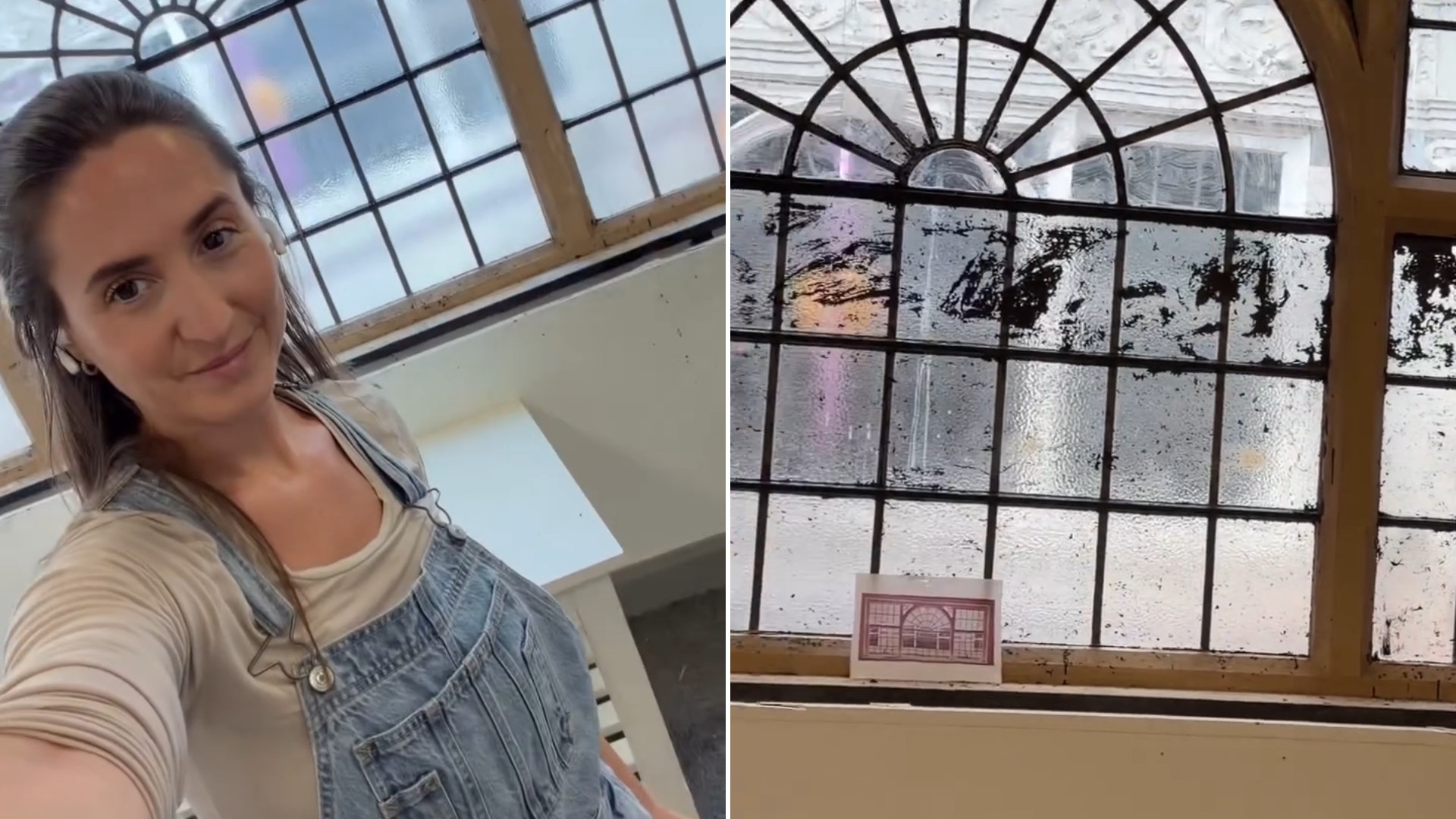
Some renovation surprises are structural headaches. Others are the kind you post immediately because you can’t quite believe your own wall. The team behind @beanstalkmerch landed firmly in the second category when a routine tear-out revealed a genuinely beautiful historic window that someone had, at some point, boarded up completely and painted flat black, hiding it from the house for who knows how many years.
Buried in Plain Sight
There’s something almost poetic about a window being the thing that got covered up. Windows exist to let light in, to connect a room to whatever’s happening outside it, and to give a house a sense of proportion and rhythm from the street. Someone, at some point, decided this particular one needed to disappear instead, sealing it behind boards and a coat of black paint so thorough that it apparently gave no hint of what was underneath. Whether that decision was about energy efficiency, remodeling fashion, or simply covering up a window nobody wanted to deal with, the result was the same: a genuinely lovely architectural feature spent years, possibly decades, hidden in total darkness inside its own wall.
Why Old Houses Hide Things Like This
Older homes are full of these kinds of buried decisions, layered on top of each other by decades of different owners with different tastes and different budgets. A window that felt drafty or old-fashioned to one owner might get boarded over rather than replaced, especially if replacement felt expensive or unnecessary at the time. Sometimes it’s about matching a new floor plan. Sometimes it’s simply cheaper to cover a problem than to fix it properly. Whatever the original reasoning was, the boards and black paint did their job well enough that the window essentially vanished from the house’s visible history until a renovation crew started pulling things apart.
That’s part of what makes this kind of discovery so satisfying to watch. Renovation work is usually messy and unglamorous, full of dust, unexpected costs, and problems nobody planned for. Every so often, though, tearing into a wall uncovers something that feels like a genuine gift from a previous version of the house, a feature that was never actually gone, just waiting behind drywall or plaster for someone to notice it again.
The Appeal of Restoring What Was Already There
There’s a particular kind of home renovation content that resonates more than almost anything else, and it’s the reveal of something original and beautiful that had been covered up, rather than something brand new being installed. New fixtures are nice, but they don’t carry any history. An original window, especially one with detailing or proportions that modern replacements rarely bother with, comes with decades of quiet context built in. It was there when the house was built, it saw whatever that era of the house looked like, and now it gets to be part of the home again instead of a sealed-off memory.
Old windows in particular tend to have details that get lost in modern replacements, from the thickness of the wood trim to the slightly imperfect glass to proportions that were designed for a completely different architectural moment. Finding one intact and simply hidden, rather than damaged or removed entirely, is close to a best-case scenario for anyone doing a historic renovation. It means the option to restore rather than replace is actually on the table, which isn’t always true once a wall comes down.
A Reminder to Look Twice Before You Renovate
This kind of discovery is also a quiet argument for caution during demolition, especially in older houses. Walls that look purely structural sometimes aren’t. Boarded-up sections that seem like dead space sometimes used to be something else entirely. Anyone taking on a renovation in a home with any real age to it would do well to go slowly around anything that looks even slightly unusual, because the difference between demolishing a random wall panel and uncovering a hidden window worth restoring often comes down to nothing more than pausing for an extra minute before swinging the hammer.
For this particular house, that pause paid off. What could have easily stayed sealed away for another few decades is instead back to doing what windows are supposed to do, letting in light and giving the room a little bit of the character it apparently had all along, just waiting behind a coat of black paint for someone to finally let it back into the house.

Leave a Reply