

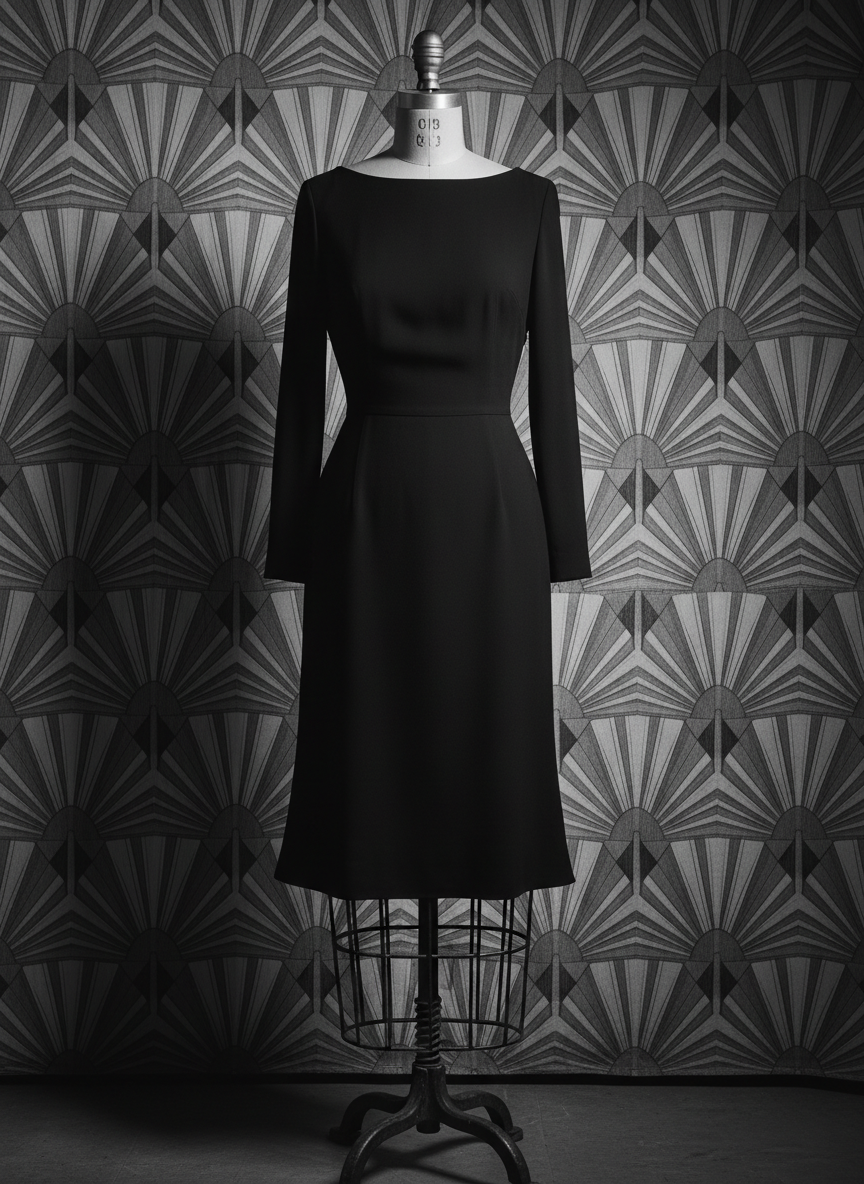
In October 1926, American Vogue published a sketch of a simple, calf-length black dress with a few diagonal seams and nothing else to recommend it on paper. The magazine still knew exactly what it was looking at, dubbing the design “Chanel’s Ford” and predicting it would become “a sort of uniform for all women of taste.” The comparison to Henry Ford’s mass-market automobile was deliberate: like the Model T, Gabrielle “Coco” Chanel’s dress was built to look the same, and look good, on women regardless of class or budget.
A Color With a Bad Reputation
The reason Vogue’s endorsement mattered is that black itself needed rehabilitating first. As the documented history of the little black dress lays out, the color carried heavy, specific baggage going into the 1920s. Victorian mourning customs required widows to wear black for a minimum of a year following a death, and black was simultaneously the standard uniform color for domestic servants across Europe and the United States. Putting a wealthy woman of taste in the same color a maid wore to work, or a widow wore to grieve, was not an obviously flattering pitch, and early reactions to Chanel’s design reflected that discomfort before the dress won anyone over.
Chanel Rewrites What Black Means
Chanel didn’t dispute the association with mourning and servitude so much as steamroll it. “I imposed black; it’s still going strong today, for black wipes out everything else around,” she said, a line that treats the color’s starkness as the entire point rather than a liability to work around. Where black on a Victorian widow signaled loss and black on a housemaid signaled function, black on Chanel’s dress signaled the opposite of both: a woman who needed no color, embellishment, or obvious wealth signaling to hold a room. That inversion, more than the cut of the dress itself, is what made the design radical.
The Timing Wasn’t an Accident
Chanel’s dress didn’t arrive in a vacuum. The First World War had left an enormous number of European households in some stage of formal mourning through the late 1910s and early 1920s, meaning black clothing was already common on the street, just not stylish. At the same time, the same war had pulled women into factory and office work that made corsets and floor-length skirts impractical, feeding demand for clothing that moved. Chanel, who had already built her early reputation on jersey fabric and menswear-inspired tailoring years before 1926, was positioned to take a color everyone already owned and a silhouette suited to an already-changed daily life, and combine them into something that read as chic rather than somber or utilitarian.
Built for Everyone, on Purpose
Unlike the elaborate beaded and corseted eveningwear that still dominated formal fashion in the mid-1920s, Chanel’s dress used minimal fabric, a straight silhouette, and almost no ornamentation. That simplicity was a practical decision as much as an aesthetic one: a dress this stripped down could be produced cheaply and copied easily, which is exactly what happened. Department stores and home sewers alike could approximate the silhouette without Chanel’s fabric or her fitting, which is part of why Vogue’s “uniform for all women of taste” line proved less like marketing hyperbole and more like an accurate forecast.
A Century of Restocking the Same Idea
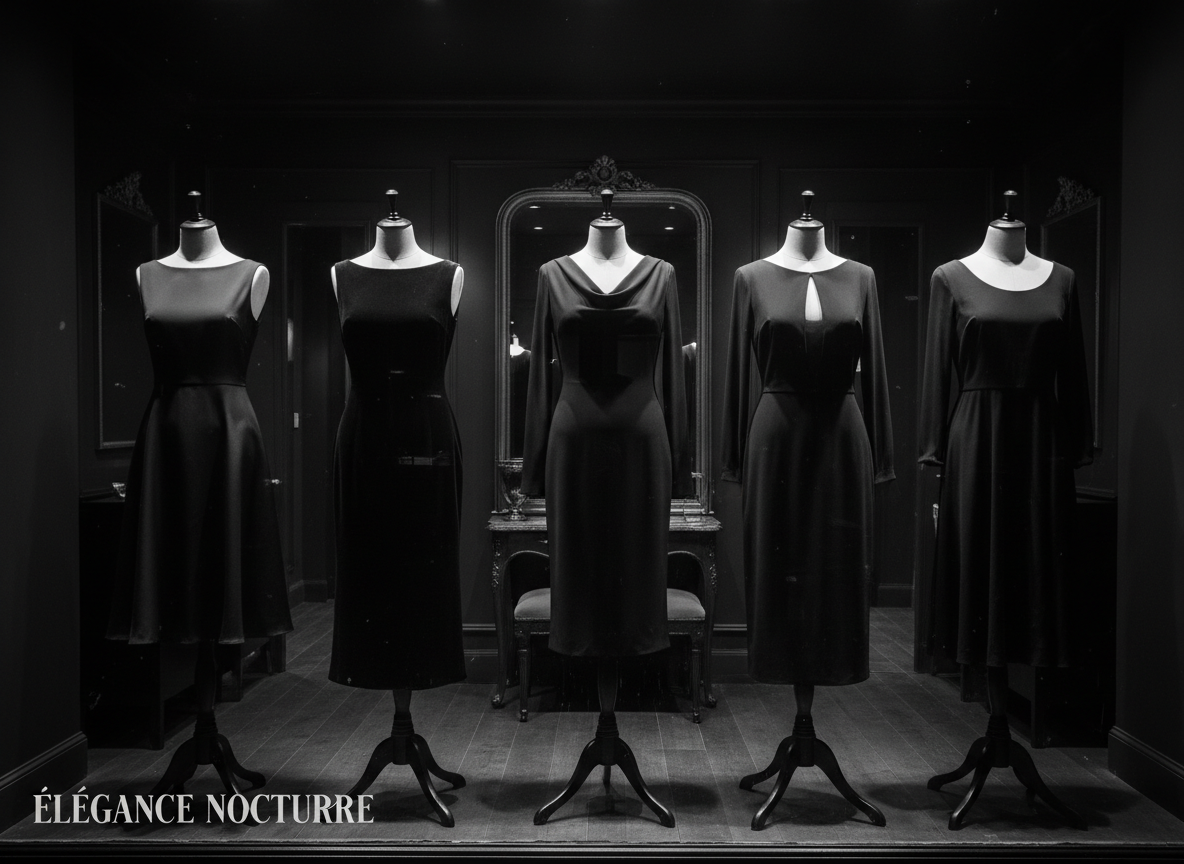
The dress has been reinterpreted by nearly every major designer since, from Christian Dior’s more structured postwar versions to Hubert de Givenchy’s dress for Audrey Hepburn decades later, each one keeping Chanel’s core proposition intact: black as a deliberate, confident choice rather than an absence of one. Fashion historians Amy Holman Edelman and Justine Picardie have both traced this throughline in dedicated books on the garment and on Chanel herself, arguing that what changed across a century of little black dresses was fabric and hemline, never the underlying idea that simplicity could read as sophistication rather than plainness.
Still the Uniform, a Century Later
Nearly a hundred years after that first Vogue sketch, the little black dress remains the one garment most closet inventories still treat as non-negotiable, which is a strange kind of victory for a design that critics initially filed next to mourning veils and maids’ aprons. Chanel took a color built entirely out of loss and servitude and left it standing for confidence instead.

Leave a Reply