

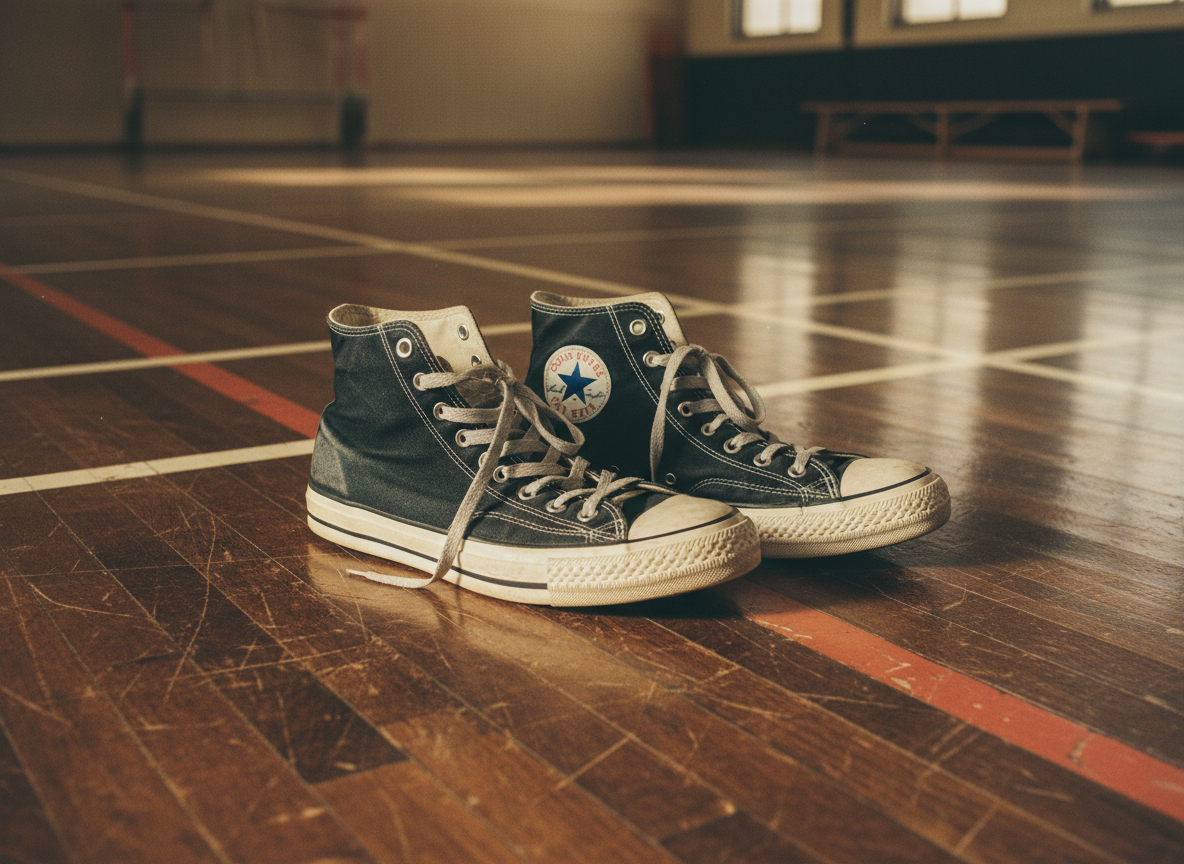
Converse released its first basketball sneaker, the Non-Skid, in 1917, four years before the name that would make the shoe famous ever set foot in the company’s offices. Charles “Chuck” Taylor was a semi-professional player for the Akron Firestone Non-Skids when he walked into a Converse sales territory in 1921 looking for work, not a legacy. He got hired as a traveling salesman, and within about a year the shoe he was selling started to look different because of him.
A Salesman With Opinions About the Product
Taylor wasn’t an engineer and he never claimed to be. What he had was a player’s sense of what a basketball shoe actually needed on a hardwood floor: more flexibility through the forefoot, better support around the ankle. According to the newspaper industry’s own retrospective on the shoe’s history, carried in the Kentucky New Era’s 2001 Associated Press feature on the All Star’s anniversary, Converse folded Taylor’s suggested tweaks into the shoe within roughly a year of hiring him, and the redesigned high-top picked up a new name to go with its new stitching: the All Star.
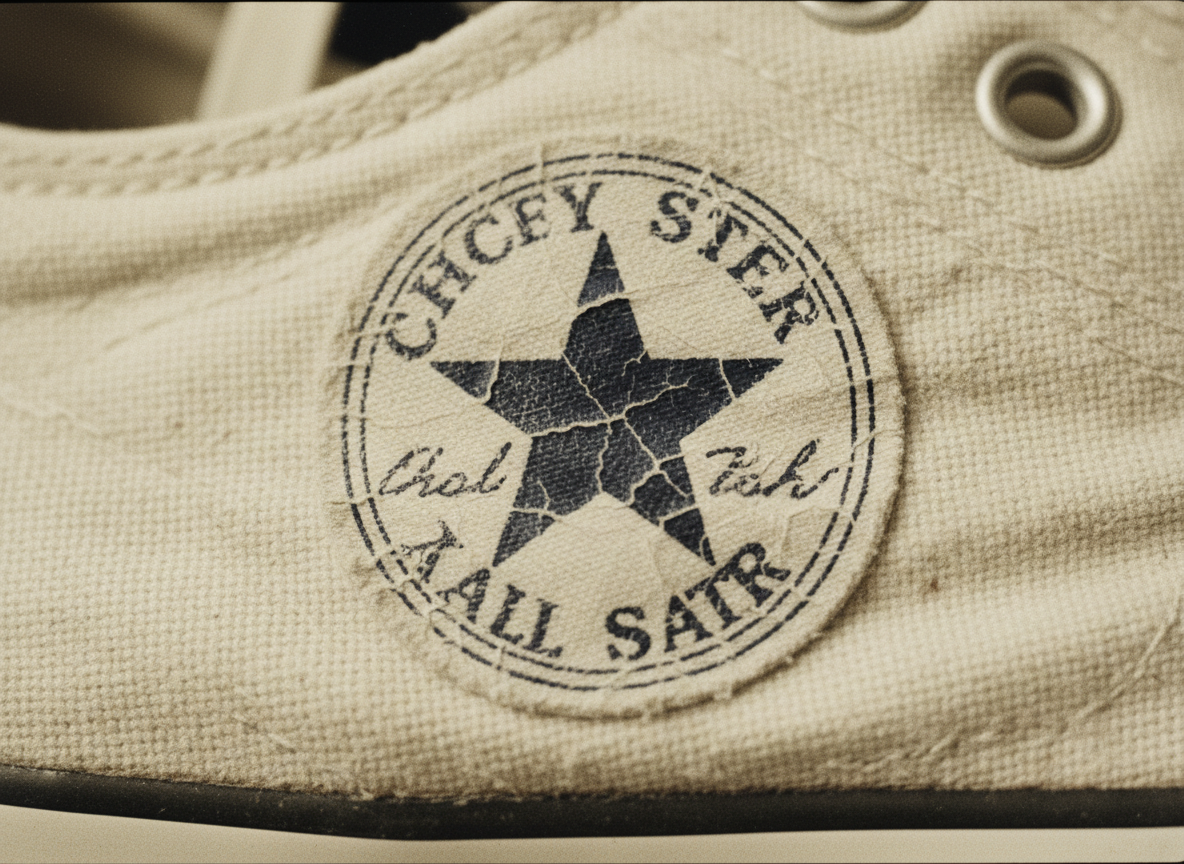
The Ankle Patch Deal
The circular ankle patch is the detail most people register without ever asking where it came from. Converse added Taylor’s signature to it in 1932, turning a salesman’s name into a permanent stamp of approval on every pair that left the factory. It’s frequently cited as the first celebrity endorsement built into an athletic shoe’s actual design, predating the modern athlete-signature sneaker business by decades. Taylor wasn’t paid a cut of every sale the way a modern endorser would be; his compensation was largely the job itself; a lifetime of expense-account travel, clinics, and standing as basketball’s most recognizable shoe salesman.
Selling the Game to Sell the Shoe
Taylor’s real innovation wasn’t stitching. It was distribution through relationships. He crisscrossed the country running basketball clinics in high school gyms, college fieldhouses, and YMCAs, teaching fundamentals to coaches and kids who would then, naturally, want the shoes the clinic instructor wore. During the 1926–27 season he managed the Converse All Stars, a company-sponsored barnstorming team that existed largely to put the shoe in front of live audiences. It was marketing built out of actual basketball knowledge rather than a slogan, and it worked precisely because Taylor could talk technique as easily as he could talk sales.
Seventy Percent of a Sport
By the 1960s, Converse’s All Star had become close to synonymous with the sport it was built for. Industry estimates cited in that same Associated Press retrospective put the company’s share of the basketball shoe market at somewhere between 70 and 80 percent at the decade’s peak, a dominance that traces directly back to a canvas high-top redesigned by a player-turned-salesman rather than a design department. Taylor was inducted into the Naismith Memorial Basketball Hall of Fame in 1968, one of the few people ever enshrined there for what he did off the court rather than on it.
From the Hardwood to the Street
The All Star’s second life had nothing to do with basketball at all. As performance shoes with cushioned soles and ankle bracing took over competitive courts in the 1970s and 1980s, the canvas high-top Taylor helped shape drifted sideways into music venues, skate spots, and thrift racks. Punk and garage bands adopted it because it was cheap, durable, and unbothered by a mosh pit; art students and musicians kept it because, by then, it read as a piece of American working-class history rather than sports equipment. That migration is documented at length in the shoe’s own encyclopedia entry on its design and cultural history, which traces the All Star’s path from gymnasium staple to permanent fixture in nearly every vintage and secondhand clothing bin in the country.
A Shoe That Outlived Its Salesman
Chuck Taylor died in 1969, and Converse eventually phased his signature off newer models as performance basketball moved toward specialized cushioning and support the canvas All Star was never built to provide. But the low-top and high-top silhouettes never left. What survives on every pair sold today, more than a century after the Non-Skid’s debut, isn’t a piece of athletic engineering. It’s the signature of a man who sold the shoe so well that Converse decided his name belonged on it permanently.

Leave a Reply