

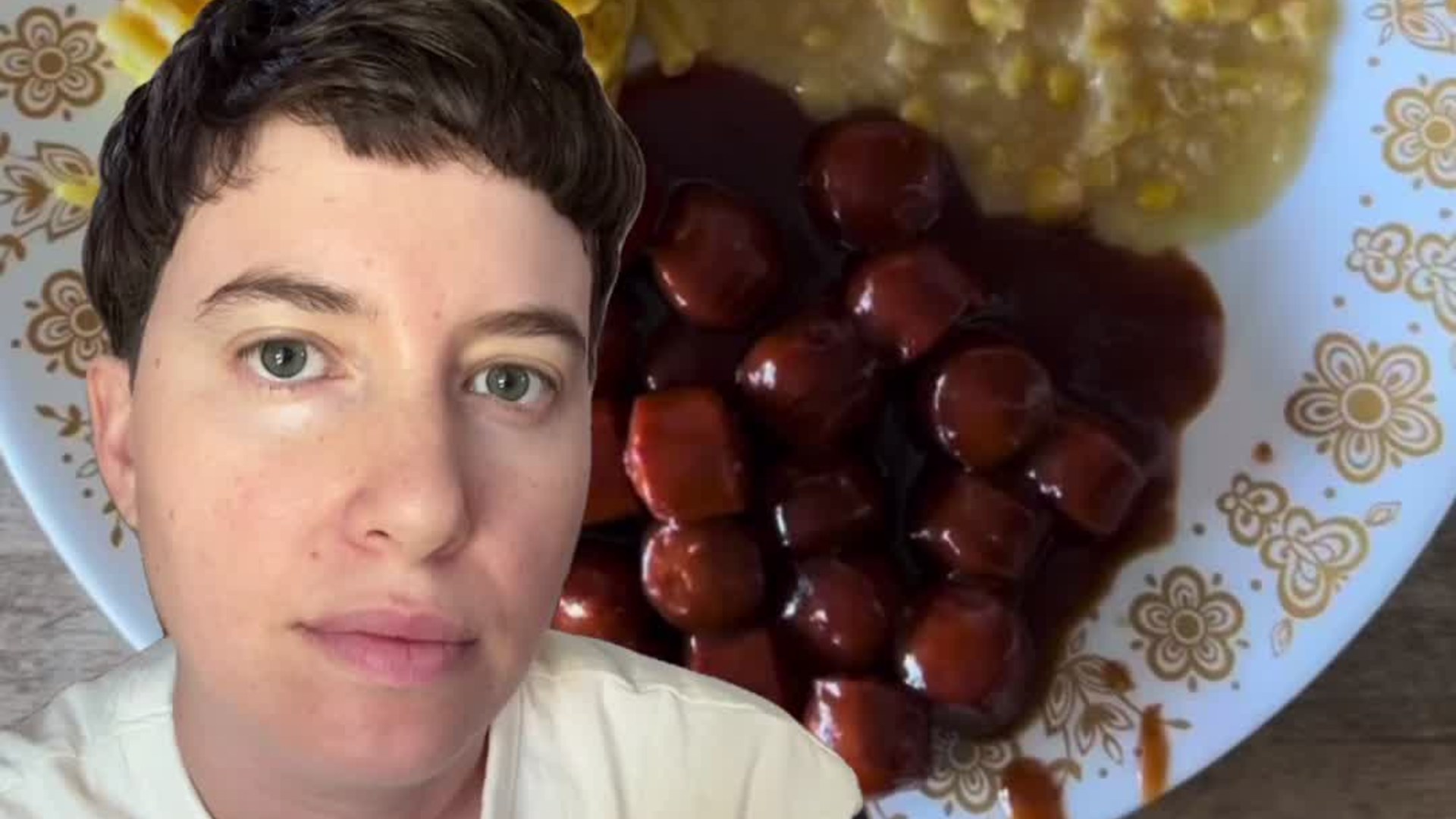
A thrifting creator who posts under the handle @the.lead.lady ran a UV-reactive lead test directly on a floral-patterned vintage dinner plate, and the reaction on the glaze delivered a punchline in three deadpan words: “It’s called lead.” The clip has drawn 532,400 views, 48 times her typical view count.
The video opens with a green-screen montage of cozy home-cooked meals, sausages in sauce, mac and cheese, creamed corn, all served on the same white-and-gold floral plate pattern, while the creator reacts with a flat expression and the caption “Big fan of whatever this is called.” It cuts to her kitchen, where she picks up an identical plate, presses a handheld test device against the painted floral rim, and watches it react under the light before delivering the reveal.
Why vintage dish patterns keep testing positive
Decorative glazes and the paints used on ceramic dinnerware for most of the 20th century commonly relied on lead-based pigments to get bright, stable colors to survive the kiln, and pieces made before 1992, when the FDA tightened its lead limits for food-contact ceramics, are the ones most likely to contain it, according to Consumer Reports’ guide to testing vintage and imported dishware. The FDA has regulated lead in ceramics since 1971, tightening those rules further in 1992, and it maintains a public list of dinnerware found to exceed safe limits.
The risk isn’t hypothetical. The Center for Environmental Health’s research on vintage dishware notes that lead can leach out of decorative glazes into food, especially acidic foods, and especially where the glaze is worn, cracked, or sits on the rim where food and lips make direct contact. Health effects from repeated low-level exposure can include developmental problems in children and cardiovascular and kidney effects in adults, which is exactly why a bright floral pattern from a beloved set of hand-me-down plates is worth testing before it goes back into regular dinner rotation.
@the.lead.lady has built her entire account around exactly this kind of test, running lead checks on secondhand dishware live in thrift stores and posting the results, often to viewers who had no idea their favorite pattern might be a problem. This particular plate pattern’s popularity, cozy, floral, clearly decades old, is precisely the profile that makes it worth a second look before it’s used for anything hotter than decoration.
Key Points
- The creator tested a vintage floral ceramic plate with a UV-reactive lead test, which reacted positively on the decorative glaze.
- The reveal video drew 532,400 views, about 48 times the creator’s typical view count.
- Ceramic dinnerware made before 1992, when the FDA strengthened lead limits for food-contact ceramics, carries the highest risk.
- Lead can leach from worn or cracked decorative glazes into food, particularly acidic dishes.
Grandma’s dish pattern might be gorgeous. It might also belong on a shelf instead of a place setting.

Leave a Reply