

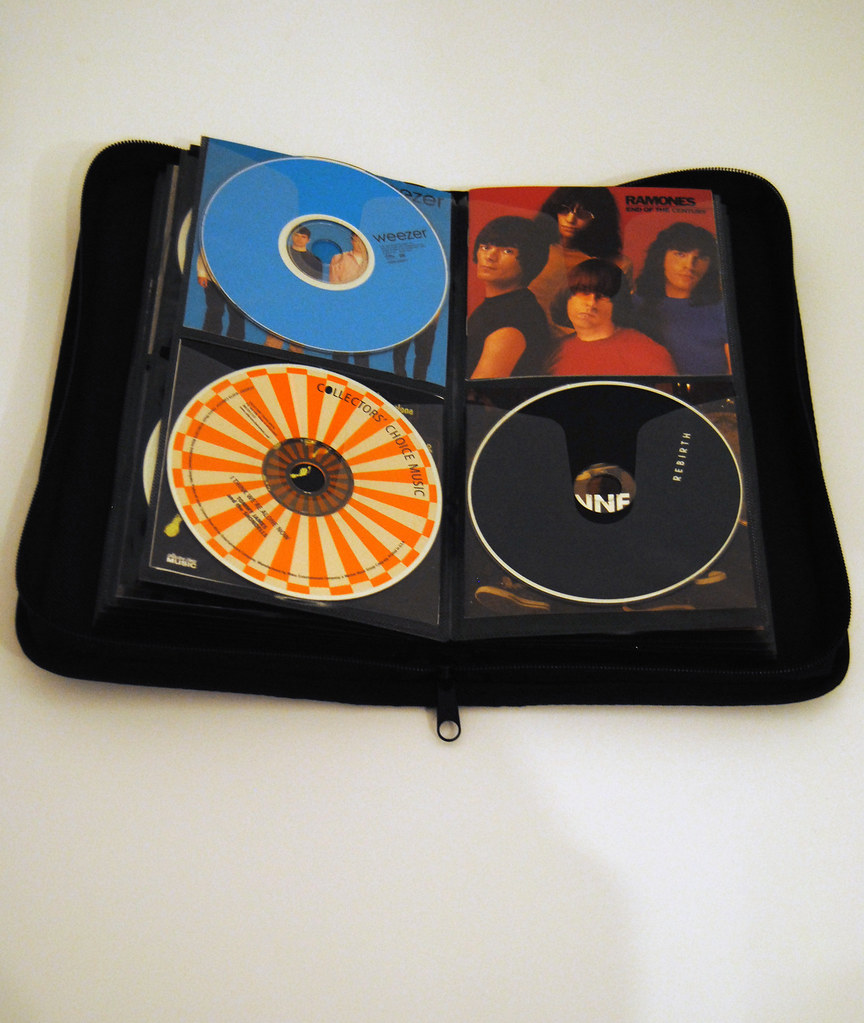
A scuffed black Case Logic CD binder that once rode shotgun in a Honda Civic is now listing for $42 on Etsy, more than double its roughly $20 shelf price in the late 1990s. That is not a fluke from one overly sentimental seller. A sweep of current listings turns up the same nylon-zippered binders, built to swallow 24, 48 or 96 discs behind foam-backed sleeves, regularly clearing $33 to $64 depending on capacity, with sellers leaning hard on the words “Y2K” and “faux leather” in their titles. The binder nobody wanted during a 2009 garage purge has become, improbably, a thing people pay for.
A Case for Everything, Literally
Case Logic has been in the business of transporting things “effortlessly, with style and confidence” since 1984, according to the company’s own account of its history, and it marked its 40th anniversary in 2024 without much fanfare from the culture at large. Its earliest cases were built for music, camera gear and other electronics, a category that expanded naturally into CD and cassette storage as portable audio exploded through the 1990s. The binder format itself was almost aggressively utilitarian: a zippered nylon shell, plastic-ring spine, and page after page of clear-fronted sleeves, each one built to hold a disc on one side and its jewel-case booklet folded on the other. Nobody bought one for how it looked. They bought it because a shoebox full of loose CDs was a liability in a moving car.
Built for a Format That Was Supposed to Disappear
By the mid-2000s, the CD binder had become a punchline of its own obsolescence, a physical artifact from a format everyone assumed iPods and then streaming had killed for good. That assumption held for roughly two decades. Then it didn’t. Physical media overall grew 25.9% in dollar terms in the first half of 2026 compared with the same period a year earlier, reaching $731.5 million, according to Recording Industry Association of America figures reported by TechCrunch. CDs specifically pulled in $171.1 million in that window, up 58.6% year over year, with unit sales climbing 45.7% to 17.5 million discs sold. The reporting ties much of that growth to younger buyers who never lived through the format’s first run, describing a demographic “snapping up old gadgets at thrift stores or vintage tech websites like eBay,” drawn to a version of technology that didn’t demand constant attention.
Where the Binder Fits Back In
A CD revival built entirely on nostalgia still needs somewhere to put the discs, and that is where the binder re-enters the picture. Anyone assembling a physical collection again, whether inherited from a parent’s closet or built disc by disc from a thrift shelf, runs into the same problem Case Logic solved in the ’90s: jewel cases are bulky, and a hundred loose discs is chaos. Vintage binders solve it cheaply and, for a certain buyer, more authentically than a new plastic organizer would. Etsy listings for units branded “Case Logic Classic” or simply “vintage 90’s” routinely note original owner history and full capacity, treating a used office-supply item the way a record store treats a promo pressing. One current listing for an 80-plus-disc Case Logic Classic binder, marketed explicitly with the phrase “Y2K faux leather,” was priced at $42; a smaller 48-disc zippered version sat at $33.14, reduced from $38.99.
A Storage Solution Became a Time Capsule
What makes the binder trend different from most thrift novelties is that the object’s design was never meant to be admired in the first place; the appeal sits somewhere else, in what the binder implies about the hours spent burning mix discs and agonizing, Sharpie in hand, over which 96 albums earned a spot in the good case. eBay listings selling the binders pre-loaded, with someone else’s 150-plus album collection of “Weezer, Wilco, movies, film,” treat the whole assemblage as a single artifact rather than a container plus contents. That is a strange kind of collectible logic, closer to buying a stranger’s mixtape than buying a stranger’s Tupperware, and it is exactly the logic driving the rest of the Y2K resale boom. The CD binder never changed. What changed is that the format it was built to organize stopped being disposable and started being, again, worth organizing.

Leave a Reply