

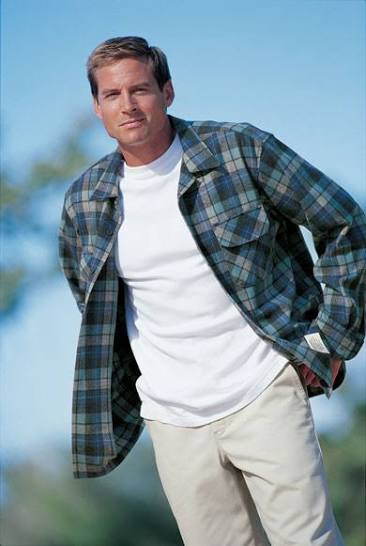
A 1960s Pendleton wool board shirt in a shadow-plaid pattern is currently listed on eBay for $199.99 with 27 people watching it, while a plainer 1960s example in brown plaid sits at $114. Sold listings from the past 90 days put the median price for vintage Pendleton pieces at roughly $40, but board shirts in sought-after colorways regularly clear $120 to $180. The gap between an ordinary rack find and a genuinely valuable one usually comes down to a label, a pattern, and a few decades of manufacturing history most casual shoppers have never heard explained.
A Company That Didn’t Start Out Making Shirts
Pendleton’s roots trace back further than most of its buyers realize. According to Wikipedia’s history of the company, the original wool-scouring mill dated to 1893, sat idle for years, and was revived in 1909 when the Bishop family, led by Fannie Kay Bishop, bought it and incorporated it as Pendleton Woolen Mills. It took Clarence Morton Bishop’s push into “men’s woolen sport shirts in bright colors and patterns” starting in 1924 to turn a wool-processing operation into a clothing brand, expanding into a full sportswear line by 1929. Before that shift, wool shirts had mostly meant muted, purely functional workwear; Pendleton’s bet was that the same fabric could be fashionable.
Blankets Came First, and They Set the Template
Shirts weren’t Pendleton’s first move into recognizable pattern-making. The same company history notes that Pendleton’s wool blankets, developed earlier with input from designer Joe Rawnsley working alongside Native American tribes across the Southwest, established the square-cornered, multicolored aesthetic that later carried over into the sport-shirt line. That blanket-making background is part of why Pendleton plaids read as more considered than a generic flannel pattern; the company had already spent years refining color and pattern work for a different product before it ever put a loop collar on a shirt.
The Beach Boys Connection Isn’t Marketing Spin
Pendleton’s own product page for its signature style leans hard into a specific piece of pop-culture history, and the history checks out. The company’s Board Shirt page notes it was “made famous by California surfers in the 1960s,” and that a vocal group briefly called themselves “the Pendletones” after the plaid shirt surfers wore, before renaming themselves the Beach Boys and wearing the shirts on early album covers. That surf-culture pedigree is a big part of why 1950s and 1960s production is, per one current pricing guide, considered among the most collectible eras for the label, alongside a separate wave of demand for 1990s grunge-era pieces that carry their own nostalgia premium among younger buyers.
What Actually Moves the Price
Not every Pendleton shirt on a thrift rack is worth fighting over, and resellers have gotten specific about why. Board shirts, the loop-collar, wool button-ups Pendleton produced from the late 1960s through the 1970s, consistently outperform the brand’s standard plaid shirts. Within that category, shadow plaids and named tartans like Black Watch or Royal Stewart pull stronger prices than generic checks, according to sold-listing data compiled by MarketplaceIQ, which tracked a $40 median sale price across 240 completed eBay sales in a recent 90-day window. Original paper hang tags, when they survive, can add another 20 to 40 percent to a shirt’s final sale price, while moth damage or a missing label pulls hard in the opposite direction. Resellers also treat fiber content as a near-automatic price ceiling: a shirt cut from the acrylic and polyester blends Pendleton introduced later rarely competes with a pure wool piece, no matter how good the pattern looks.
Why the Rack Digging Continues
None of this is a secret anymore, which is exactly why the hunting has gotten more competitive rather than less. A shirt that would have sat on a six-dollar thrift rack a decade ago now gets photographed, labeled, and cross-checked against sold comps before it ever reaches a resale platform. The shirts that clear the highest prices are consistently the ones a casual shopper would have walked straight past, usually because of a faded tag or a cut that looks a size too big until someone recognizes it as an original 1960s fit rather than a modern one.
Wool doesn’t break down the way cotton flannel does, which means the shirts driving this market were, without any particular effort on Pendleton’s part, engineered sixty years ago to survive long enough for someone to argue over them today.

Leave a Reply