

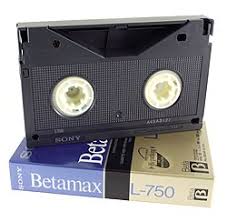
By 1988, only twelve percent of the 170 million VCRs sold worldwide were Betamax machines — a stunning collapse for a format that most engineers of the era considered the better product.
Sony’s Betamax beat JVC’s VHS to market by a full year and delivered sharper resolution and cleaner color reproduction, according to Smithsonian Magazine’s history of the format. It still lost, decisively, within a decade — and the reason has become one of the most durable lessons in how a technically inferior product can still win a market.
A Head Start Sony Couldn’t Hold
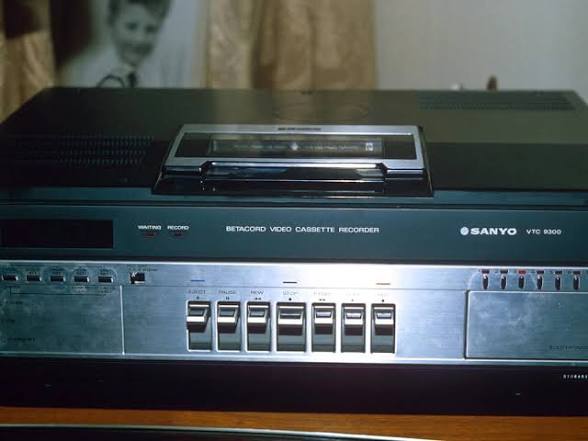
Sony launched the Betamax SL-6300 in May 1975, a full year before JVC brought VHS to market in 1976, per Smithsonian’s reporting. For a brief window, Sony had the home-video recording category entirely to itself. But two practical shortcomings opened the door for a rival: early Betamax cassettes could only record one hour of programming, while VHS tapes offered two hours from the start — enough to capture a full football game or a feature film without swapping cartridges mid-recording, a gap Smithsonian identifies as decisive in shaping early consumer preference. Sony widened Betamax’s capacity in later models, but the format never fully closed the gap on the feature that mattered most to ordinary households.
Open Standard, Closed Standard
The bigger issue wasn’t tape length. It was who got to build the machines. Sony kept tight control over Betamax, licensing the format to only a handful of manufacturers under restrictive terms, while JVC pursued the opposite strategy, licensing VHS broadly to competitors across the electronics industry, according to Smithsonian’s account of the two companies’ contrasting approaches. Rival electronics makers that might otherwise have built their own proprietary systems instead signed on to produce VHS hardware under license, which meant a shopper browsing a department store’s shelves in 1980 could choose a VHS deck from several different brands at several different price points, while Betamax buyers had far fewer options and generally paid more. That decision multiplied the number of companies making VHS hardware, which in turn multiplied the number of households recording their favorite shows on VHS tape — a feedback loop Betamax’s narrower licensing model simply couldn’t match.
The Numbers Tell the Rest
The market share collapse happened fast once it started. Within Betamax’s first year on shelves, VHS had already captured 40 percent of what had been Sony’s exclusive business, according to an analysis published by The Conversation. By 1987, VHS controlled roughly 90 percent of a $5.25 billion VCR market, the same analysis found, leaving Betamax as a niche format clinging to a shrinking base of loyalists rather than a mainstream contender. Sony didn’t formally concede until 1988, when the company began manufacturing its own VHS decks — an unusually candid admission of defeat from a corporation that had staked its reputation on Betamax’s technical superiority. The company kept selling Betamax hardware to consumers who still wanted it until 2002, when it finally discontinued the recorders, according to reporting from Fortune, by which point the format had sold roughly 18 million total units worldwide against VHS’s hundreds of millions.
The Case Study That Won’t Go Away
What happened between Betamax and VHS became a template that business and marketing courses still return to when teaching students how standards wars actually get decided. The lesson isn’t that quality loses to marketing, exactly — it’s that a format’s real value depends on how many other people are using it too, and a company that hoards licensing rights to protect its technical edge can end up strangling the very adoption curve it needs to win. Sony’s own history bears that lesson out twice: the company made the same closed-licensing mistake again decades later with its Memory Stick format, competing against the more openly licensed SD card, and lost a similar battle for a similar reason.
Betamax didn’t fail because it was worse at recording television. It failed because being technically better didn’t matter once VHS machines were sitting on more shelves, from more manufacturers, than Betamax could match — proof that in a format war, the winner is decided less by the tape than by who else is allowed to build the deck. Every rental store that stocked more VHS titles than Betamax ones, every video club that standardized on the cheaper hardware, reinforced the same imbalance, until owning a Betamax machine meant increasingly limited access to the movies everyone else was watching. The format that lost the fight on paper is the one still remembered as the classic underdog story, and the one that won barely gets mentioned at all — a fitting irony for a rivalry that was decided by shelf space rather than the difference either format actually put on screen.

Leave a Reply