

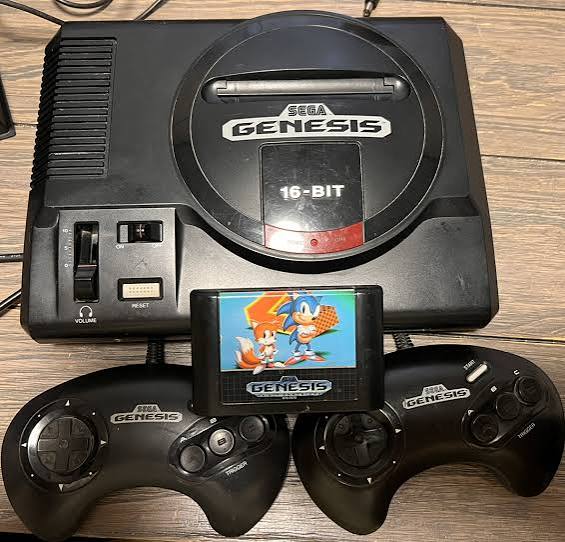
By 1994, Sega’s Genesis had grabbed more than half of the U.S. home console market, according to marketing history compiled by Sega-16’s retrospective on the company’s advertising, an outcome that looked almost impossible when the console had launched in North America in October 1989 against a Nintendo Entertainment System that owned the category outright.
The turnaround came less from Sega’s hardware than from four words printed over a black screen: “Genesis Does What Nintendon’t.” It was one of the first times a major console maker had mocked a named competitor directly in national advertising, and it kicked off a rivalry that reshaped how tech companies have marketed against a dominant leader ever since.
The Slogan That Almost Wasn’t
Sega’s earliest U.S. marketing didn’t work. Campaigns built around the tagline “Genesis Does It All” landed flat, and the console struggled to make a dent in Nintendo’s dominance until Michael Katz took over as president of Sega of America and pushed the company toward direct confrontation instead of a generic pitch, according to Sega-16’s history of the campaigns. Ad agency Bozell, which had picked up Sega’s roughly $10 million account in May 1989, built the “Nintendon’t” line around the console’s faster, more arcade-like graphics, framing Nintendo as the kiddie option by comparison, per the same account and a separate retrospective from Overstreet Access. Within six months of Katz’s arrival, Sega had sold 500,000 Genesis units in the U.S., a fast start against a competitor that still controlled the larger share of the market.
Escalation
The rivalry only got louder from there. Sega leaned on console-specific exclusives tied to real athletes and celebrities, Pat Riley Basketball, Tommy Lasorda Baseball, Joe Montana Football, Michael Jackson’s Moonwalker, to differentiate its library, per Overstreet Access, while its ads kept the direct-comparison format Nintendo had never had to answer before. In July 1992, agency Goodby, Berlin & Silverstein took over Sega’s account with a much bigger budget: $65 million that year, climbing to $95 million in 1993, funding the “Welcome to the Next Level” and “SEGA!!” campaigns that debuted at the 1993 MTV Video Music Awards, according to Sega-16’s account. Nintendo spent years publicly downplaying the newcomer as a legitimate threat, even as Sega’s ads kept the pressure on.
Why the Apostrophe Worked
Part of what made the line land wasn’t just the insult, it was the typography. Former Sega global marketing head Al Nilsen has recalled that the moment the campaign clicked internally was seeing the word on screen for the first time, with the apostrophe and trailing “t” doing more work than any voiceover could, according to Sega-16’s account of the campaign’s development. Rather than explaining why Genesis was better in a paragraph of ad copy, the slogan let Nintendo’s own name carry the insult, which made it instantly repeatable on playgrounds in a way a longer tagline never would have been. It’s a small detail, but it’s a big part of why the phrase outlived nearly every other console-war slogan that followed it, Nintendo’s own late-1990s comebacks included.
What the Real Numbers Say
The two companies have disputed exact sales figures for decades, but independent tallies of console shipments tell a fairly consistent story. Sega’s Genesis reached roughly 65 percent of U.S. home console market share at its early-1990s peak, per Overstreet Access, and research compiled by the hobbyist archive Sega Classics puts total worldwide Genesis and Mega Drive sales at more than 54 million units against roughly 44 to 49 million for the Super Nintendo, with the Genesis frequently outselling its rival by close to two-to-one in North America during the campaign’s peak years, according to Sega Classics’ sales research. That same research notes Nintendo’s own early sales claims were later revised downward once independent tallies caught up, with the actual U.S. Super Nintendo install base sitting closer to 4 million units in 1992 against internal forecasts of 6 million.
The Template Everyone Copied
By the mid-1990s, Sega’s market-share advantage had narrowed and eventually reversed, as Nintendo regained ground and Sony entered the console business entirely, but the marketing playbook Sega wrote survived long after the Genesis stopped selling. Naming a competitor outright, mocking its limitations in a national ad, and building a brand around being the edgier alternative became standard practice across gaming, phones, and streaming services in the decades that followed. Apple’s “I’m a Mac” campaign and every carrier’s attack ad against its rivals run some version of the play Sega ran first. Nintendo eventually won back the console throne. Sega’s ad campaign won something that outlasted the hardware war entirely.

Leave a Reply