


On April 13, 2000, Metallica walked into a federal courthouse in California and sued Napster, the file-sharing service millions of fans were using to trade MP3s for free — and named three schools, the University of Southern California, Yale University, and Indiana University, as co-defendants for allowing the traffic on their campus networks, according to Rolling Stone’s contemporary reporting.
The complaint accused Napster and the universities of copyright infringement, unlawful use of digital audio interface devices, and violations of the Racketeer Influenced and Corrupt Organizations Act. For a band built on outsider credibility, suing its own fan base looked like betrayal to a huge slice of the internet — and the fight still shapes how the industry treats streaming today.
A Leaked Demo Started It
The lawsuit didn’t begin as a grand statement about the future of the music business. It began with a single song. Metallica’s unfinished demo of “I Disappear,” recorded for the Mission: Impossible II soundtrack, showed up on Napster and started circulating before the band had cleared it for release. Drummer Lars Ulrich later framed the issue in blunt terms: “It is therefore sickening to know that our art is being traded like a commodity rather than the art that it is,” he said, adding, “From a business standpoint, this is about piracy — taking something that doesn’t belong to you,” according to Rolling Stone. Metallica hired an outside firm to trace who was sharing its catalog on the service and compiled a list running past 300,000 usernames, an enforcement effort no band had attempted at that scale before, as detailed in a timeline of the case maintained on the record of Metallica v. Napster, Inc.
Backlash From the Fans
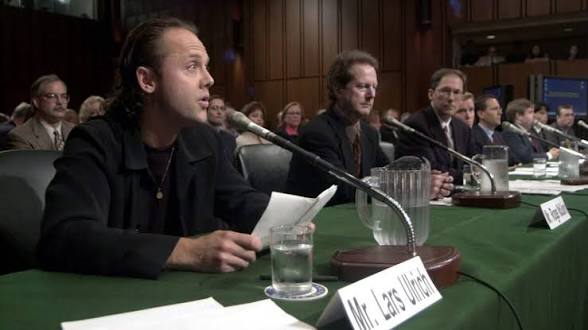
The public reaction was immediate, and it was not kind to the band. Message boards and college radio stations that had championed Metallica for two decades turned on them within days, unconvinced that a platinum-selling act needed to chase teenagers over shared files. Metallica pressed forward anyway. Ulrich went on to testify before the U.S. Senate Judiciary Committee about the case in July 2000, arguing that unauthorized trading of an artist’s work amounted to theft regardless of how convenient the technology made it, a sequence of events confirmed by the same litigation summary on Wikipedia.
How the Case Ended
In March 2001, U.S. District Judge Marilyn Hall Patel ordered Napster to filter copyrighted material from its network within 72 hours or shut down, a ruling that effectively dismantled the service’s original file-sharing model. Napster settled directly with Metallica, and separately with rapper Dr. Dre, who had filed a similar suit, in July 2001. A later plan for German media company Bertelsmann to buy Napster for roughly $94 million collapsed when a bankruptcy judge blocked the deal, and Napster was liquidated the following year, according to the same case record.
Not the Only Suit Napster Was Fighting
Metallica’s case ran alongside a much larger one that ultimately decided Napster’s fate: A&M Records and the major labels had already sued the company months earlier, arguing the service enabled mass copyright infringement on an industrial scale. Metallica and Dr. Dre’s separate suits targeted something narrower and more personal, the specific harm to individual artists whose unreleased or copyrighted material was moving through the service without any compensation reaching them at all. That distinction mattered in how the press covered it. The labels’ case read as a corporate fight over control of distribution; Metallica’s case, fairly or not, read as multimillionaire musicians turning on the fans who had made them multimillionaires in the first place, according to the same record of the litigation.
Why It Still Matters
Metallica’s lawsuit didn’t stop file sharing. Napster’s shutdown mostly pushed users toward decentralized services that were harder to sue into oblivion. What the case did was force the music industry, and eventually every entertainment industry built on selling copies, to confront the fact that the old distribution model was ending whether labels liked it or not. The licensing frameworks built in Napster’s wake became the rough blueprint for iTunes, and later for Spotify and every subscription service that followed, all of which route royalties back to rights holders through tracked, licensed streams instead of the free-for-all Napster represented. Metallica spent years being cast as the band that hated its own fans for wanting free music. Two decades later, the streaming economy they fought for in court is the one every band, including plenty still annoyed at them for it, now depends on to get paid.

Leave a Reply