

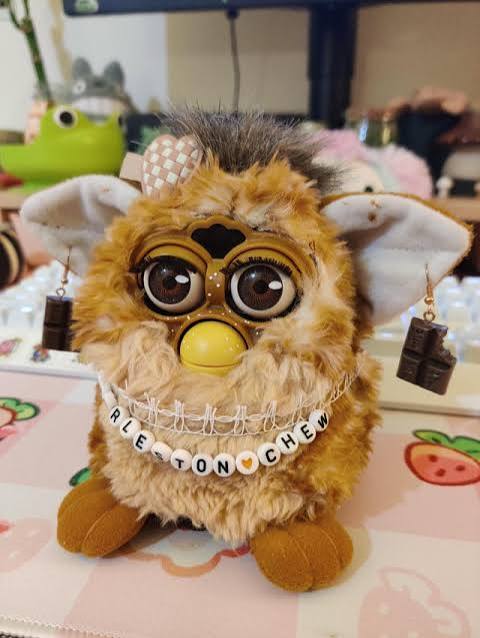
Hasbro gave FURBY a 2026 makeover earlier this year, unveiling a version called FURBY Vibes that swaps a single fixed personality for three interchangeable ones — a very different problem than the one the original toy caused when the National Security Agency banned it from its own headquarters in 1999.

Key Points
- Hasbro introduced FURBY Vibes at its 2026 Toy Fair presentation on February 14, per the company’s own newsroom announcement.
- The new toy comes with swappable glasses that unlock one of three personalities — Star Diva, Chill Spa and Punk Rocker — each with its own music, sounds, phrases and games.
- The original Furby, launched by Tiger Electronics in 1998, became one of the decade’s biggest holiday-toy phenomena.
- In 1999, the NSA barred Furby from its Fort Meade headquarters, worried the toy might record and repeat classified conversations, according to an account by FAA historian Terry Kraus.
The NSA ban has become one of the more-repeated pieces of Furby lore, and for good reason: it wasn’t a rumor confined to office gossip. Photography and audio-visual recording equipment were already prohibited inside NSA headquarters, and security officials worried Furby’s habit of “learning” phrases from its surroundings meant it might actually be capturing and repeating sensitive material, per the FAA account. The reality was less dramatic — Furbys were pre-programmed with a fixed vocabulary that shifted based on light, touch and sound, with no recording hardware inside at all. Tiger Electronics tried to knock the panic down directly, issuing a public statement that read simply, “Furby is not a spy,” a line later revisited by the fact-checking site Snopes when the story kept resurfacing online years later.
FURBY Vibes trades that old controversy for a much lower-stakes pitch: customization. Instead of one fixed set of reactions, kids can swap the toy’s glasses to shift its entire personality, unlocking different soundtracks and phrase sets depending on which “mood” is loaded in. It’s a design choice squarely aimed at a generation raised on customizable avatars and swappable phone cases, applied to a toy whose animatronic, blinking-eyed unpredictability made it a fixture of late-’90s childhoods in the first place. Toy Fair floor coverage from Mulderville framed the redesign as part of a broader industry shift toward toys built as “identity companions rather than passive electronic novelties.”
The relaunch was part of a broader nostalgia push at Hasbro’s 2026 Toy Fair slate, which also included a redesigned version of the marble game CROSSFIRE. Furby’s journey — from a toy the government worried might be secretly listening, to a toy now built around letting kids choose what it says — traces just how far both the technology and the paranoia around it have shifted in less than three decades.

Leave a Reply