

Most people who own a piece of iridescent glass inherited it, not shopped for it. It sat in a grandmother’s china cabinet, got wrapped in newspaper during a move, and eventually ended up in a donation box headed for Goodwill because nobody was sure what it was worth, or whether it was worth anything at all. Sometimes that box holds a five-dollar dish. Occasionally it holds a Fenton.
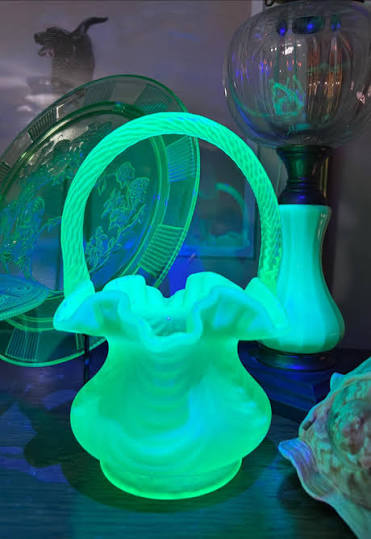
One example of just how far that gap can stretch: a Fenton Vaseline Opal Curtain Optic vase, a pale yellow-green glass with a rippled, drapery-like surface pattern and a milky opalescent edge, sold for $3,199, according to price data compiled by True Legacy Homes. That single result sits well above what most decorative glass fetches today, and it’s not the only strong number in the same guide. A Vaseline hobnail floor lamp brought $1,750, and a rare jade turtle aquarium piece sold for $1,525.
What makes the Curtain Optic vase worth singling out is how unglamorous it would look sitting on a shelf next to something like a punch bowl set or a full epergne. It’s a single vase, not an elaborate showpiece, and its value comes almost entirely from the combination of a specific color formula and a mold pattern Fenton didn’t run forever. That’s the trap in sorting through inherited glassware: the pieces that look the most impressive at a glance are frequently the common ones, while a modest-looking vase with the right rare color can quietly outvalue an entire cabinet of showier pieces.
A painting shop that became a glass empire
Fenton didn’t start out making glass at all. According to e-WV: The West Virginia Encyclopedia, the company was founded in 1905 in Martins Ferry, Ohio, as a decorating operation that painted and embellished glass other manufacturers had already made. It wasn’t until a factory went up across the river in Williamstown, West Virginia, in 1906 that Fenton started producing its own glass from scratch. That factory is where the company built its reputation, eventually becoming one of the country’s dominant makers of iridescent pressed glass designed to mimic the far more expensive art glass Louis Comfort Tiffany was making at the time. Collectors later nicknamed the style “carnival glass,” on the mistaken assumption it had been given away as prizes at carnivals, when in reality it was sold cheaply through five-and-dime stores to ordinary households.
The Williamstown plant kept running for more than a century before economic pressure caught up with it. Traditional glassmaking at the site ended in 2011, the e-WV entry notes, though the company briefly kept producing jewelry and glass beads afterward. The original molds didn’t disappear, either; they’re now used by Mosser Glass in Ohio, meaning some Fenton-designed shapes are technically still being pressed today, just under a different name.
What actually separates a keepsake from a payday
Not every piece with a rainbow sheen is a windfall, and it’s worth being honest about that before anyone starts digging through a closet with dollar signs in their eyes. True Legacy Homes’ own pricing data shows plenty of everyday Fenton selling in a far more ordinary range: hobnail vases in the $15 to $50 range, carnival glass bowls between $65 and $150, and footed dishes as low as $10. The guide is blunt that decorative glassware overall has lost value over the last decade as collecting habits shift toward younger buyers with different taste. The pieces still worth real money tend to be the ones combining a desirable color, like Vaseline or cranberry opalescent, with a distinctive pattern and genuine age, not just an iridescent shimmer that catches the light.
Telling the difference takes a closer look than most donation-bin sorting gets. Fenton pieces made after 1970 usually carry a molded signature worked directly into the glass, while earlier pieces were marked only with a paper sticker that has often long since fallen off or been washed away. Genuine opalescent and carnival pieces tend to show small manufacturing tells, tiny carbon specks or air bubbles trapped in the glass, along with ruffled, crimped, or sawtooth edges that mass-produced modern imitations rarely bother replicating. None of that takes an appraiser to check. It just takes someone willing to hold the piece up to a window before it goes in the donation box, because the difference between a curbside giveaway and a four-figure sale can come down to thirty seconds of actually looking.

Leave a Reply