

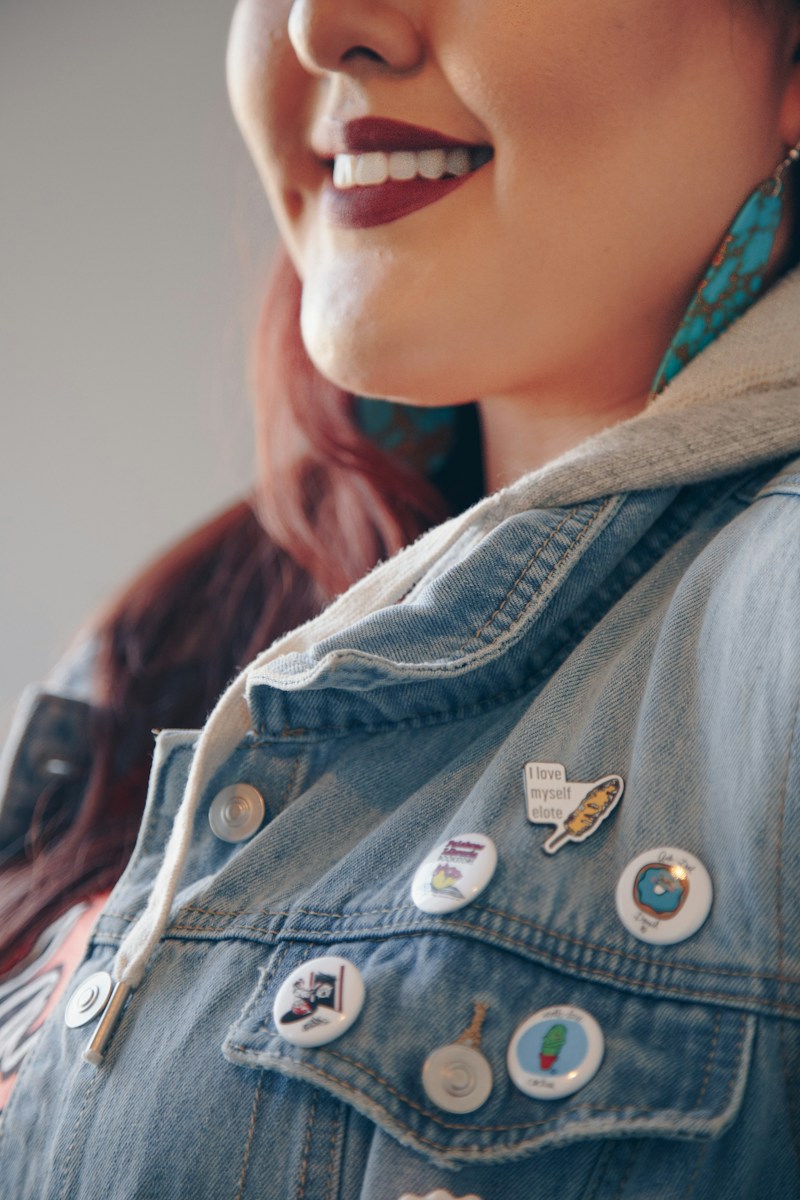
Pinterest’s trend forecasters put an official name on something a lot of closets had already started doing quietly: pulling old lapel pins, retired service medals, and grandmother’s costume jewelry out of drawers and pinning them onto blazers, sweaters, even socks. The platform’s Pinterest Predicts 2026 report calls the trend “Brooched,” and it specifically flags Boomer and Millennial men as the ones driving it, wearing “vintage pins, crystal clip-ons and heirloom brooches” in places brooches have rarely shown up before.
Pinterest itself describes the whole thing as “part homage, part reinvention”: “a new way to wear your heart on your sleeve.” The specific styling detail is what makes it feel real rather than aspirational: this isn’t one statement pin on a lapel, it’s pins clustered on a tie, scattered across a cardigan, or pinned to the cuff of a sock, the way someone might have arranged them decades ago simply because they owned several and liked all of them.
The runways already caught up
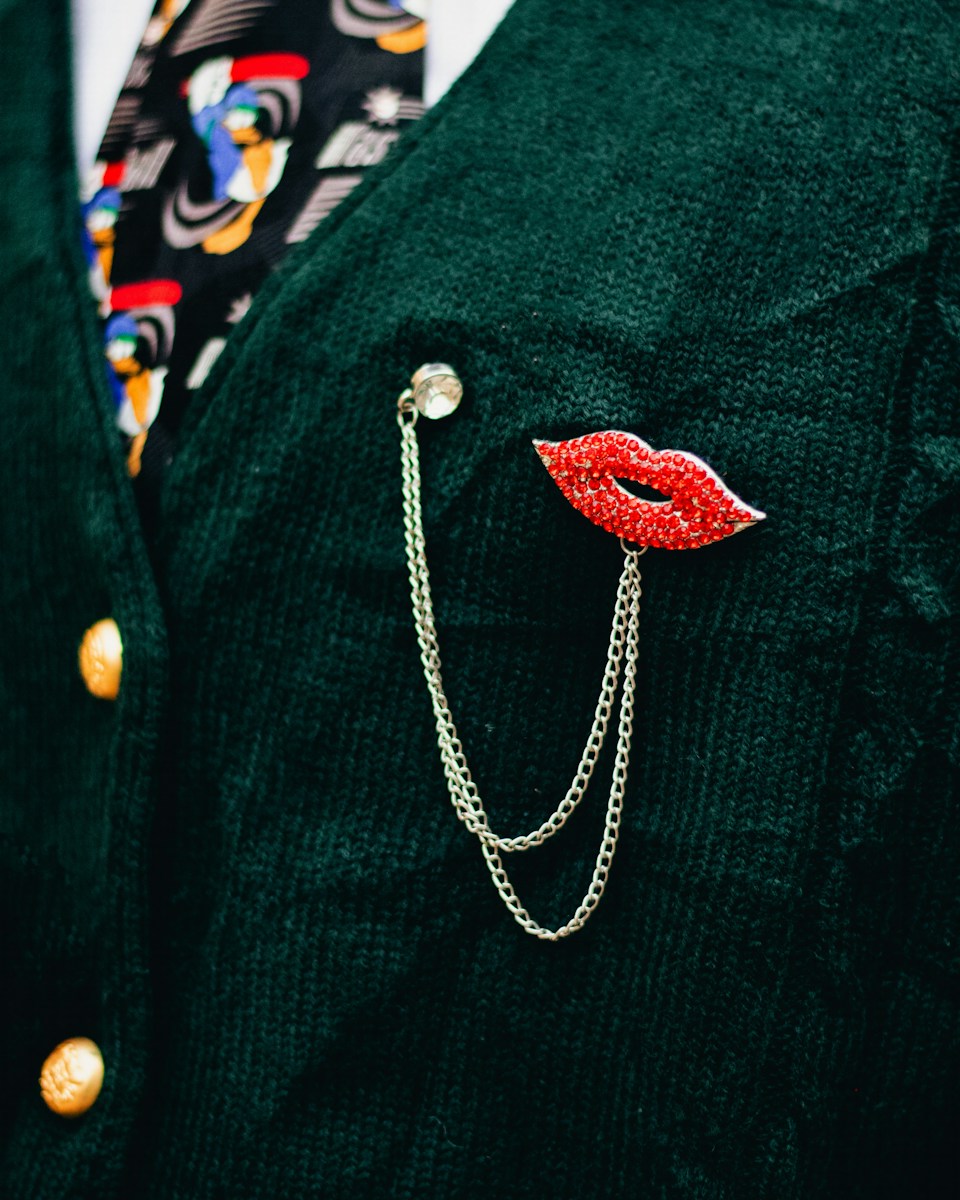
By the time the forecast went public, fashion had already started proving it right. According to Grazia Singapore, searches for “brooch aesthetic” on Pinterest jumped more than 100 percent, and spring 2026 runway shows turned out to be dense with pins. Chanel sent camellias and floral clusters down the runway pinned to tweed jackets and shirts. Dior’s Haute Couture show built sculptural pin bouquets directly into gown necklines. Tory Burch went stranger, with figurative fish and sardine brooches, while Miu Miu, Celine, Wales Bonner, Dolce & Gabbana, Ralph Lauren, and Giorgio Armani all sent their own versions down their own runways in the same season. At the 2025 Met Gala, stylists reportedly clustered six or seven brooches onto a single lapel rather than settling for just one, and heading into the 2026 awards circuit, diamond leaf brooches and antique crest pins have started replacing the pocket square as the finishing touch on a tuxedo.
A category with real teeth
None of this is new territory for the brooch, though. It’s a return trip. Brooches have spent most of the last century doing exactly this kind of cultural double duty, dressing up both status and sentiment at once. During World War II, when the U.S. government was rationing base metals for the war effort, the costume jewelry house Trifari solved its own materials shortage by switching to Lucite. Its head designer, Alfred Philippe, who trained at Paris’s Ecole Boulle and had previously designed for Cartier and Van Cleef & Arpels, began setting sterling silver mounts around solid, glassy plastic “jelly” cabochons shaped like beetles, birds, and flowers, creating what collectors still call Trifari’s “Jelly Belly” line. Those wartime pieces, made scarce by circumstance rather than by design, are now among the most sought-after Trifari jewelry that exists.
That’s really the thread connecting a 1940s jelly-belly beetle pin to a lapel in 2026: a brooch has never just been a way to close a coat. It’s a small, wearable proof that someone kept something on purpose, a grandfather’s service pin, a mother’s rhinestone spray, a dead relative’s taste in costume jewelry, long after it stopped being fashionable to keep it around. Every brooch on a runway right now is standing in for one that’s still sitting in somebody’s actual drawer.
Worth digging for the real ones
What makes this particular revival worth paying attention to, rather than just another accessory cycle, is where the actual supply lives. You can’t manufacture a fifty-year-old lapel pin. The interesting ones — service medals, mourning brooches, wartime jelly bellies, the mid-century rhinestone sprays that turn up in estate-sale jewelry boxes for a few dollars a piece — were made once, in finite numbers, by people who were solving problems entirely unrelated to whatever Pinterest is forecasting this year. A man’s grandfather’s old union pin or fraternal-order badge was never designed with a runway in mind. It was designed to say, quietly, which rooms he belonged in.
That’s also why the trend photographs so differently from most Pinterest predictions, which tend to describe a look you can buy new in a single afternoon. This one specifically rewards not doing that. A drugstore brooch bought last week reads as costume. A grandfather’s tie pin, slightly tarnished, with a scratch nobody remembers the story behind, reads as inheritance. Pinterest just noticed enough people reaching for the second kind at the same time to give the moment a name.

Leave a Reply