

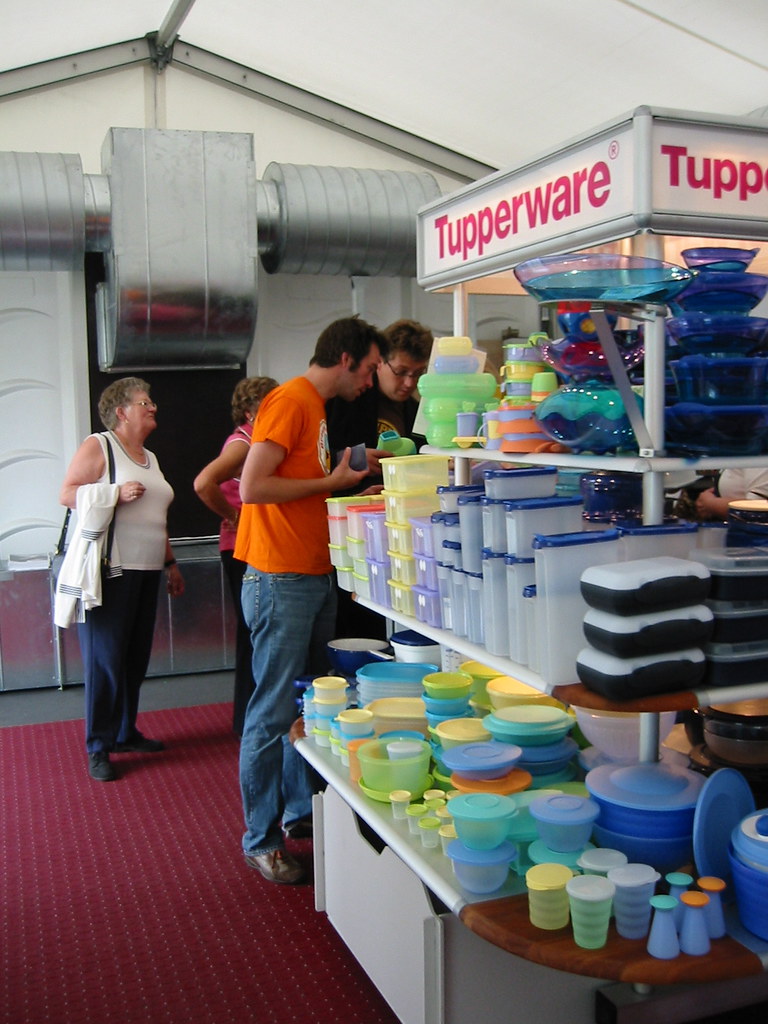
In 1949, one dealer working under a Miami saleswoman named Brownie Wise sold fifty-six plastic Wonder Bowls in a single week. Not from a store shelf, but from a living room, one demonstration at a time. Tupperware, the product itself, had already been sitting in stores for three years by then, and it was barely selling.
Shoppers picked up the sealed containers, turned them over, and put them back down, unable to tell what made them different from any other plastic bowl. Wise figured out the fix: you couldn’t sell the seal on a shelf. You had to watch someone use it.
Wise had come to Tupperware sideways. A divorced mother supporting her son and her own mother on a secretary’s income, she had already built a small home-party business of her own, called Patio Parties, using techniques picked up selling for Stanley Home Products.
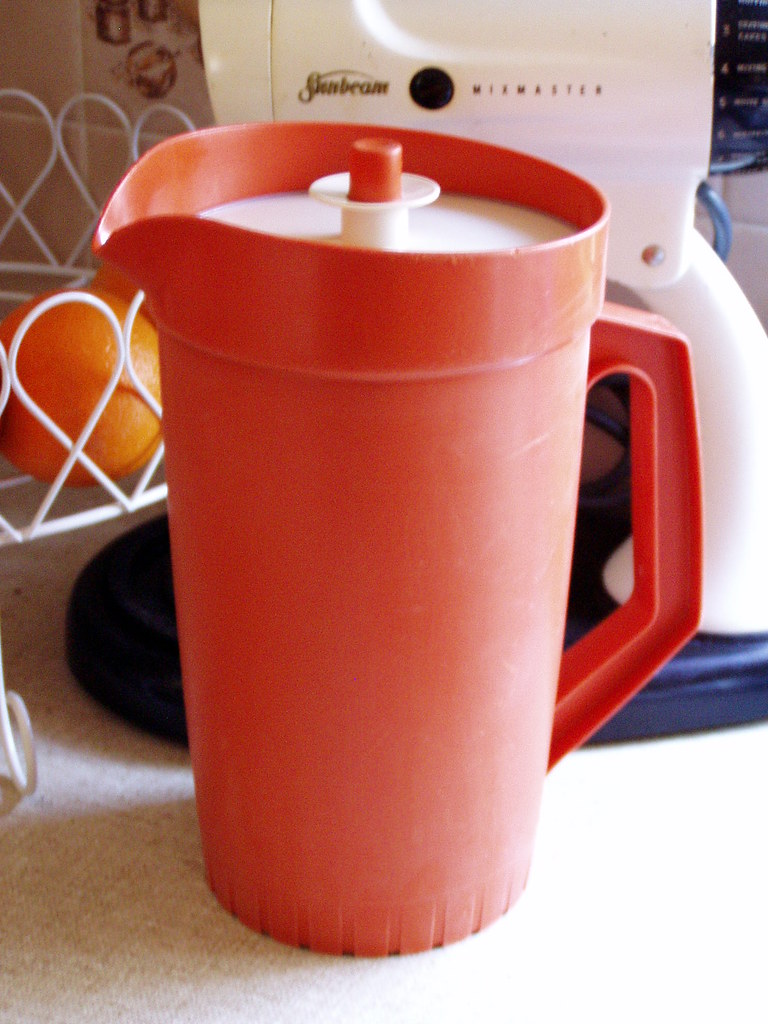
Earl Tupper, the chemist who invented the polyethylene “Wonder Bowl” and its now-famous burping seal in 1946, hired her in 1951 to run sales. She turned his failing retail product into one of the defining household brands of postwar America, mostly by throwing out the idea of retail altogether.
The system she built ran on demonstration and community as much as on the product itself. Dealers held parties in customers’ homes, physically dropping the bowls to prove they wouldn’t crack and popping the lids to show off the seal. Wise published a weekly newsletter to her sales force, staged pep rallies, and ran an annual retreat, part sales conference and part revival meeting, where top performers won prizes on stage in front of their peers. She recruited widely, across rural and urban women, Black and white, at a time when few sales organizations bothered building that kind of reach. By 1954, the network she’d built counted roughly 20,000 people as dealers, distributors, and managers, and company-wide sales had climbed to $25 million — well over $200 million in today’s dollars. Earl Tupper made her a vice president, an almost unheard-of title for a woman running a sales division in 1954.
Her own philosophy, as she put it herself, was simple: “You build the people and they’ll build the business.” It worked exactly the way she said it would. Tupperware pulled its products off store shelves entirely and sold exclusively through home parties for decades, a business model Wise had essentially invented on the fly and that the company rode straight to national dominance.
None of it bought her any security. Wise had no formal employment contract, and in January 1958, Earl Tupper and the company’s board fired her — reportedly, according to Smithsonian magazine’s account, because Tupper was preparing to sell the company and worried an outspoken woman running its most visible division would make it a harder sell to buyers. She received a one-time settlement worth about a year’s salary, roughly $30,000, and only after threatening legal action. Tupper reportedly moved to scrub her name from company literature soon after she left.
It had never really been on the literature to begin with. The product line she spent seven years turning into a national phenomenon carried, and still carries, the name of the man who patented the plastic — Tupper plus ware. Wise’s name never appeared on a single box, despite building the entire sales machine that made the boxes worth anything at all.
The home-party model she invented outlived her tenure by a wide margin. Direct-selling companies built on the same living-room-demonstration blueprint — Mary Kay, Pampered Chef, and a long list of others — followed the exact structure Wise pioneered at Tupperware in the early 1950s, right down to the pep rallies and the incentive trips for top sellers. Tupperware itself kept using her model for decades after pushing her out, long after most Americans had forgotten her name was ever attached to it. The company survived Wise’s ouster, survived Earl Tupper’s own sale of the business in 1958, and kept the party format running well into the 2000s, before finally filing for Chapter 11 bankruptcy in September 2024 — a slow-motion ending for a company that, in its founder’s own telling, was never supposed to be a story about home parties at all.
Pull open a kitchen drawer anywhere in America today, and the container inside still credits the inventor. The saleswoman who taught the whole country how to buy it, who built the network that turned a flopping plastic bowl into a $25 million business in three years, doesn’t get a mention.

Leave a Reply