

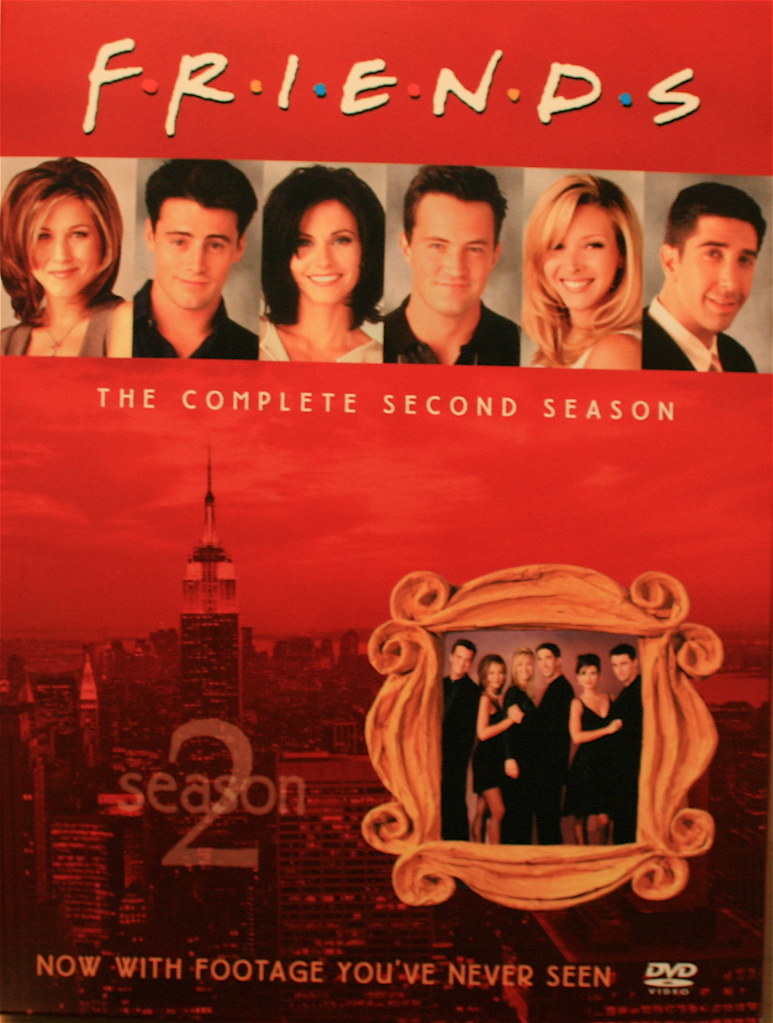
Two million dollars. That’s what a 30-second commercial cost during the final episode of Friends on May 6, 2004 — a price NBC News reported at the time as the most ever paid for a spot inside a sitcom episode, full stop.
The show that closed out that night pulled in 52.5 million U.S. viewers, according to a retrospective marking the anniversary, making “The Last One” the most-watched entertainment broadcast in six years at the time it aired.
Run the math on that ad rate and the arithmetic gets absurd fast. A single half-minute of airtime cost more than most Americans’ annual salary, multiplied across roughly eight minutes of commercial breaks built into the hour-long finale.
CNN Money reported months ahead of the broadcast that NBC stood to gross around $64 million from the finale’s ad inventory alone, netting the network roughly $50 million after agency commissions — for one 60-minute episode of a show that had already been running for a decade.
Context makes the number land harder. A regular Friends episode that same final season sold ad time for roughly $450,000 to $475,000 per 30 seconds, per CNN Money’s reporting — meaning the finale’s rate ran more than four times a normal week’s price, for the exact same show in the exact same network slot. NBC could charge that premium because a series finale is a once-only inventory item: there’s no rerun of a cultural moment, and advertisers were bidding to be inside the last new episode of the biggest comedy on television, not just a good timeslot.
NBC didn’t just cash in on the episode itself, either. The network built a retrospective special to air right before “The Last One,” and per CNN Money, even that clip show — not the finale proper, just the warm-up act — was selling 30-second spots for $1.25 million, itself a startling number for what amounted to a highlight reel stitched together from ten years of old footage. Selling both halves of the night at premium rates is how a single Thursday managed to gross the network tens of millions before a single episode of the fall season had even been scheduled.
It also blew past the previous record-holder by a wide margin. NBC News noted that Seinfeld’s 1998 finale, the prior gold standard for sitcom send-offs, had averaged $1.7 million per 30-second spot — a huge number at the time that Friends still cleared by roughly $300,000 six years later. For comparison, the same NBC News report pointed out that the finale’s rate came within shouting distance of the $2.25 million networks were charging for 30 seconds during that year’s Super Bowl, meaning advertisers treated one sitcom’s goodbye as functionally equivalent to America’s biggest annual sporting event.
What the finale didn’t do was out-draw television’s actual all-time audience benchmarks. M*A*S*H’s 1983 finale, still one of the largest single-broadcast audiences in American television history, drew an estimated 106 million viewers — roughly twice what Friends pulled two decades later, per the same NBC News comparison. That gap says less about Friends than about how television itself had changed. In 1983, there were only a handful of channels and no real alternative to watching whatever the big three networks aired that night. By 2004, cable, early DVR adoption, and a fragmenting media landscape meant no show, however dominant, could plausibly command the kind of monopoly M*A*S*H had over a single evening. Advertisers weren’t paying $2 million because Friends drew M*A*S*H-sized crowds. They were paying it because, in an increasingly splintered media world, an audience that large watching one thing at one time had become the rare commodity, not the common one.
No sitcom finale since has come close to matching the ad price or the audience simultaneously. Seinfeld’s finale had the bigger per-spot number relative to its own era, and M*A*S*H had the bigger crowd outright, but Friends is the only one of the three that landed near the top of both charts at once — in the exact stretch of television history when doing both was still possible, before streaming fully scattered audiences for good. That combination, more than the show’s plot or its cast’s post-finale careers, is what actually made May 6, 2004 a genuine television landmark rather than just a beloved show ending on a high note — and it’s a big part of why the finale still gets cited as a benchmark event more than two decades on.

Leave a Reply