

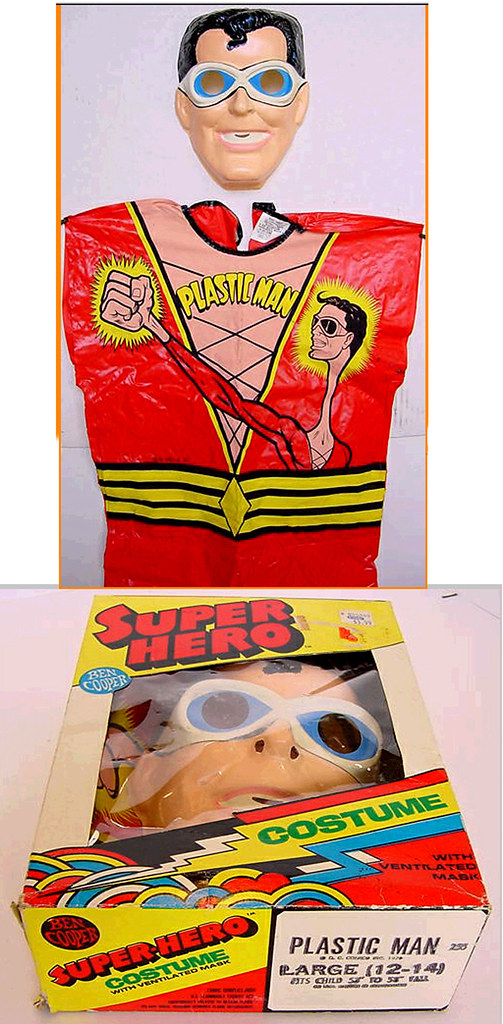
A plastic Ben Cooper mask that cost $1.25 off a Woolworth’s rack in the 1960s can now sell for more than $600, and a boxed set in decent shape regularly clears $300.
If you grew up between the Eisenhower and Reagan administrations, there’s a good chance you wore one of these costumes at least once — and a decent chance somebody in your family threw one away without a second thought.
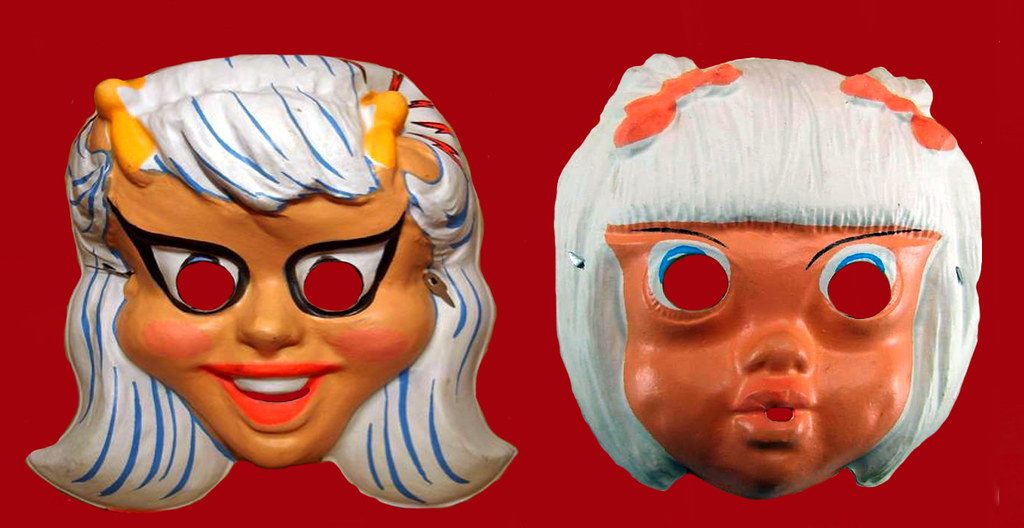
Ben Cooper Inc. built its empire on exactly that kind of disposability. The company was founded in 1937 in Red Hook, Brooklyn, by Benjamin Cooper, a former Tin Pan Alley songwriter who’d spent the 1920s designing stage costumes for Cotton Club chorus girls and Ziegfeld Follies performers before pivoting to children’s Halloween wear during the Depression, according to a detailed company history from The Bowery Boys.
Within his first year in business, Cooper merged with a firm holding merchandising rights to Walt Disney characters, and the formula that would define the brand for the next 50 years was set: a molded plastic mask with an elastic band, paired with a thin smock printed with the character’s image, packaged together in a box with a cellophane window. One-size-fits-all. Cheap to make. It reeked of plastic and it was everywhere.
By the time the company hit its stride, “everywhere” wasn’t an exaggeration. Ben Cooper was the largest Halloween costume supplier in the country by both 1979 and 1984, and by 1991 it controlled somewhere between 70 and 80 percent of the entire licensed costume-character business, manufacturing more than four million costumes a year, per the company’s history compiled by WorthPoint. The company was first to license Marvel superheroes for costumes, landing Spider-Man in 1963 and Batman the following year, and it held deals with DC Comics, Mattel, and Children’s Television Workshop on top of its original Disney contracts.
From Trash Night to Trophy Case
None of that made Ben Cooper indestructible. A brutal run of bad luck hit the company late in its life: a January 1989 fire at a Georgia facility destroyed $2 to $3 million worth of inventory, and consumer anxiety over tampered Halloween candy in the 1980s dented costume sales across the industry. Ben Cooper filed for Chapter 11 bankruptcy in March 1988, emerged a year later after paying creditors in full, then filed again in October 1991. Rubie’s Costume Co. acquired what was left of the company in 1992, and the Brooklyn factory that had outfitted generations of trick-or-treaters went dark for good.
That should have been the end of the story — a defunct novelty manufacturer, forgotten along with the smell of hot plastic mask against a kid’s face. Instead, collectors kept the costumes alive, and specialty auction data now tracks real, escalating money changing hands for pieces most families once bagged up for the curb.
According to sale records compiled by GoCollect, a complete boxed Ben Cooper Dracula costume without the rooted-hair variant has sold for $162.50 to $240.50, while a boxed Phantom of the Opera set has cleared as high as $565.55. Spider-Man sets, the company’s biggest license, run a wide range depending on box variant and condition, from under $20 to nearly $80, with individual loose masks trading for a few dollars up to $16. Rarer character licenses climb faster: Antique Trader’s collecting guide lists a boxed 1966 Ben Cooper Daredevil costume at $2,000 and a 1965 Morticia Addams set at $1,752, with individual masks alone typically bringing $66 to $389 and original packaging adding as much as 40 percent to a costume’s value on its own.
Check the Attic Before Trash Night
Most vintage Ben Cooper pieces still only fetch $30 to $50, so this isn’t a guarantee that whatever’s balled up in a garage bin is a payday. But the gap between “worthless plastic novelty” and “several-hundred-dollar collectible” usually comes down to three things any household can check in five minutes: whether the original box survived, whether the character is a scarcer license rather than a common one, and whether the mask and smock are still a matched, complete set. Halloween season means secondhand shops and estate sales are about to fill up with exactly this kind of thing again. A company that made four million disposable costumes a year, it turns out, left behind a market where the surviving ones are worth taking seriously.

Leave a Reply