

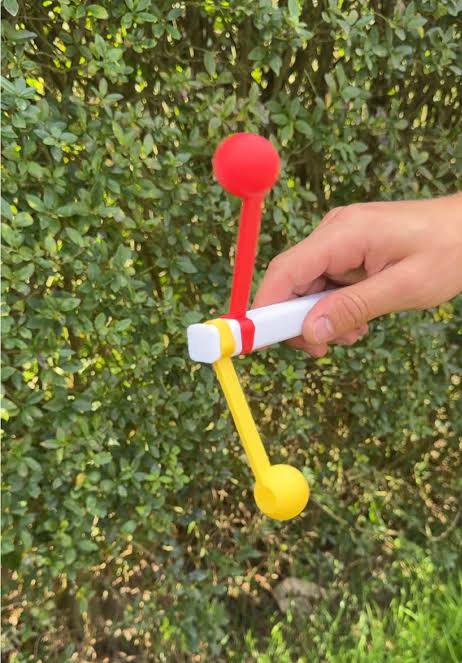
Clackers took a piece of ranching equipment and turned it into the most dangerous fad on the American playground. The toy’s basic design traces back to the bola, a throwing weapon used by South American gauchos, adapted into a pair of hard acrylic balls on a string that kids swung up and down to smash together with a satisfying crack, according to a history published by Legendary Toys.
A Global Sales Phenomenon Built on Repetitive Impact
Clackers exploded into a genuine worldwide craze almost as soon as they hit toy store shelves, according to reporting from Quartz. The mechanics were simple enough for any kid to pick up in minutes: hold the string in the middle, get the two acrylic balls swinging in opposite arcs, and let momentum carry them into each other over and over, faster and faster.
When the Cracking Sound Became a Warning Sign
The acrylic plastic used in early Clackers wasn’t built to withstand the repeated high-speed impact the toy’s entire play pattern demanded. Under enough force and enough repetition, the balls didn’t just crack — they shattered outright, and because kids were holding the string with the balls swinging directly toward their own faces and hands, the resulting plastic fragments had nowhere else to go.
The Recall Nobody Saw Coming
Federal authorities eventually pulled dangerous acrylic Clackers from shelves, and by the mid-1980s the CPSC was still actively enforcing against unsafe versions still circulating in the secondary market — the commission’s own recall record shows a U.S. Marshal seizing a shipment of “Ker-Bangers”, a rebranded Clacker variant, in Phoenix as late as 1985. That seizure is documented in a parallel legal recall archive as well, per Justia’s recall database.
A Design Flaw Manufacturers Couldn’t Fully Engineer Around
Later versions of the toy attempted safer engineering — thicker-walled plastic, softer materials, shorter strings — but none of it fully solved the underlying physics problem. According to Wikipedia’s history of the toy, the shattering issue and resulting court cases became significant enough that Clackers are still cited today as an early case study in toy-safety regulation.
Gone From Shelves, Never Fully Forgotten
Clackers never fully vanished — softer foam and rubber versions still circulate as nostalgia novelty items — but the genuine acrylic original is a toy history mostly remembers through its injury reports rather than its sales figures.

Leave a Reply