

Furby wasn’t dreamed up in a Tiger Electronics boardroom, and it definitely wasn’t built to be easy. According to a history published by the Computer History Museum, inventors David Hampton and Caleb Chung spent roughly nine months designing the toy and another nine months actually building it. Getting it into stores took almost as long as building it — and once it arrived, it broke the entire toy industry’s supply chain within a single holiday season.
Two Inventors, Eighteen Months, and a Language Nobody Ordered
Hampton, who designed Furby’s invented language, Furbish, explained his reasoning in a quote preserved by the Computer History Museum: “I do not want to do anything that interrupts the play, imagination, of a child.” That philosophy is why Furby never spoke plain English out of the box.
Getting the toy into production took its own detour. Per the toy’s history on Wikipedia, Hampton and Chung’s early licensing pitches went nowhere until toy industry veteran Richard C. Levy brought the concept to Tiger Electronics, whose owner, Roger Shiffman, bought the rights outright.
From Toy Fair Curiosity to $35 Must-Have
Furby made its first public appearance at the 1998 American International Toy Fair in New York and officially went on sale October 2, 1998, at a retail price of roughly $35, according to the Computer History Museum’s account.
The Christmas Nobody Could Find One
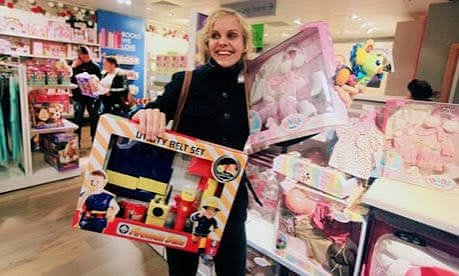
Tiger sold 1.8 million Furbies in 1998 alone, according to reporting from ABC7 New York, and shelves emptied out fast enough that the toy became that year’s defining holiday-shopping headache. By the Computer History Museum’s account, resale prices on the secondary market climbed past $100. Over its first three years of production, worldwide sales eventually topped 40 million units.
When the National Security Agency Got Nervous
The frenzy eventually reached an unlikely audience: the National Security Agency. On January 13, 1999, the NSA issued an internal “Furby Alert” barring the toys from its Fort Meade headquarters, reported at the time by the Deseret News. The agency’s own memo, quoted directly in that reporting, read: “Personally owned photographic, video and audio recording equipment are prohibited items. This includes toys, such as ‘Furbys,’ with built-in recorders that repeat the audio with synthesized sound to mimic the original signal.” Furby had no recording capability whatsoever.
Still Waiting on the Toy Hall of Fame
Furby’s staying power got a fresh test in 2025, when it made the finalist list for the National Toy Hall of Fame at The Strong National Museum of Play, a shortlist announced in the museum’s own press release. Christopher Bensch, the museum’s vice president for collections, described the matchup as “Tickle Me Elmo and Furby — two technological icons of the 90s toy world — battling it out.” Furby didn’t make the cut; Battleship, slime, and Trivial Pursuit took the three open inductee spots instead.
Nearly three decades later, Furby’s real story was never just about the toy itself. It’s about how fast a concept pitched and rejected twice can turn into a national supply-chain crisis, a Fort Meade security memo, and a museum finalist — all inside the same handful of years.

Leave a Reply