

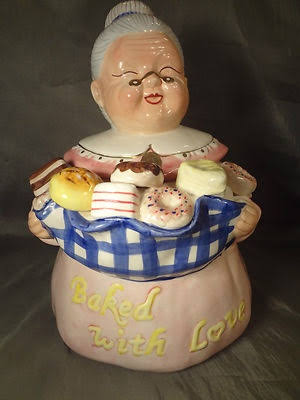
One McCoy Pottery fox squirrel cookie jar has sold at auction for $4,600 — for a piece of stoneware that would have retailed for a few dollars when it left the factory decades ago. That’s not an isolated fluke either. A matched pair of figural cookie jars from Andy Warhol’s personal collection sold for $23,100 at Sotheby’s in 1988, roughly two hundred times its pre-sale estimate, and his entire 175-jar collection brought in a combined $247,000 against an original estimate of just $5,000 to $7,000. If there’s a ceramic cookie jar sitting on top of your grandmother’s refrigerator, it may be worth a genuinely serious second look.
Depression-Era Kitchens Got the First Ones
The ceramic cookie jar as a specific category of American kitchenware traces back to the Brush Pottery Company of Zanesville, Ohio, which is generally credited with producing the first true ceramic version — a plain green jar with the word “Cookie” simply embossed across the front, according to a documented history of American cookie jars. Before that, cookies were more commonly kept in glass jars with metal lids; stoneware didn’t become the dominant material until the mid-1930s, arriving right in the middle of the Great Depression, when a cheap and cheerful piece of novelty kitchenware carried real appeal. What followed became known among collectors as the medium’s “Golden Age” — roughly 1940 through the early 1970s, a stretch during which nearly every American ceramics manufacturer, from Abingdon to McCoy to Twin Winton, put out its own cookie jar line.
Why Some Names Matter More Than Others
Not every jar from that boom carries the same weight today. Collectors and appraisers pay close attention to a handful of specific manufacturers — McCoy Pottery, Brush Pottery, American Bisque, and Metlox Potteries chief among them — because those companies produced the figural, character-driven designs that tend to command real money now, according to the same collector reference. A plain canister with a lid rarely draws a bidding war; the pieces that consistently break records are shaped like something specific and charming — an animal, a storybook character, a person — the kind of design choice that turns a kitchen utility item into a genuine piece of folk sculpture.
One Celebrity Collection Rewrote the Market
The single biggest event in cookie jar collecting history has a name attached to it: Andy Warhol. Warhol spent years hunting New York flea markets on weekends specifically for playful, figural cookie jars, eventually amassing 175 of them shaped like everything from clocks to Humpty Dumpty, a collection detailed in Atlas Obscura’s account of the 1988 estate sale. When Sotheby’s auctioned his estate after his death, two serious buyers — Movado watch chairman Gedalio Grinberg and art collector Stuart Pivar, who paid $11,550 for several pieces alone — drove prices to levels nobody in the pottery world had seen before. The sale proved that ordinary mid-century cookie jars could function as legitimate collectible objects rather than kitchen kitsch, and prices for comparable pieces at flea markets and antique shops reportedly jumped five to ten times overnight once collectors noticed.
The Market Cooled, But It Never Disappeared
That late-1980s speculative rush didn’t last at its original intensity — the broader collectibles market cooled considerably after the 2008-2009 recession, and plenty of jars purchased new after the mid-1980s now sell for a fraction of their original retail price. But the top tier never really came back down to earth. That $4,600 McCoy fox squirrel jar and the six-figure total from Warhol’s collection sit alongside plenty of far more modest but still real numbers — a Roy Rogers and Trigger figural cookie jar set sold at a Christie’s auction for $1,750 in 2010, a reminder that licensed character pieces from beloved mid-century franchises still pull serious bids well outside the rarified Warhol-provenance tier.
What separates a genuinely valuable jar from a $10 flea-market find usually comes down to maker’s mark, condition of the lid (chips and cracks tank value fast), and how specific and well-executed the figural design is. A generic canister rarely excites anyone. But a distinctive McCoy squirrel, a Brush character piece, or a Metlox animal in good condition with an intact glaze is exactly the kind of thing that quietly waits on a shelf for decades before someone finally checks what it’s actually worth.

Leave a Reply