

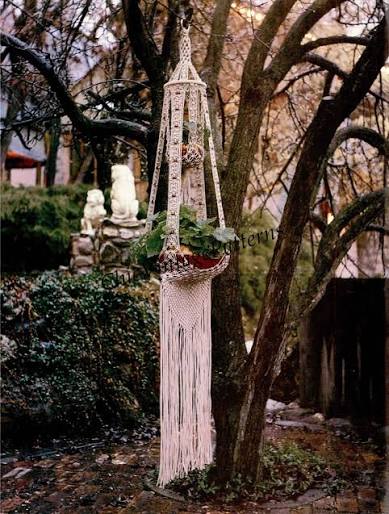
More books about macramé were published in the late 1960s and 1970s than at any other point in its centuries-long history, according to EBSCO’s research history of the craft. Half a century on, the knotted cotton plant hanger that filled that era’s sunrooms is back in apartment windows again, though the version now hanging over a pothos in a rental unit looks almost nothing like the jute owl your grandmother tied.
A Sailor’s Knot Long Before It Was a Craft
Macramé’s roots go back much further than the shag carpet era. Per EBSCO’s history of the technique, it evolved thousands of years ago out of practical maritime knotting, the kind of rope work used to lash rafts together, build fishing nets, and rig ships’ rigging. Sailors carried the skill with them on long voyages, filling idle hours at sea by knotting decorative knife handles, mats, and screens they’d sell once they made port. The craft is believed to have reached Europe by way of Spain during the early eighth century, spreading from there into France and developing independently in other regions, including China.
By the Victorian era, the rough sailor’s knotting had been refined into something far daintier. Victorian women adopted what they called “macramé lace,” using the technique to fringe lampshades and cover mantels and tabletops in delicate knotted trim, a domestic hobby craft a world away from its shipboard origins.
The 1970s Boom, and the Long Quiet After
The counterculture-era revival that followed dwarfed anything that came before it. Publishers churned out how-to books at a pace the craft had never seen, and hobbyists across the country knotted plant hangers, wall hangings, headbands, and jewelry in earthy jute and hemp, hanging spider plants and pothos in nearly every sunlit corner of a decade defined by earth tones and shag textures. Then, as decorating tastes shifted toward the minimalism of the 1980s and ’90s, the hangers came down, and macramé spent a couple of decades mostly living in thrift store bins and grandmothers’ closets.
Instagram Brought It Back, and Millennials Cleaned It Up
The current revival didn’t come from a nostalgia trend chasing the 1970s directly. It grew out of the houseplant boom, according to reporting from the Inlander, which traced the craft’s comeback to millennials filling rental apartments with trailing pothos and spider plants and needing somewhere to hang them that wasn’t a plastic hook. Macramé artist Laurie Ann Greenberg, interviewed for that piece, described watching the craft’s popularity explode within the span of a single year once it caught on through Instagram, and pointed out a real difference from the original 1970s wave: crafters in that earlier era were largely working within their own local communities, while today’s macramé makers are plugged into a global network of tutorials and inspiration that simply didn’t exist the first time around.
The look changed along with the audience. Rather than reviving the scratchy brown jute and wooden bead-eyed owls of the original wave, the current generation of macramé favors soft, undyed cotton cord in cream and neutral tones, built to disappear quietly into a minimalist, plant-filled apartment rather than announce itself as a retro statement piece. It reads less like costume nostalgia and more like a genuinely useful piece of hardware that happens to have a groovy backstory.
A Craft That Keeps Evolving Instead of Fading
Unlike some retro trends that flare up and vanish within a season, macramé’s current run has had real staying power, carried by the same online tutorial culture and plant-parent community that revived it in the first place. It’s since branched out well past the hanging planter, showing up in wall hangings, curtains, chair seats, and hammocks, evidence of a craft that keeps reinventing its application rather than repeating the same pattern from fifty years ago. Even as design forecasters point toward newer fiber crafts like crochet and punch needle for the next wave of texture-driven decor, the knotted plant hanger has proven durable in a way its 1970s counterpart never quite managed: it just kept quietly earning a spot in apartment windows, one trailing pothos at a time. That’s a longer run than the original craze itself ever managed, and it owes less to nostalgia marketing than to a genuinely practical problem, keeping a plant off a crowded windowsill, that a length of knotted cotton still solves better than almost anything else on the market.

Leave a Reply