

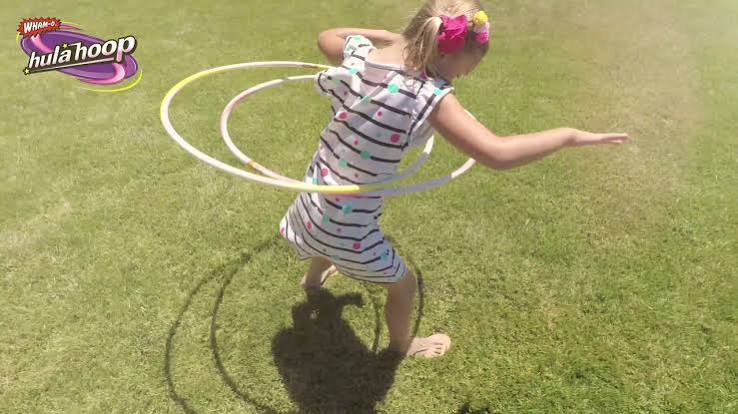
Twenty-five million plastic rings, sold in sixteen weeks, at $1.98 apiece, out of a garage-turned-toy-company in California. That’s the number History.com’s retrospective on the hoop’s patent history puts on Wham-O’s Hula Hoop launch in the spring and summer of 1958, and it remains one of the fastest-selling toy runs in American history. It’s also, according to the company’s own later accounting, the thing that nearly sank the business that made it.
A Gym Class Ring From Australia
The hoop wasn’t a Wham-O original idea. Per the Strong National Museum of Play’s collection history, Wham-O co-founder Richard Knerr and his partner Arthur “Spud” Melin had heard about Australian schoolchildren swinging bamboo exercise hoops around their waists in gym class. In 1957 they set about building an American version out of something sturdier than bamboo, and found it in a brand-new industrial plastic called Marlex, a high-density polyethylene that Phillips Petroleum had spent roughly $50 million developing and was still struggling to find buyers for, according to the American Oil & Gas Historical Society’s account of the material’s early years. Wham-O bought it by the truckload, colored it, sealed it into hollow rings, and named the result after the Hawaiian hip-swaying dance it resembled.
Sixteen Weeks, Twenty-Five Million Hoops
What happened next is the part that made toy-industry history. Wham-O seeded the product with kids in California parks and let word of mouth do the rest, and by the American Oil & Gas Historical Society’s account, a single Titusville, Pennsylvania plastics plant ran 125 workers across three shifts, seven days a week, just to keep pace, churning out roughly 20,000 hoops a day at its peak. Production spread to plants in Chicago, Newark, and Toronto to keep up with demand, and within four months, the company had moved more than 25 million units. Total worldwide sales would eventually cross 100 million within two years, a milestone no single toy had ever hit before.
The fad crossed oceans fast enough to spook governments. Japanese officials reportedly restricted public hooping over concerns it was too suggestive for the street, a detail the Strong museum’s own object history still highlights as evidence of just how far and fast the craze traveled beyond American backyards.
Then, Almost Overnight, It Stopped
Hula Hoop mania had a shelf life measured in months, not years. Wham-O had scaled up manufacturing to a degree few toy companies ever had, licensing production to more than a hundred outside plastics manufacturers to keep pace with orders, and building factories as far away as Tokyo, London, and Frankfurt to meet global demand. Then, as autumn set in and children went back to school, the orders essentially stopped, leaving warehouses and retail shelves stacked with a toy nobody wanted to buy anymore.
The bill for that miscalculation came due fast. By the company’s own later reckoning, the actual profit squeezed out of tens of millions of dollars in Hula Hoop sales came to something close to $10,000, a rounding error against the scale of the craze, once licensing costs, plastics contracts, and unsold inventory were all tallied up. Wham-O had manufactured and shipped faster than almost any toy company in history and still nearly broke even doing it.
The Toy That Taught Wham-O to Slow Down
Wham-O survived, in part because it didn’t stop moving. The company redirected leftover Marlex production capacity toward another new item it had also been developing, a flying plastic disc it would rebrand as the Frisbee, and applied harder-won lessons about scaling manufacturing to future launches like the Slip ‘N Slide and the Super Ball. But the Hula Hoop stayed the cautionary tale inside the company for decades afterward: proof that a toy could sell every unit a factory could physically produce and still leave the people who made it staring at empty bank accounts and full warehouses, because nobody had built a plan for the exact week America would move on to something else.
The hoop itself never really vanished. Fitness studios rediscovered it decades later as a core workout, and it remains a five-dollar toy-aisle staple. But the 1958 version of the story is really about the terrifying math of American fads: 25 million units sold, and a company that came within a rounding error of losing everything anyway.

Leave a Reply