


A 25-year-old German soldier recovering from a broken foot invented an air-cushioned sole in 1945 because standard-issue boots hurt too much to wear. That soldier was Dr. Klaus Maertens, and according to Dr. Martens’ own history page, his fix eventually became the 1460 boot, launched April 1, 1960. Sixty-five years later, the same silhouette has been claimed, in turn, by skinheads, punks, goths, grunge kids, and nu-metal fans, four youth movements that mostly despised each other’s music and politics, all lacing up the identical boot.

A Workwear Boot With No Rebellious Intentions
The original pitch had nothing to do with subculture. Maertens partnered with mechanical engineer Dr. Herbert Funk, and the pair began production in 1947, selling the air-cushioned sole to an unglamorous customer base: German housewives over 40, per the brand’s own account. It was the Griggs family in England who acquired an exclusive license in 1960, modified the design, and branded it “Airwair” under the tagline “With Bouncing Soles.” As the company’s history page puts it plainly, “Dr. Martens’ first few years of existence was very much that of a £2 work-wear boot,” sold to postmen and factory workers who needed something durable and comfortable for a long shift on concrete floors, nothing more symbolic than that.
How a Postman’s Boot Became a Uniform of Rebellion
The shift started almost immediately. By the late 1960s, early skinheads had adopted the boot, along with an unlikely evangelist in The Who’s Pete Townshend, who wore them on stage. That was just the opening chapter. Through the 1970s, the boot spread into glam, punk, Two Tone ska, and the earliest goth scenes. The 1980s brought psychobilly, grebo, and UK scooter boys into the fold, alongside American hardcore musicians who adopted it as their own. Then the 1990s handed the boot to grunge and Britpop simultaneously, two scenes that couldn’t have looked more different sonically but somehow agreed on the same footwear, before nu-metal and emo carried it into the 2000s.
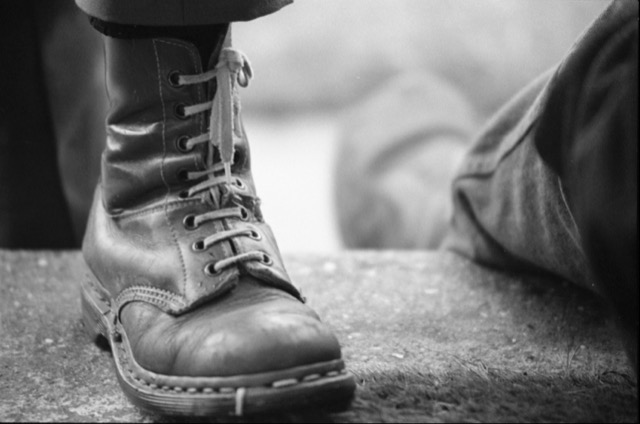
The Common Thread Across Four Incompatible Scenes
What’s genuinely strange about this run is that none of these subcultures liked each other much. Skinheads and punks had real friction. Goth and grunge occupied almost opposite aesthetic universes. Yet each successive scene looked at the same boot and saw exactly what it needed: something sturdy, unglamorous, and durable enough to survive whatever the scene demanded of it, whether that was a mosh pit or a factory floor. The boot never changed to court any of them. They came to it.
Marking 65 Years Without Losing the Thread
For the boot’s 65th anniversary, Dr. Martens’ design director Adam Owen framed the throughline directly, noting that the 1460 boots “have always been about more than just footwear – they’re a symbol of individuality, resilience, and rebellion,” according to WWD’s coverage of the anniversary release. The company still builds the boot at its original Wollaston, Northamptonshire factory, using full-grain leather sourced from a Leeds tannery it’s partnered with since the 1980s, a manufacturing continuity that’s rare for any product still selling six and a half decades after launch, let alone one so thoroughly rebranded by outsiders every decade or so.
A Design That Never Needed a Redesign
Compare that to how most footwear brands operate. A silhouette usually gets refreshed, reworked, or retired once its original cultural moment passes, chasing whatever look is currently trending. The 1460 took the opposite path for sixty-five years: the eight-eyelet lacing, the yellow welt stitch, the air-cushioned sole Maertens invented out of physical necessity in 1945, all of it stayed essentially untouched while entire genres of music rose and fell around it. That stubbornness turned out to be the boot’s biggest asset, since every new scene that adopted it was buying into something with a documented history rather than a trend built to expire.
What the Boot Actually Proves
The 1460’s real achievement isn’t that it survived four subcultures. It’s that it never had to reinvent itself for any of them. A £2 work boot built for comfort on a concrete floor turned out to carry exactly the right blend of toughness and plainness that rebellion, in any decade, keeps reaching for. The boot didn’t chase the culture. The culture kept finding its way back to the boot.

Leave a Reply