

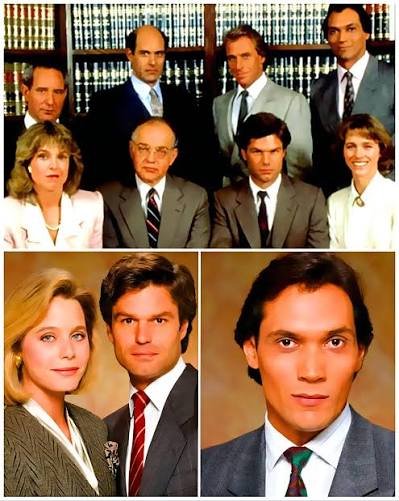
L.A. Law premiered as a two-hour pilot movie on NBC on September 15, 1986, and within a year it had won Outstanding Drama Series at the Emmys — then won it again in 1989, again in 1990, and again in 1991, according to Wikipedia’s entry on the series. Four Outstanding Drama Series wins across an eight-season run is a rare enough feat on its own. What made the show matter more than the trophy case, though, was what it did to the shape of legal drama itself — it turned “ripped from the headlines” from a gimmick into a format.
An Instant Hit, Not a Slow Build
The show didn’t need years to find its footing. According to the Wikipedia record of the 39th Primetime Emmy Awards, L.A. Law’s very first season led every program on television with 13 major nominations and walked away with four wins, including Outstanding Drama Series at the September 1987 ceremony. The pilot itself, directed by Gregory Hoblit, won for Outstanding Directing, and the episode “The Venus Butterfly,” written by Steven Bochco and Terry Louise Fisher, took the writing award. That’s an unusually dominant debut season for any drama, let alone one built around courtroom procedure.
Bochco wasn’t a first-time gambler on this kind of format. He’d already built his reputation on Hill Street Blues, the ensemble police drama that had spent years proving audiences would follow overlapping, unresolved storylines across an entire cast rather than a single lead character carrying every episode. L.A. Law took that same structural instinct and pointed it at a law firm instead of a precinct house, swapping arrests and interrogations for depositions and closing arguments — and the Emmy voters responded to the format almost immediately, rather than needing several seasons to come around on it the way they had with Bochco’s earlier show.
Fifteen Emmys and a Nielsen Top-30 Streak
The show’s dominance wasn’t a one-season fluke. Across its eight-season run, L.A. Law won 15 Emmy Awards total, including Outstanding Drama Series in 1987, 1989, 1990, and 1991, with additional nominations in 1988 and 1992, per Wikipedia. Cast members Richard Dysart, Larry Drake, and Jimmy Smits each picked up individual acting Emmys along the way. The show also held a place in the Nielsen Top 30 for its first six seasons, anchoring NBC’s Thursday 10 p.m. hour as part of the network’s “Must See TV” lineup — a real ratings performer, not just a critical darling collecting trophies nobody watched for.
Storylines Torn Straight From the News
What set L.A. Law apart from earlier legal dramas was its willingness to build entire episodes around subjects the genre had mostly avoided. Wikipedia’s account lists capital punishment, abortion, racism, homophobia, sexual harassment, HIV/AIDS, and domestic violence among the storylines the show tackled directly, at a time when network drama largely stuck to safer procedural cases. The show folded real current events into its plots too, including storylines tied to the 1992 Los Angeles riots, and it aired television’s first lesbian kiss in a 1991 episode — a moment that generated real controversy and real conversation well beyond the show’s own fanbase.
A Show Legal Scholars Actually Studied
The show’s influence didn’t stop at the entertainment industry. Wikipedia cites a law professor’s assessment that the series “has conveyed more ‘bytes’ of information…than all the Legal Studies programs, all the op-ed pieces, all the PBS shows put together” — a striking claim from inside academia about a network drama’s actual public education value. That’s the rare case of a prime-time hit being taken seriously as a genuine information source about how the legal system works, not just as entertainment loosely inspired by it.
The Format That Outlived the Show
L.A. Law ran for 172 episodes before ending on May 19, 1994, but the template it built — pairing case-of-the-week procedural structure with storylines lifted straight from the day’s headlines — became the standard operating model for the legal dramas that followed it for decades. The show proved something networks hadn’t fully trusted before it aired: that audiences would stick with a drama that took on real, contested social issues head-on, provided the storytelling around them was sharp enough to earn their attention first.

Leave a Reply