

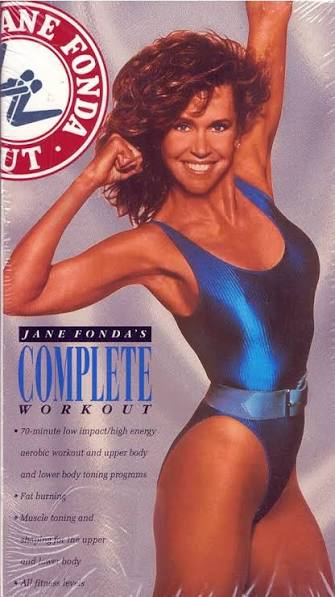
A $59.95 VHS tape — about $195 in today’s money, according to Wikipedia’s account of the release — is not the kind of product that usually reshapes an entire decade’s closet. “Jane Fonda’s Workout” did exactly that anyway. Released on April 24, 1982, the tape and its sequels went on to sell roughly 17 million copies across the series’ run through 1995, and somewhere inside that runaway success, an entire generation of American women adopted leg warmers, striped leotards and stirrup tights as a genuine daily uniform, not just gym wear.
The Numbers Behind the Phenomenon
The scale of the tape’s success is almost hard to grasp against today’s fitness media. It topped Billboard’s video sales chart for 41 straight weeks between 1982 and 1985, according to Wikipedia’s account, and held a top-four spot on that chart for three consecutive years. That kind of sustained dominance meant the tape was not a one-season fad purchase — it stayed in heavy circulation, played and replayed in living rooms across the country for years after its release, which gave its visual style far more time to sink into mainstream fashion than a typical trend cycle allows.
Why the Outfit Became the Point
Fonda’s on-screen look was specific and instantly recognizable: a striped leotard, black tights and burgundy stirrup leg warmers, worn while leading a crew of instructors through side stretches and leg lifts. CNN’s own retrospective on the tape notes that ensemble became the standard workout uniform of 1980s fitness culture — not just what Fonda happened to wear, but the template millions of women copied at their own gyms, aerobics classes and living-room floors. Leg warmers themselves were not new; per Wikipedia, they had already been standard in ballet studios for dancers stretching between routines. What Fonda’s video did was take an item confined to a specific professional context and put it in front of a mass audience repeatedly enough that it stopped reading as “ballet gear” and started reading as “fitness gear,” full stop.

A Business Model Built on a Sweatband
The tape’s success was not just cultural, it was structural. Fonda told CNN the period was “a pretty interesting time for me because people recognized me in a whole different way” — a shift from film star to fitness figure that built an entire business around her. The video effectively invented what Wikipedia’s account calls the “celebrity-as-fitness-instructor model,” a format still used constantly across streaming platforms and apps today. It also happened to arrive at exactly the right technological moment: American household VCR ownership jumped from roughly 2.5% in 1980 to about one-third of households by 1985, meaning Fonda’s tape was riding a genuinely new home-technology wave into a market that had never had this kind of at-home fitness option before.
How Far the Look Actually Traveled
What makes the leg-warmers-and-leotard look worth revisiting decades later is how far it drifted from its original, purely functional purpose. Leg warmers exist to keep muscles warm between stretches — a practical dancer’s tool, not a fashion statement. Once Fonda’s tape put them on millions of screens on repeat for years, they became something people wore to the grocery store, to school, to the mall, entirely detached from any actual workout happening nearby. The stirrup tights followed a similar path, worn under skirts and dresses by people who had never done a single leg lift in Fonda’s routine. The aesthetic outran the exercise almost immediately.
What Survives on the Rack Today
Original stirrup tights and striped leotards from the era are genuinely harder to find intact than you would expect, since the stretchy synthetic fabrics common in 1980s activewear tend to lose elasticity and structure over decades in a way that sturdier vintage fabrics do not. Leg warmers fare better — a knit tube with elastic at both ends is a simple enough construction to survive storage well, which is part of why they show up on resale racks more consistently than the leotards that started the whole look. Anyone hunting for the genuine 1982-era aesthetic is usually better off sourcing leg warmers as the anchor piece and building the rest of the outfit around modern equivalents, since true survivors of the leotard and stirrup-tight era are increasingly rare finds rather than reliable rack staples.
The Bigger Pattern
Few single pieces of media have converted a workout routine into a fashion movement as cleanly as Fonda’s tape did. It is a reminder that trends do not always start on a runway or in a design studio — sometimes they start on a rented VHS tape, played on repeat in front of a captive home audience until an outfit built for stretching becomes the outfit everyone wants regardless of whether they are stretching at all. Seventeen million copies later, the tape itself is a relic. The look it sold has never fully left the closet.

Leave a Reply