

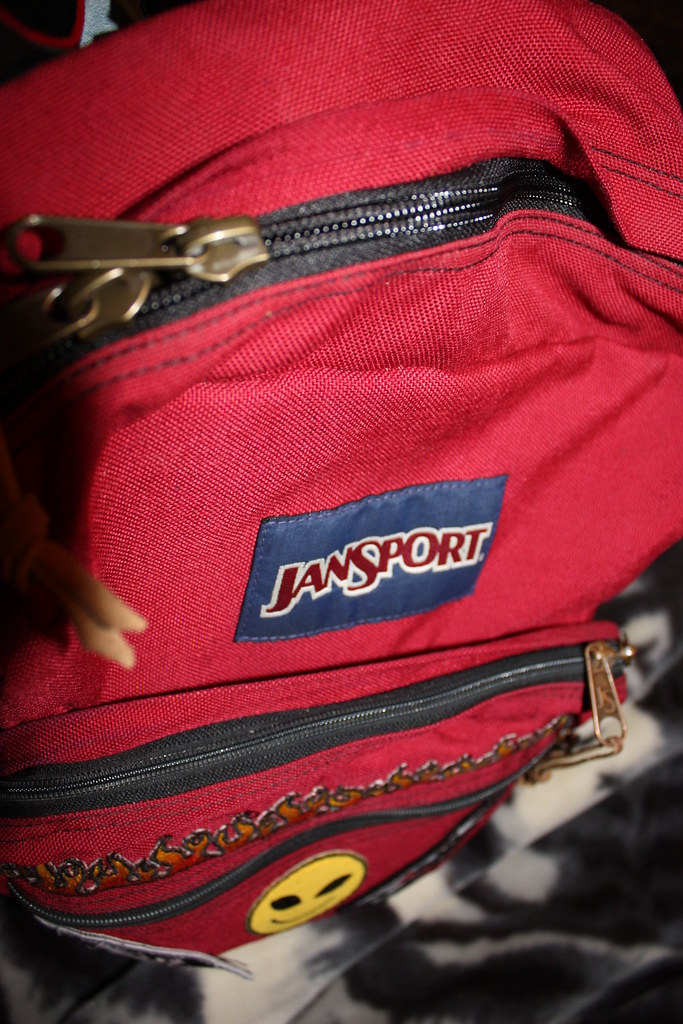
In 1967, a University of Washington engineering student, his girlfriend and his father started sewing backpacks in a loft above a Seattle transmission repair shop. That small operation became JanSport, and nearly six decades later, the specific late-1990s and early-2000s backpacks it made — the ones covered in pins, patches and puffy-paint doodles — are what thrift shoppers now search for by name every August. The company’s origin story is oddly specific and fully documented: a contest, a bookstore manager, and a backpack frame designed to solve a real engineering problem, not chase a trend.
A Backpack Born From an Aluminum Contest
Murray Pletz, later known as Murray McCory, was an engineering student at the University of Washington when he entered an Alcoa aluminum design contest and won with a lightweight, ergonomic aluminum-frame backpack sewn to a nylon pack, according to reporting from MyNorthwest, the news outlet of Seattle’s KIRO Newsradio. It was a real improvement over the wood-frame and canvas packs still common at the time. Pletz married his girlfriend, Janis “Jan” Lewis, and the two of them, along with Murray’s father, Norman Pletz, launched a company built on that design from a loft above Norman’s transmission shop, according to the same MyNorthwest account. The name JanSport is a straightforward mashup of Jan and sport.
From Hiking Gear to Required School Supply
The earliest JanSport products were built for the outdoors: backpacks, tents and sleeping bags aimed at hikers and climbers. The shift toward campus life came in 1970, when Pletz and Lewis worked with Ed Bergren, manager of the University Book Store in Seattle’s U-District, to adapt their daypack into something students would actually carry, according to MyNorthwest. The result was marketed as the University Bookstore Rucksack, a direct precursor to the SuperBreak silhouette that’s now one of the most recognizable backpack shapes in American retail. Within a few years it had become, per that reporting, “a required accessory for college students,” and eventually a fixture for kids far younger than college age too.
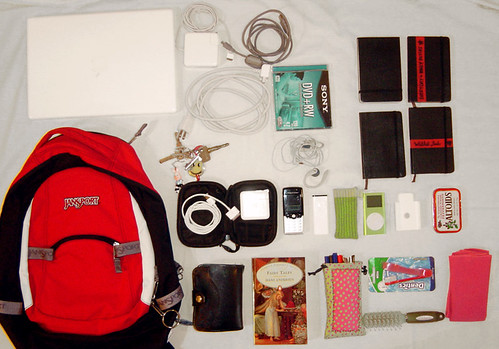
JanSport stayed a U.S. manufacturer for longer than most of its category. Up until the early 1990s, all JanSport packs were made domestically, according to Wikipedia’s sourced entry on the company, before production shifted overseas along with the rest of the outdoor-gear industry. The brand itself is now part of VF Corporation, the Denver-based apparel conglomerate that also owns Vans and The North Face, per MyNorthwest’s reporting.
Why the Late-90s and Early-2000s Bags Are the Ones People Want
JanSport’s own marketing has quietly acknowledged which decades resonate hardest with shoppers today. The brand’s own blog walks through its “Right Pack” style — built by combining the leather-bottomed construction of its 1970s packs with 1990s-era design sensibility — and separately name-checks the early-2000s Y2K aesthetic, “futuristic looks with a retro flair,” defined by pastel and neon palettes, as a look customers are actively revisiting. That’s the same window — roughly 1997 through 2006 — when the SuperBreak and Right Pack became the default backpack for American middle and high schoolers, and when covering one in pins, iron-on patches, keychains and Sharpie doodles was less a style choice than a rite of passage.
That customization habit is exactly what makes those specific bags identifiable and searchable now, in a way a plain, unmarked backpack from the same era isn’t. A JanSport with an intact zipper, the boxy SuperBreak silhouette and visible wear from actual use reads instantly as a specific-decade object, which is precisely the kind of find secondhand shoppers can search for by name rather than by vague description.
Thrift Retailers Are Already Pointing Shoppers There
Goodwill’s national back-to-school messaging leans directly into this. Goodwill Industries International’s own blog tells shoppers that Y2K and street-style pieces will “dominate the back-to-school season,” and specifically notes that decades of donations have left thrift racks stocked with era-accurate labels from that same window. A worn, pin-covered JanSport fits that pitch precisely: it’s not a reproduction or a modern brand doing a throwback collaboration, it’s the actual object a middle schooler carried in 2001, still sturdy enough to carry books again in 2026.
What started as one engineering student’s contest entry for a better aluminum frame has ended up, five decades later, back-to-school inventory people go looking for on purpose. The backpack that solved a hiking problem in 1967 is now valuable specifically because of the decade it happened to be sitting in someone’s closet for.

Leave a Reply