

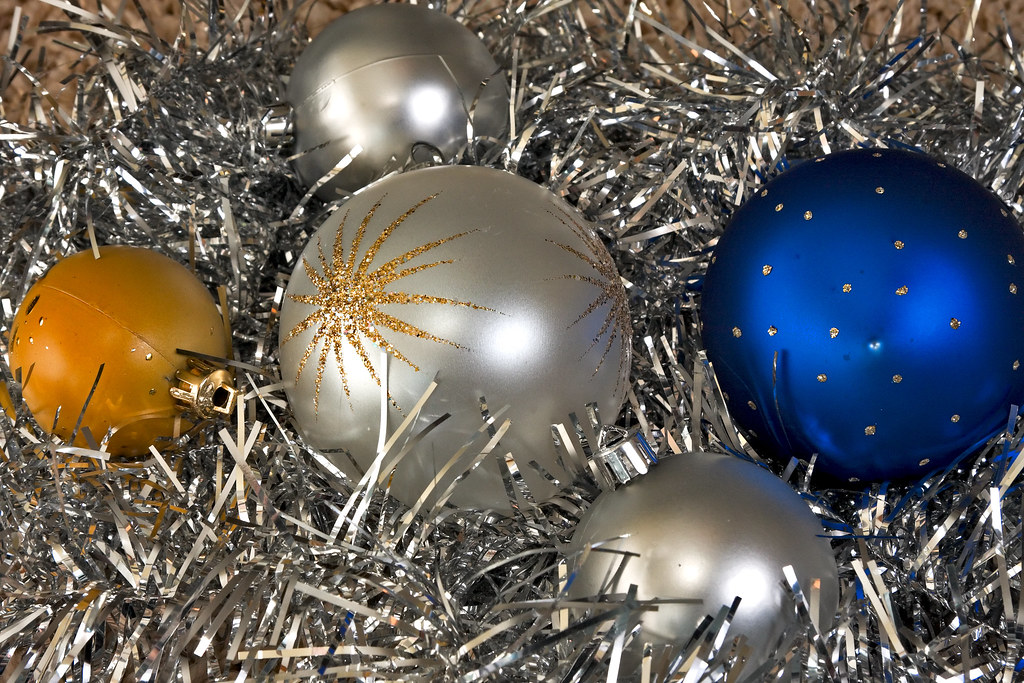
The Smithsonian’s National Museum of American History holds a handful of ball-shaped glass ornaments stamped “SHINY BRITE / MADE IN U.S.A.” on their metal caps, most dated to the 1940s, some spanning as late as 1960, according to the museum’s own collection records. That stamp was a marketing decision as much as a manufacturing one — and understanding why “Made in U.S.A.” mattered so much to a Christmas ornament company is most of what explains why collectors are still hunting these fragile glass balls down nearly a century later.
An Import Business That Had to Reinvent Itself
Before there was a Shiny Brite ornament, there was Max Eckardt, a New York businessman who’d been importing hand-blown glass balls from Germany since around 1907, according to a documented history of the brand. German glassblowers had essentially owned the ornament trade for decades, which left Eckardt’s entire business exposed the moment that supply chain became politically unreliable. His solution, in 1937, was to stop importing and start manufacturing — he partnered with Corning Glass Works and adapted its light-bulb-blowing machinery to mass-produce glass ornament balls on American soil, which were then hand-silvered and hand-decorated at his own factories in Wellsboro, Pennsylvania, and several New Jersey locations.
That timing turned out to be shrewd rather than lucky. Once the supply of German ornaments dried up entirely with the outbreak of World War II, “Made in U.S.A.” stopped being a footnote on the box and became the entire pitch.
Why the Wartime Ones Are the Ones People Want
The ornaments that came out of Shiny Brite’s factories during the early 1940s look noticeably different from the ones that came before or after, and that difference is now a collector’s dating tool. Wartime metal shortages forced the company to swap its silver metal caps and hooks for cardboard tabs strung with plain yarn or string, and the interior silvering on the glass itself often thinned out as materials were redirected to the war effort. Those wartime pieces are more fragile than either their prewar or postwar counterparts by design, not by accident, which is exactly why intact examples are harder to find today — a rationed, no-frills ornament had a much shorter list of things it needed to survive to become a collectible.
Postwar design brought its own quirks worth knowing before you go digging through a thrift-store ornament box. Shiny Brite introduced an adjustable metal hook after the war that let a hanger lengthen or shorten depending on how sparse a real fir tree’s branches were that season — a feature that became pointless once uniform aluminum Christmas trees took over American living rooms and the company discontinued the design by 1960. Collectors now use hook style alone to date a piece within a few years, the same way a car buyer reads a VIN. Shape matters too — round balls are the most common survivors, while the faceted, geometric designs built to interlock and chain together in a garland are scarcer simply because there were fewer ways for that specific shape to end up boxed and forgotten in an attic instead of shattered.
What Makes a Box of Old Glass Worth Digging For
Mercury glass ornaments are inherently self-limiting as collectibles because the material fights back against its own survival: thin blown glass, a fragile silvered interior, and decades of handling by hands that weren’t thinking about resale value. Every box that got crushed in an attic, every ornament a kid dropped on a hardwood floor in 1962, is one more piece permanently subtracted from the total supply — and that supply was never being replenished, because the company that made the originals stopped in the 1960s.
The brand didn’t stay dead, exactly. Christopher Radko has held the trademark and reissued Shiny Brite’s most popular designs since 2001, which means new “Shiny Brite” ornaments are genuinely for sale in stores right now — but that revival, if anything, sharpens the line for collectors rather than blurring it. A modern reissue and a 1940s original share a name and not much else: one is a decoration you can buy at a big-box store this week, and the other is a specific, aging, irreplaceable object that a family somewhere already tried and failed to break sixty years ago. Right before the tree comes back out of the attic is exactly when that distinction starts to matter to the people going through the boxes.

Leave a Reply