

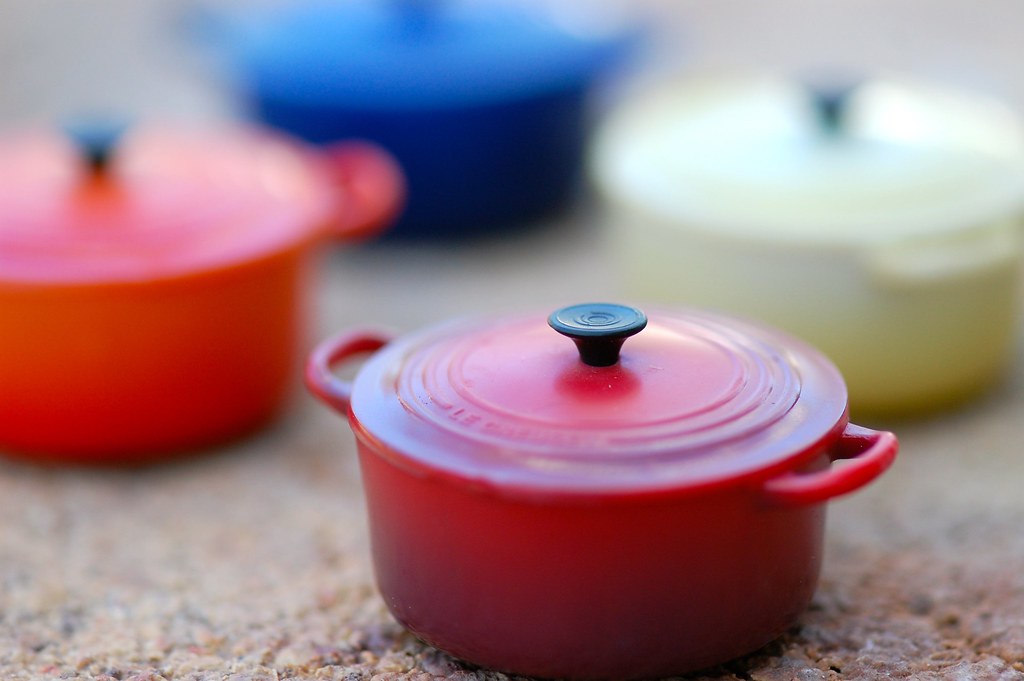
A discontinued Le Creuset Dutch oven doesn’t quietly lose value once production stops — it often does the opposite. Colors like Cassis and Rhône now “resell at or above retail price,” according to The Daily Meal’s rundown of the brand’s rarest shades, meaning a secondhand pot in the right defunct hue can cost a buyer more than walking into a store and purchasing a brand-new one in whatever color happens to be on shelves right now. For a company built entirely around cast iron that’s meant to last generations, that’s an oddly fitting twist: the cookware was always designed to outlive its owner. Apparently the color is now doing the same thing to the price tag.
A Hundred Years of Picking Which Colors Die
Le Creuset has been manufacturing colored enamel cookware since 1925, when the brand launched with Flame — an orange meant to evoke molten cast iron straight out of the mold — alongside Terra-cotta Fonte des Alps and a Grapefruit yellow, according to Le Creuset’s own history of its color archive. The palette kept expanding and contracting from there: 1950 brought the Arlequin Collection’s Grenade, Pamplemousse, Anthracite, and Vert Florentin; 1955 introduced Elysée Yellow, a shade the company says was favored by Marilyn Monroe; and 1960 produced the brand’s first blue, reportedly inspired by the packaging on food writer Elizabeth David’s preferred pack of Gauloises cigarettes.
That pattern — introduce a color, let it run for a few years, retire it, occasionally resurrect it decades later — has continued into the present with almost mechanical regularity. Indigo ran from 2018 to 2022. Fig was pulled from the U.S. and Europe in 2022. Ganache existed for barely five months, produced only between November 2022 and early 2023, according to The Daily Meal’s color-by-color breakdown. Berry was discontinued in 2019, brought back in 2025, then discontinued again — a genuine on-again-off-again relationship between a color and a company.
What a Dead Color Is Actually Worth
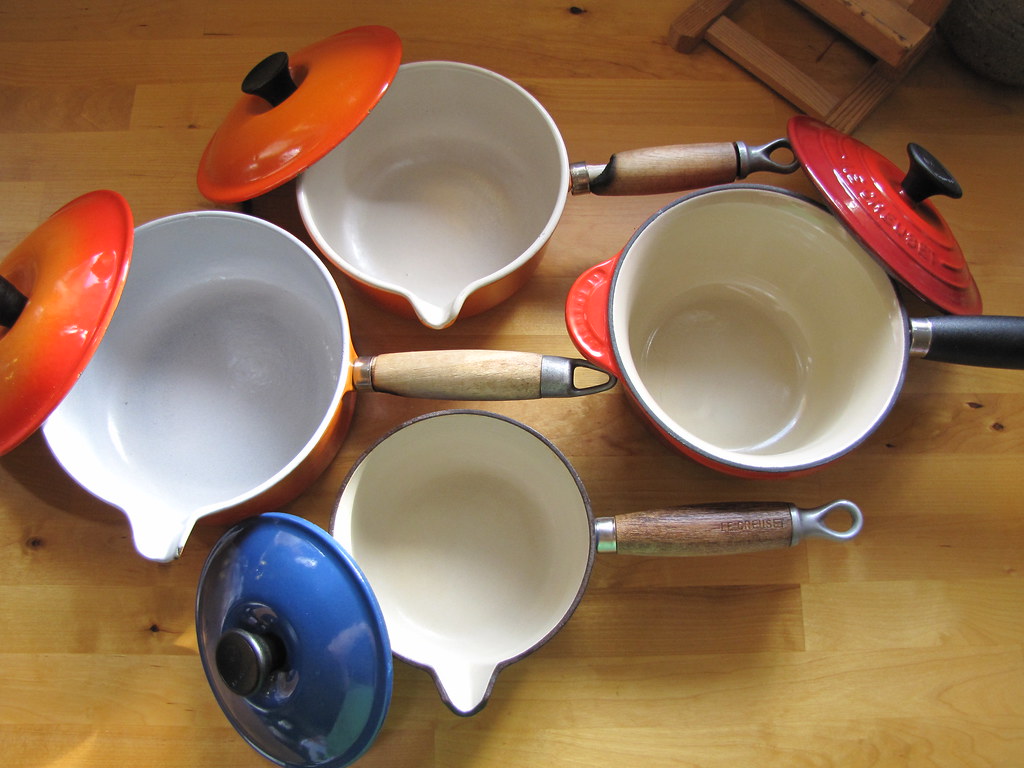
The resale numbers back up the collector obsession. Sold-listing data pulled from eBay, Poshmark, Depop, and Mercari by the resale-tracking app Cluzy shows secondhand Le Creuset pieces flipping for roughly six to ten times their thrift-store purchase price — a round Dutch oven bought for $25 resold for $245, and a vintage braiser bought for $30 resold for $285. Those particular examples happen to be in Flame, the brand’s oldest and most requested colorway, but the same collector logic applies with even more force to shades that can no longer be bought new at all: Coral, discontinued roughly a decade ago, is singled out by The Daily Meal as “perhaps one of the colors most worth looking out for,” while Rhône — on the market for barely three years before its 2025 retirement — already commands prices at or above what it cost brand new.
A handful of other names show up again and again in the same conversation: Kiwi, a lime-green shade launched in 2005; Cassis, a purple that disappeared around 2018; and Black Onyx, a glossy black finish that’s been gone long enough to qualify as genuinely rare. None of them are especially old by collectible-antique standards — most stopped production within the last two decades — which says something about how fast a modern discontinued color can become a modern expensive one.
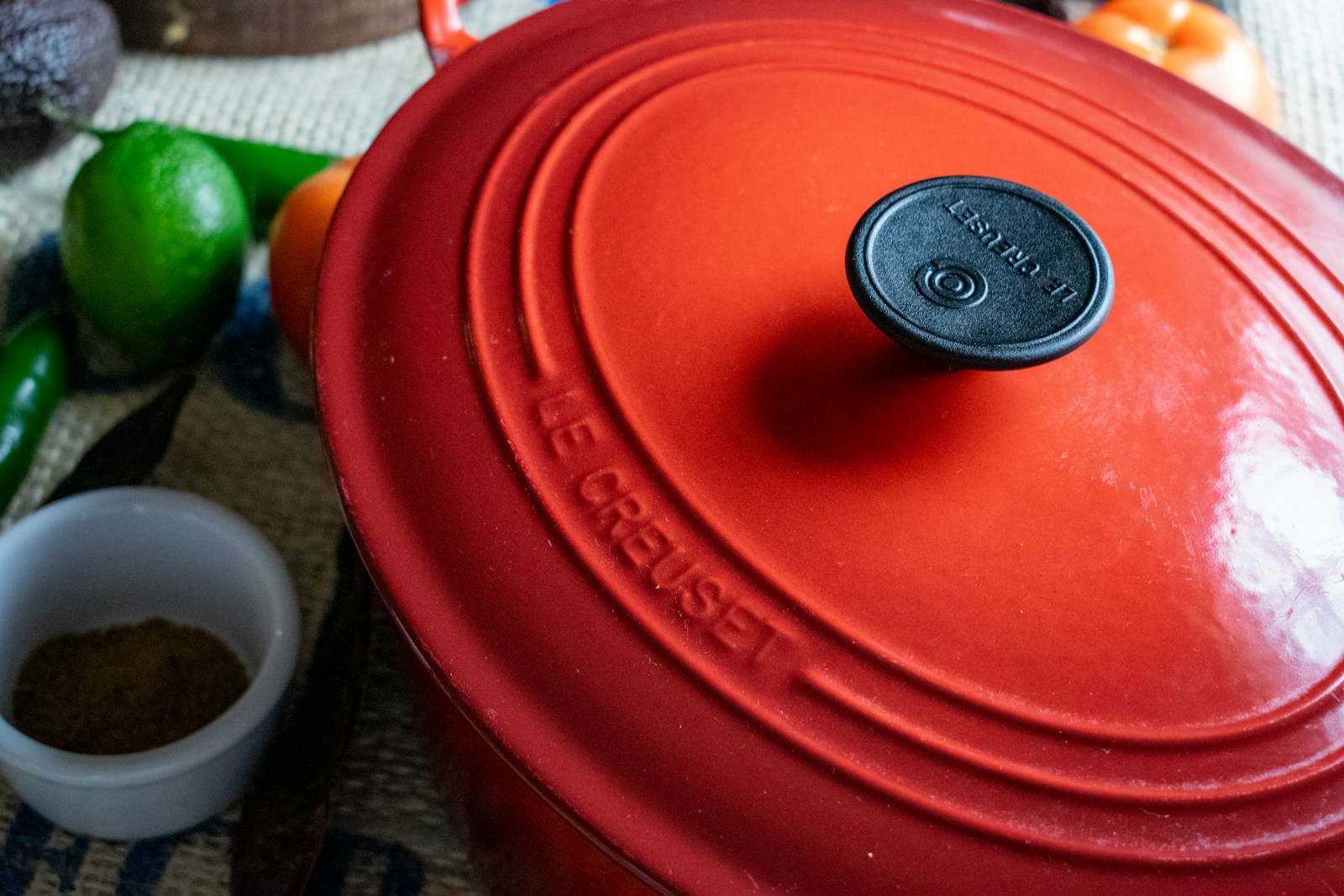
The mechanism is straightforward scarcity economics wearing a cast-iron coat. A current color can always be restocked; a discontinued one has a fixed, shrinking supply the moment production stops, and every broken or chipped piece in that shade permanently reduces what’s left. Le Creuset itself seems to understand the appeal of that finality — the company markets a whole “Archive Series” built around reviving specific historic shades, including a 2025 limited-edition Flamme Dorée designed explicitly to honor the original 1925 Flame a full century later.
Retirement Is the Business Model
None of this appears to be accidental. A company that has been strategically launching and retiring colors on a rolling cycle for a hundred years understands exactly what happens to demand the moment a shade disappears from stores — collectors chase it, prices climb, and the anticipation of the next retirement quietly drives sales of whatever’s currently on shelves. What looks like a Dutch oven with a color problem is actually a company that figured out, roughly a century ago, that the fastest way to make people want something is to eventually stop selling it to them.

Leave a Reply