

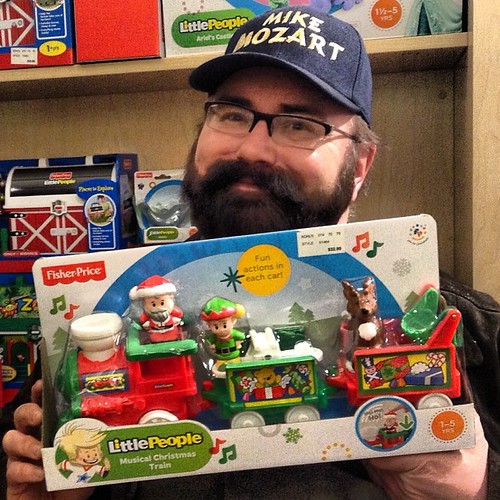
A sealed 1975 Fisher-Price Play Family Sesame Street playset has fetched as much as $2,500 at auction, according to Antique Trader’s compiled sale data on vintage Fisher-Price toys. That same box left a store shelf for a few dollars in the Ford administration. Multiply that out across the millions of wooden and early-plastic Little People figures made since 1959, and a toy line built for sticky toddler hands has quietly become one of the more interesting bets in vintage collecting.
A Wooden Figure With a 65-Year Paper Trail
Little People started life in 1959 as passengers riding inside a “Safety School Bus” pull toy, tiny wood bodies wrapped in lithographed paper, according to The Strong National Museum of Play’s official history of the line. The figures went solid-colored wood through the 1960s, then hard plastic, then in 1975 picked up a Sesame Street license that put Bert, Ernie, and Big Bird into playroom rotation nationwide.
By the museum’s count, more than two billion Little People have shipped across 60 countries since that first bus rolled out, and the line earned a spot in the National Toy Hall of Fame in 2016. That kind of volume usually kills resale value. With Little People, it did the opposite, because most of those two billion figures got separated from their sets, gnawed on, or left out in the rain, which makes an intact, dated example a genuinely different object than the loose dog you find in a junk drawer.
What the Resale Numbers Actually Show
Auction and dealer sale records tracked by Antique Trader put loose, individual Little People figures in the five to fifty dollar range on a normal day. The real spread shows up once a set is complete and boxed. The 1972 Play Family Airport has sold for as much as $1,000. The 1968 Play Family Farm tops out around $600. The 1974 Play Family Castle brings $200 to $500 complete, but the same castle missing its pieces recently changed hands for $65, a gap that says everything about what collectors are actually paying for.
A family set built around the 1960 Nifty Station Wagon sold for $139 in 2024, per the same records, and mixed lots of a hundred or more loose figures have cleared $500 to $1,000. None of that touches the eye-popping four-figure sums people associate with rare Barbies or first-edition Pokémon cards. It also isn’t nothing for a toy that shipped by the pallet.
Why Completeness Beats Rarity Here
Unlike a lot of collectibles, Little People values don’t hinge on a single “grail” item hiding in someone’s attic. They hinge on survival rate. Every playset came with a small pile of parts, doors, tiny animals, a boat trailer, a removable roof, and it’s the sets that dodged forty years of vacuum cleaners and lost couch cushions that command real premiums. A pristine 1959 Safety School Bus can bring $700, while a beat-up one barely clears its original sticker price.
That mechanic rewards patience over hunting for something obscure. A parent who kept the original box, the instruction sheet, and every last figure through three kids and two moves has, without trying, been running a decades-long holding position. Collectors chasing 1960s and 1970s Fisher-Price now aren’t hunting unicorns; they’re hunting completeness, which is a much more findable thing at an estate sale than most people assume.
What Actually Moves the Price
Talk to enough sellers working from Antique Trader’s numbers and a pattern emerges: date and material matter as much as set name. The earliest wooden-bodied figures from 1959 through the mid-1960s sit a tier above the hard-plastic figures that followed, simply because fewer of them survived daily use intact. Original boxes add a real premium too, not for nostalgia’s sake but because the box is proof a set is genuinely complete rather than reassembled from three different garage sales. Sesame Street-branded pieces from the mid-1970s carry their own following, since that license only ran for a handful of years before Fisher-Price rotated in other characters.
None of this requires an appraiser. A set with its box, its full figure roster, and no cracked plastic is worth a five-minute search on recent sale prices before it goes in a donation pile.
The Quiet Case for Looking in the Garage
None of this rivals the auction-house drama of a rare comic or a first-pressing record, and that’s sort of the point. Little People sit in a strange middle tier of the collectibles market: common enough that almost every American household from the 1960s through the 1980s owned some, scarce enough in complete condition that a shoebox of them can be worth checking before it heads to a donation bin. The toy that taught a generation to open little plastic garage doors turned out to be quietly appreciating the whole time nobody was looking.

Leave a Reply